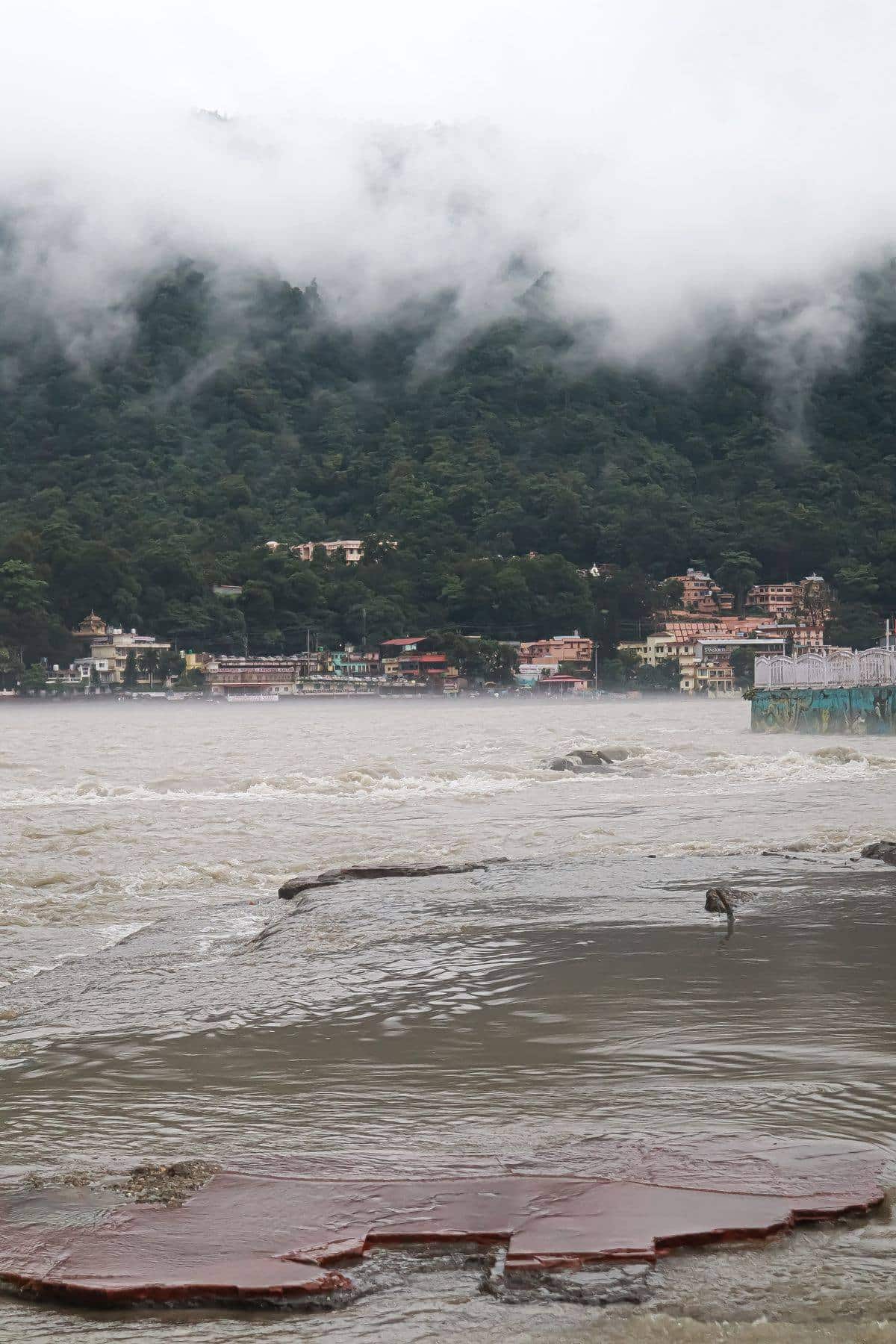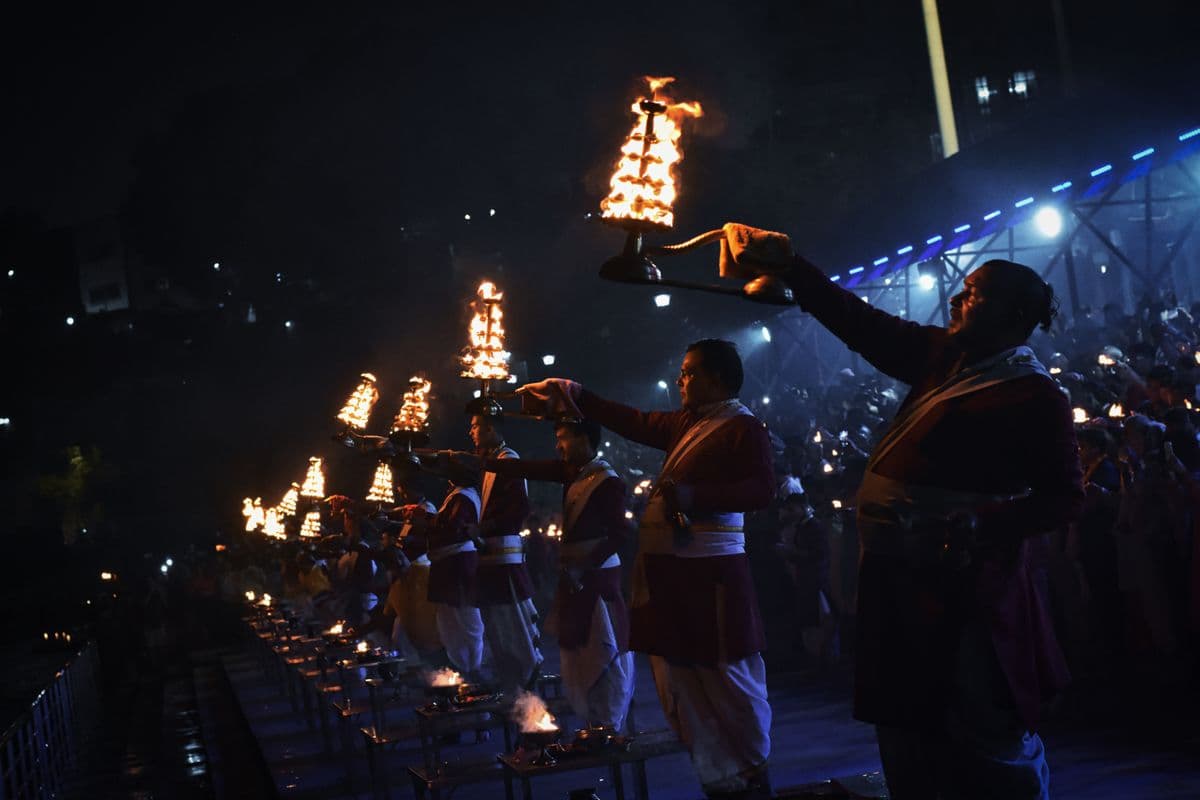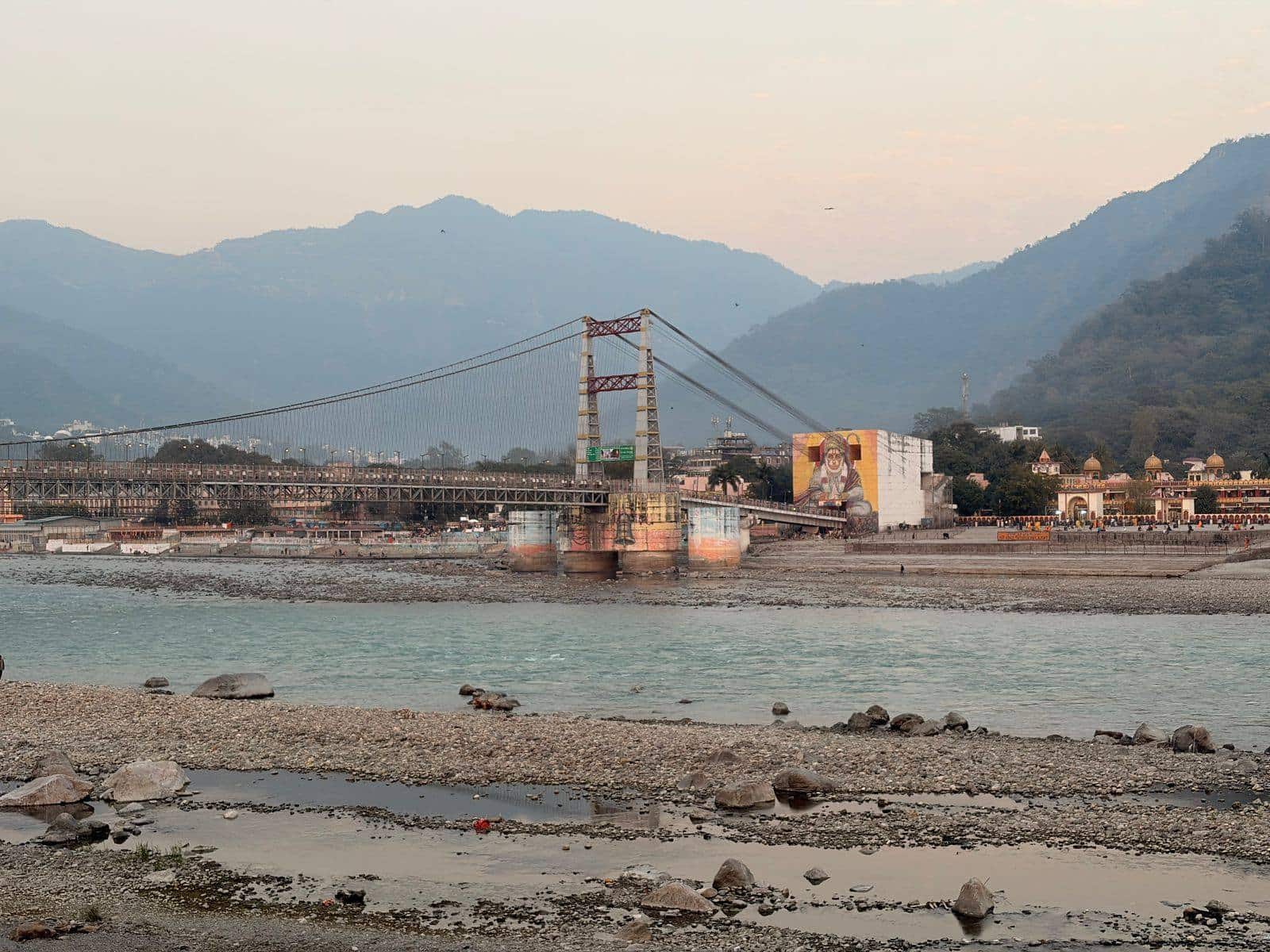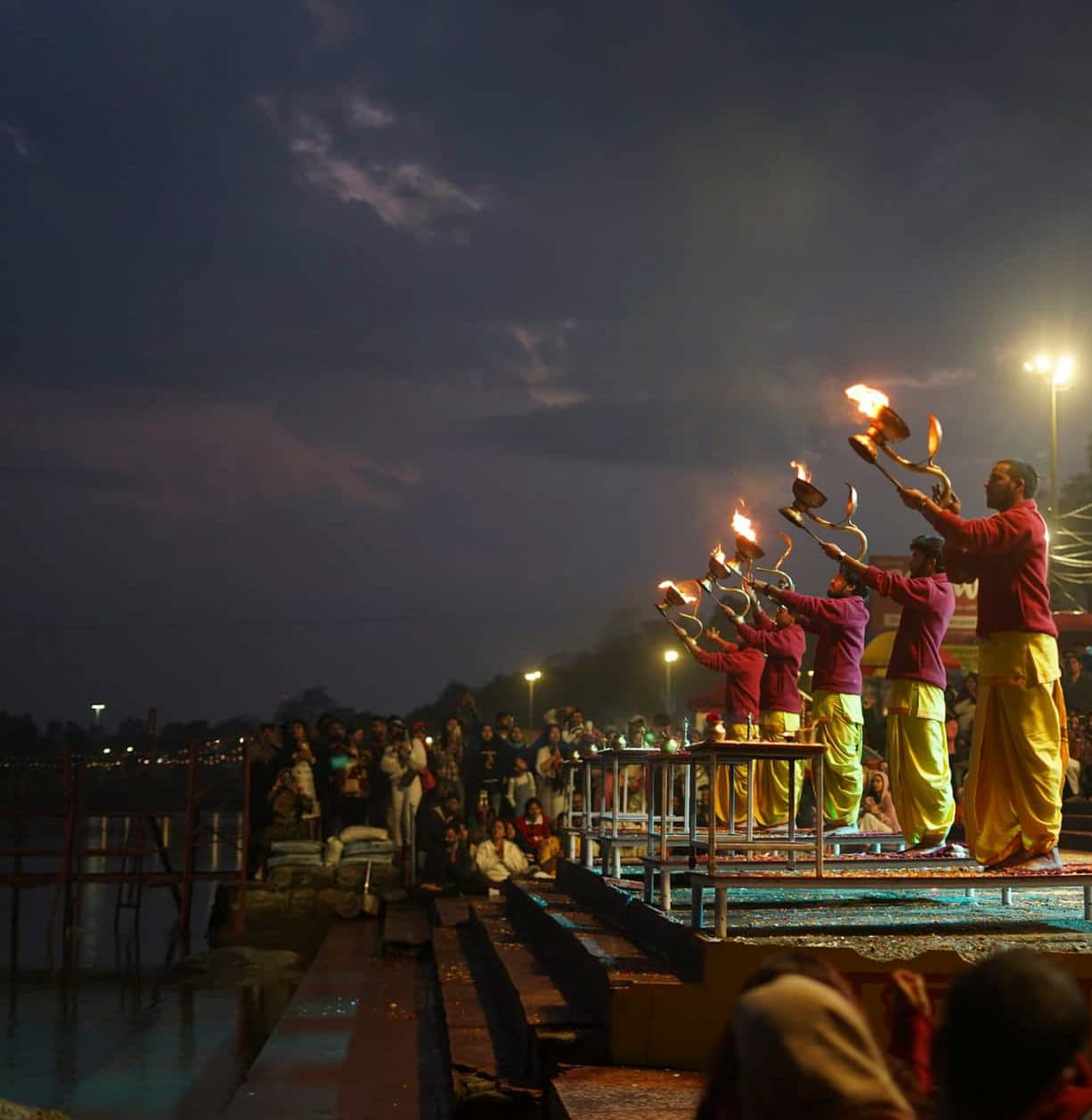
Ganga Aarti is one of those Rishikesh evenings that stays with you, but it does not feel the same at every ghat. At Parmarth Niketan you sit among a crowd as Vedic chants rise with the lamps. At Triveni Ghat it is a broad public gathering in the heart of town. Elsewhere it is smaller and closer to the everyday life of the river. You do not have to see them all. Choose the evening that suits you, arrive with time to settle, and let the prayer happen around you.
Find your kind of aarti first
For a first visit, start at Parmarth Niketan, where the ceremony is organised and easy to read. Go to Triveni Ghat for a larger public aarti in the main town. If you are already walking around Ram Jhula and Janki Setu, ask locally about the evening at Shatrughan Ghat. Purnanand Ghat is worth knowing for its community-led ceremonies, and Sai Ghat suits a slower riverside pause near Laxman Jhula. One thing to hold onto: a smaller ghat does not mean an aarti happens at the same time every day, so confirm locally before making a special journey.
1. Parmarth Niketan: the evening most visitors picture
At Parmarth Niketan the aarti has a clear rhythm. People gather by the Ganga, the singing begins, and it builds to the moment the lamps are raised. Vedic students in saffron robes are often part of it, and the large Shiva statue in the river is the familiar sight in photographs of the ashram. It is organised, musical and often busy, and you can follow the feeling of it without knowing the words. It begins at sunset, the time moving with the season, and the ashram asks you to check reception for the day. Our full Parmarth Niketan aarti guide covers where to sit and how to leave without the crush.
2. Triveni Ghat: a public aarti in the heart of town
Triveni Ghat has a different energy. It is a major bathing ghat in the main town, so the evening is not only about visitors: people come to pray, make offerings and spend time by the water. As the ceremony begins, priests raise large multi-tiered lamps while bells, drums and chanting carry across the steps. There is no need to push to the front. Give yourself time to find a comfortable spot, keep the routes worshippers use clear, and let the ceremony come into view from where you are. This is an active religious place, not a show set up for tourists.
3. Shatrughan Ghat: aarti at the end of a riverside walk
If your day has moved through the Ram Jhula area, Shatrughan Ghat is a natural place to end it. It sits in the riverside neighbourhood where bridges, ashrams and walking routes meet the everyday town. It feels less like a set-piece than Parmarth, though it will not be empty or identical every evening. It is the ghat our Ganga and Heritage Walk and Sacred Passage finish at, so it fits a day spent walking this part of Rishikesh. If you are going specifically for the aarti, ask your host to confirm the day’s arrangements rather than trusting an old timetable online.
4. Purnanand Ghat: the women-led aarti near Janki Setu
Near the Janki Setu area, Purnanand Ghat is the one to know for a more participatory side of aarti. It came into wider local reporting in April 2026 during a special women-led Ganga Aarti, when the women themselves held the brass lamps as part of the ceremony. It is a lovely glimpse of how aarti here can be something a community gathers around, rather than only something people watch from the steps.
Please do not assume visitors can hold lamps every evening. That reported ceremony was a specific occasion, not a standing invitation at every daily aarti. If taking part matters to you, ask locally whether guests are welcome that day and follow the organisers’ instructions, and if you are not invited to hold a lamp, watching quietly is just as meaningful. Treat the ghat as a place of worship first, let the people leading the prayer guide where you stand, and never interrupt the ceremony for a photograph.
You do not need to compare the ghats as if one wins. The ceremony, the crowd and the riverfront all shape the evening, and the right one depends on where you are staying and how much time you have.
5. Sai Ghat: a quieter pause near Laxman Jhula
Sai Ghat is close to Laxman Jhula, but the mood is different from the big gatherings. There are steps down to the Ganga, a Gangamata statue facing the water, and patches of pale sand when the river allows. People come to sit beside the river, not only for a ceremony. The aarti here is smaller in scale, which makes it a good low-key evening, though the crowd, the river level and whether a ceremony happens all change day to day. Our Sai Ghat guide has the detail. If there is no aarti when you arrive, it is still a fine place to watch the current and let the day’s noise settle.
A few small things that make the evening easier
- Arrive with time to spare, especially at Parmarth and Triveni, so you settle rather than squeeze through a crowd.
- For smaller ghats, confirm the current arrangement before walking over specifically for aarti.
- Wear footwear you can slip off for the river steps, and follow local guidance on where to sit.
- Keep entrances clear, ask before close photographs of priests or worshippers, and never handle a lit lamp uninvited.
- Keep an eye on children near the water, and stay back from unsafe edges and strong currents.
If you are still deciding whether the morning or the evening ceremony suits you better, the morning vs evening aarti guide is the honest comparison.
Frequently asked questions
Where is the main Ganga Aarti in Rishikesh?
For a first visit, start with Parmarth Niketan on the Swarg Ashram side near Ram Jhula. The ceremony is organised, musical and easy to understand, and it is the evening most visitors picture when they think of Ganga Aarti in Rishikesh.
What time does Ganga Aarti start at Parmarth Niketan?
Parmarth Niketan's aarti begins at sunset, so the time shifts through the year. The ashram asks visitors to check reception for that day's timing, which is the only number worth trusting. A yagna runs at the ghat about half an hour before, so arriving early gives you the whole evening.
What is different about Triveni Ghat aarti?
Triveni Ghat is a major bathing ghat in the main town, so the evening is not only for visitors. Locals come to pray, make offerings and spend time by the water, and priests raise large multi-tiered lamps as bells and chanting carry across the steps. It feels like a public town gathering rather than an ashram ceremony.
Is there a women-led Ganga Aarti near Janki Setu?
Yes, around Purnanand Ghat near the Janki Setu area a women-led Ganga Aarti was reported in April 2026, with participants holding brass lamps. It is a real part of how aarti can be community-led here. But do not assume visitors can hold lamps every evening; that was a specific ceremony, not a standing daily invitation. Ask locally whether guests are welcome that day and follow the organisers.
Is Sai Ghat worth visiting if no aarti is taking place?
Yes. Sai Ghat near Laxman Jhula has steps to the Ganga, a Gangamata statue and, when the river is low, patches of pale sand. Even with no ceremony it is a lovely place to sit, watch the current and let the day settle. Just confirm the arrangement on the day if you are going mainly for the aarti.
How should I behave during Ganga Aarti?
Treat it as a prayer ceremony, not a show. Follow the lead of the people conducting it, keep pathways and entrances clear, ask before photographing priests or worshippers up close, and never handle a lit lamp unless the organisers invite you to. You do not need to know the chants. Being attentive and respectful is enough.
Planning your evening
Pick the ghat that fits the evening you want, then check the current arrangement before you set out. If you have time, pair the aarti with a walk through the lanes or a bridge crossing rather than rushing between stops. The evening on our First Hello day is built around exactly this, and if you would rather shape your own, you can build your trip around the ghat you choose. Your co-host helps plan the route, and your host walks you through the practical details on the day.