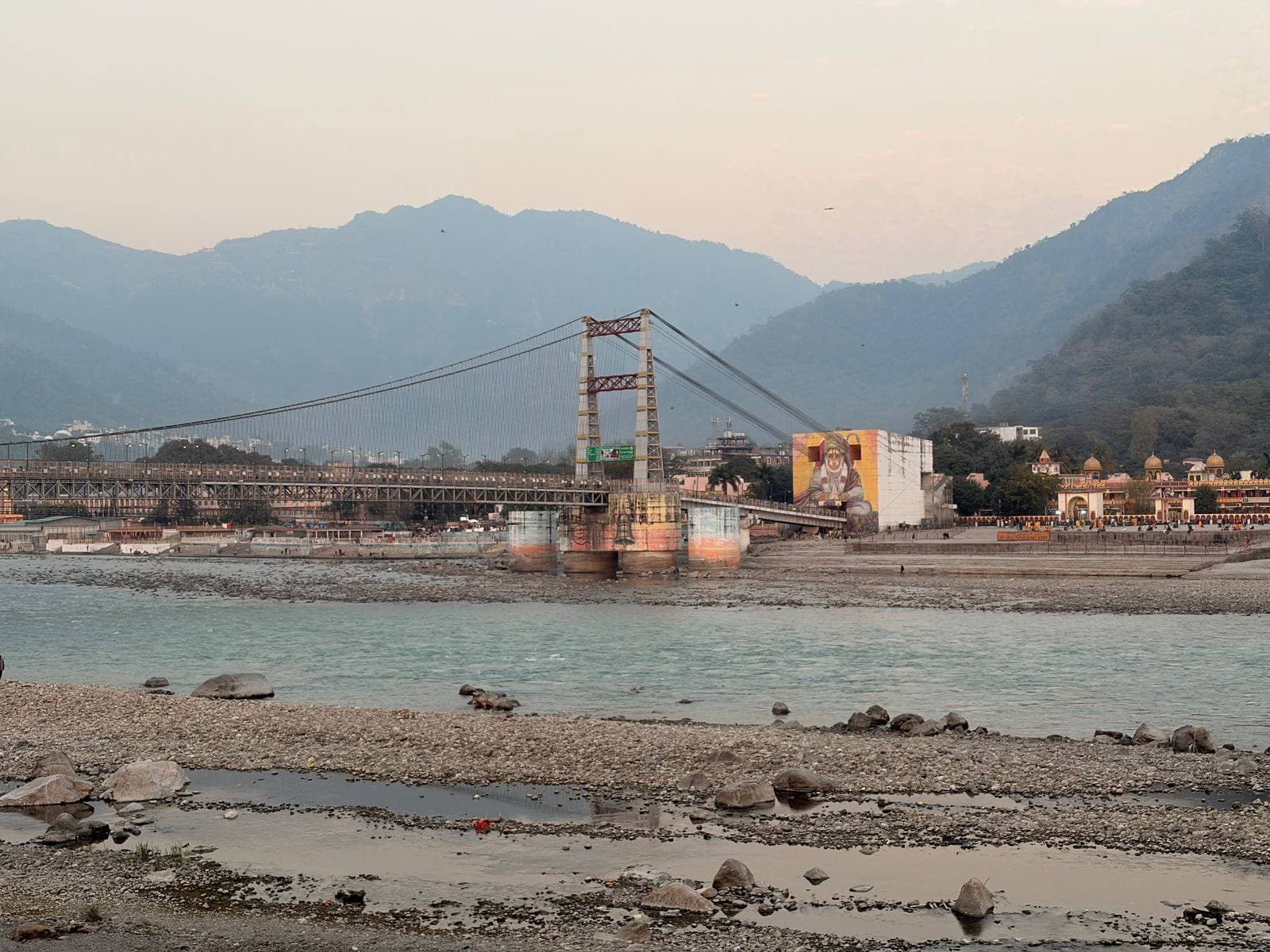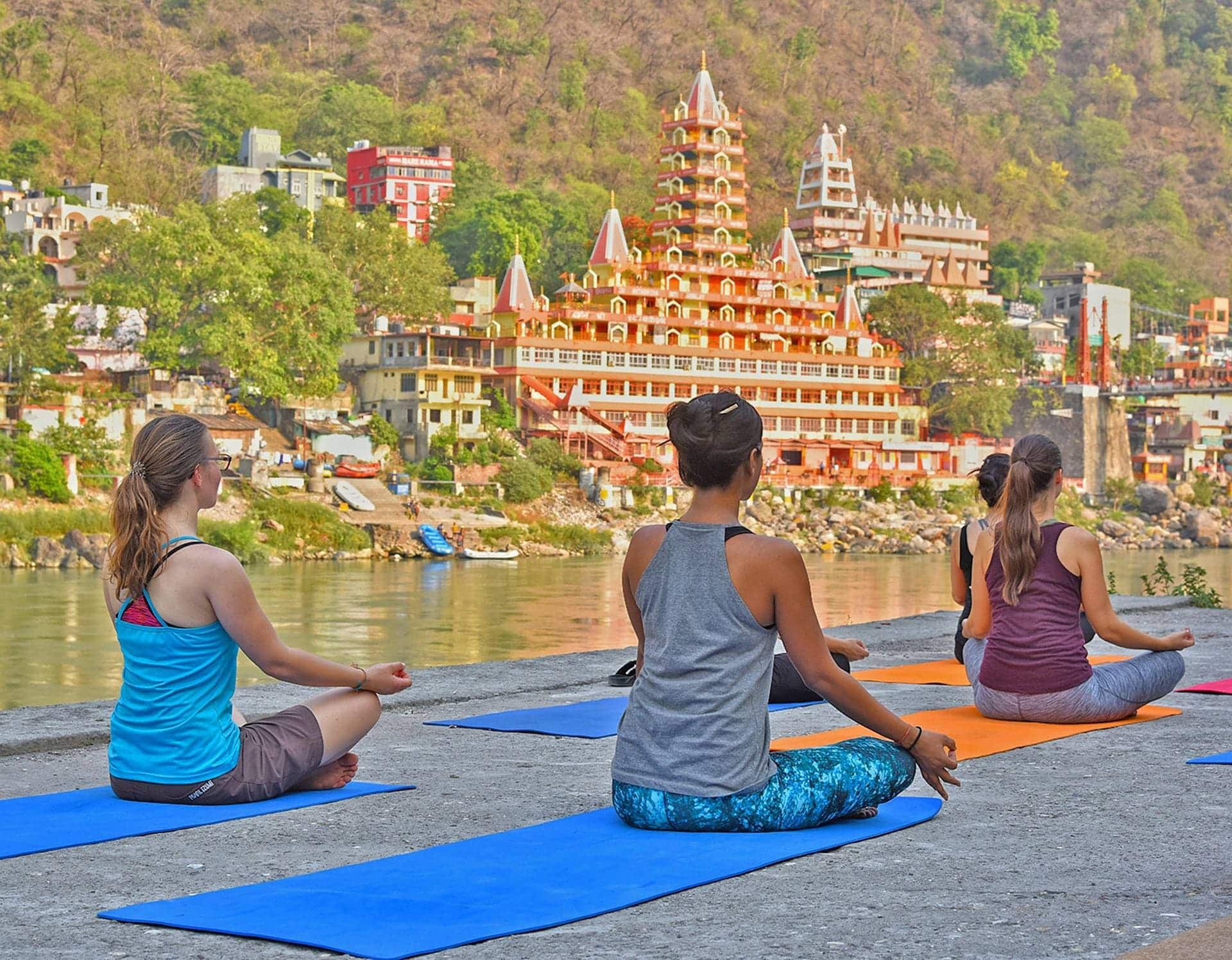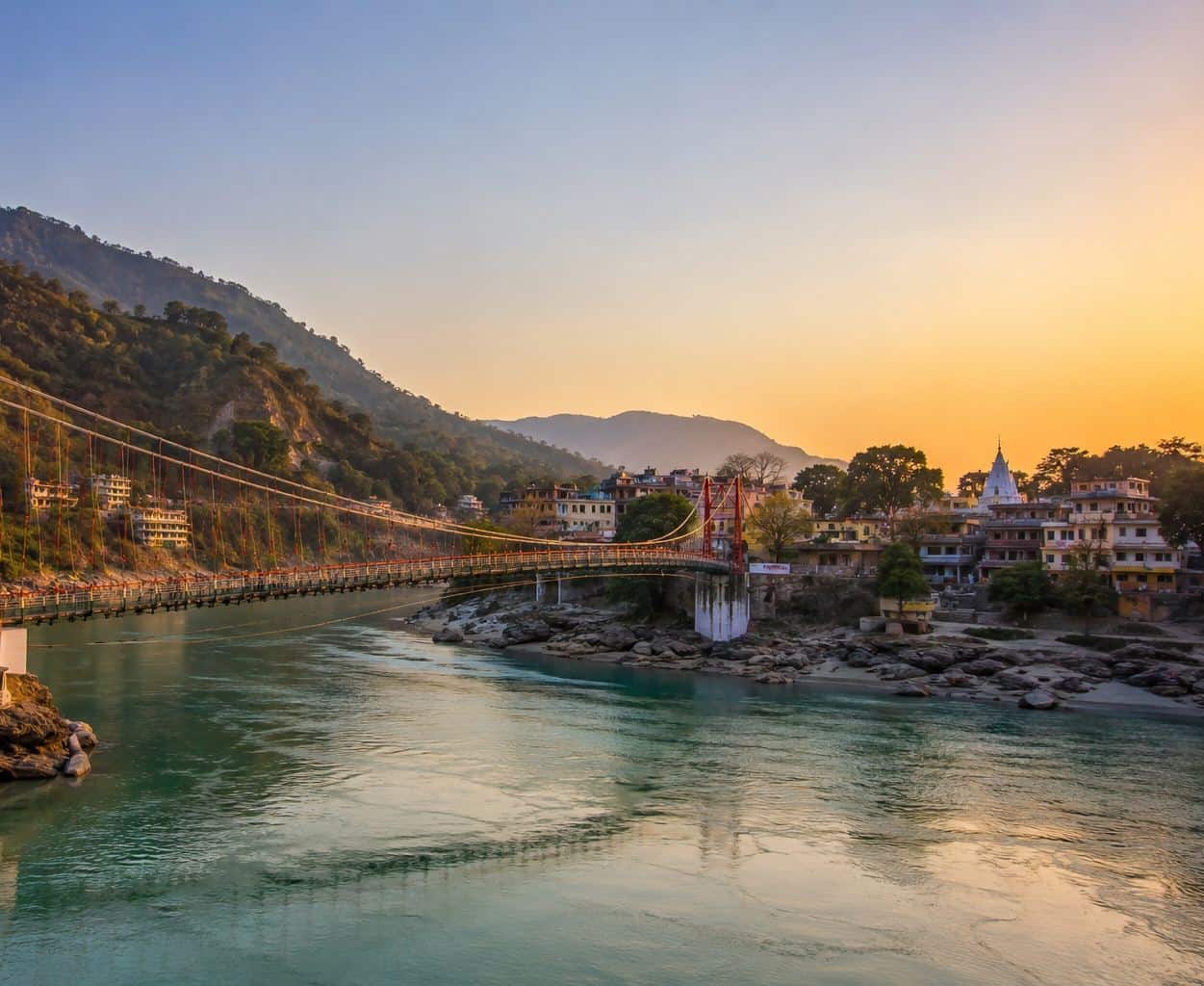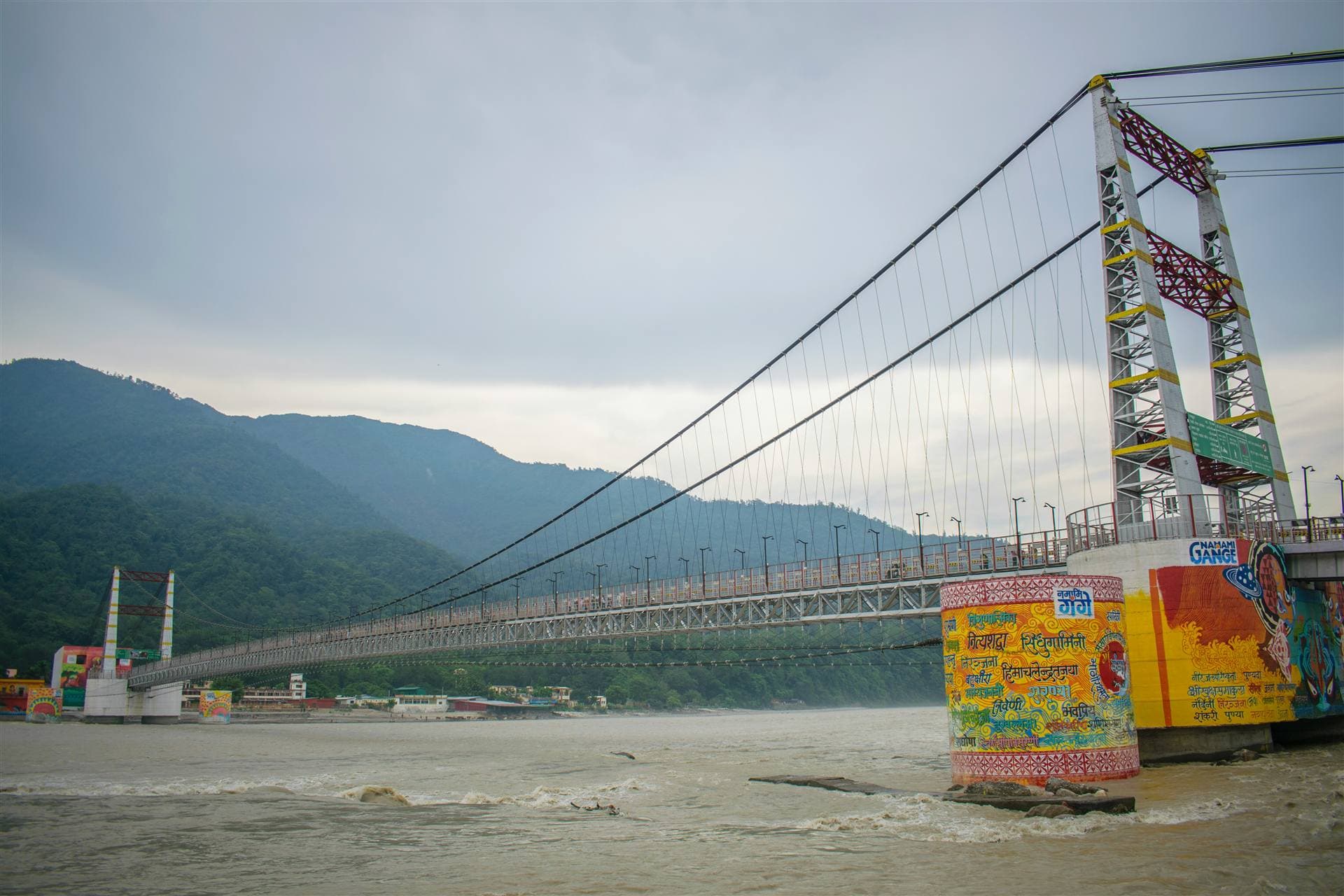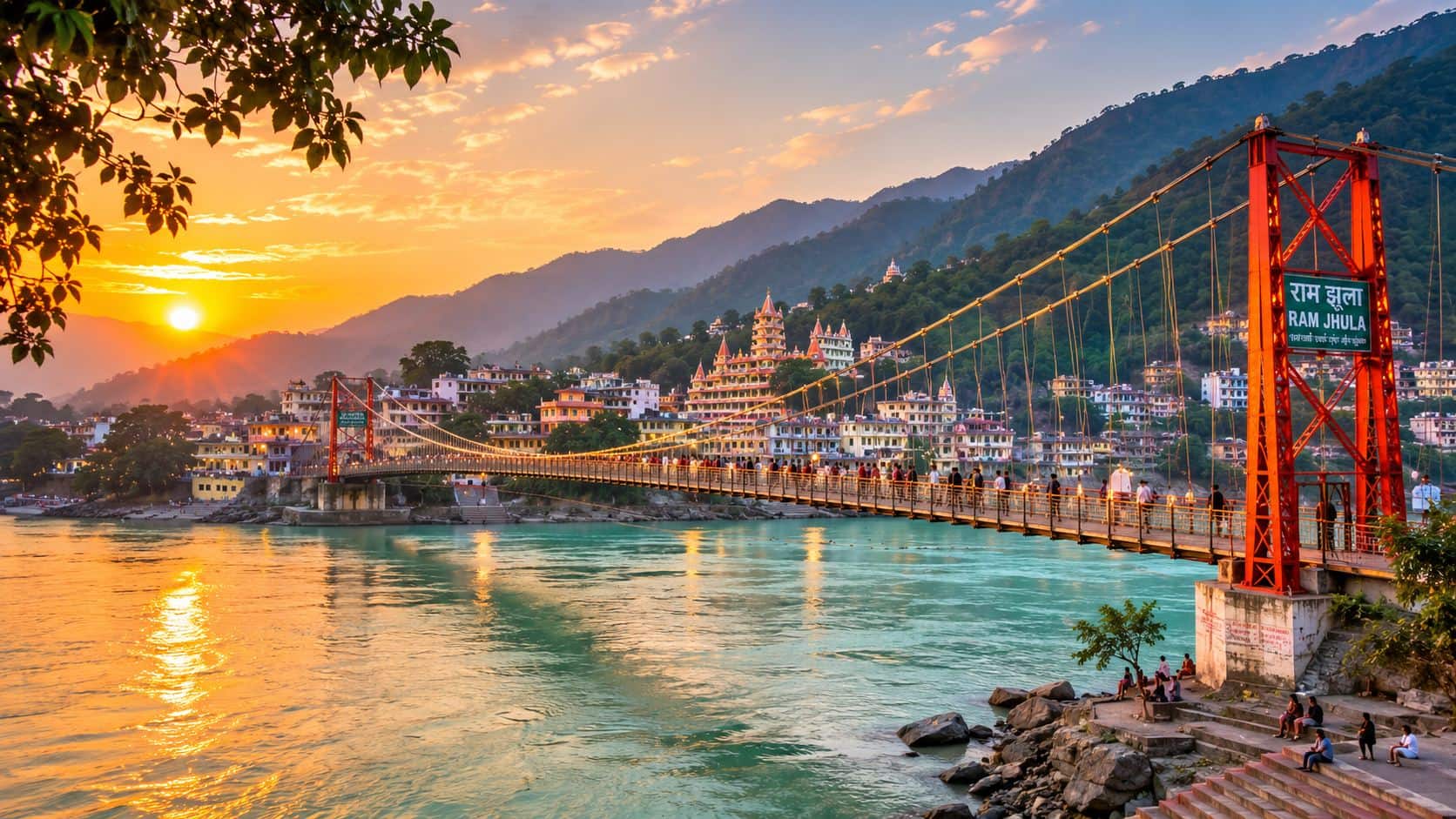
Cross Ram Jhula to the Swarg Ashram side late in the afternoon and you will notice that the crowd has a direction. Everybody is walking the same way. They are going to the ghat at Parmarth Niketan, where the largest and most elaborate Ganga aarti in Rishikesh happens every evening as the light goes.
The ashram, and the ghat in front of it
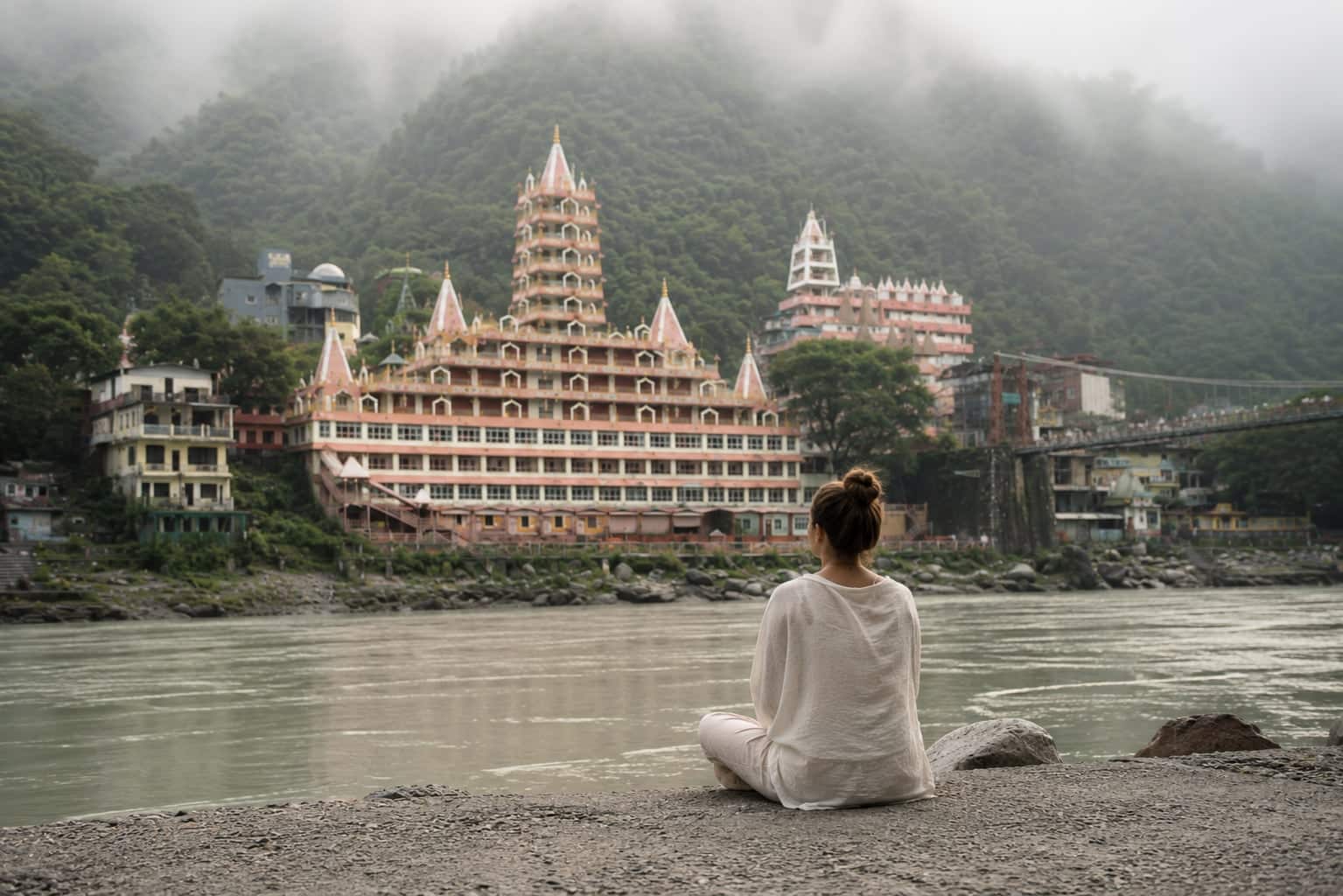
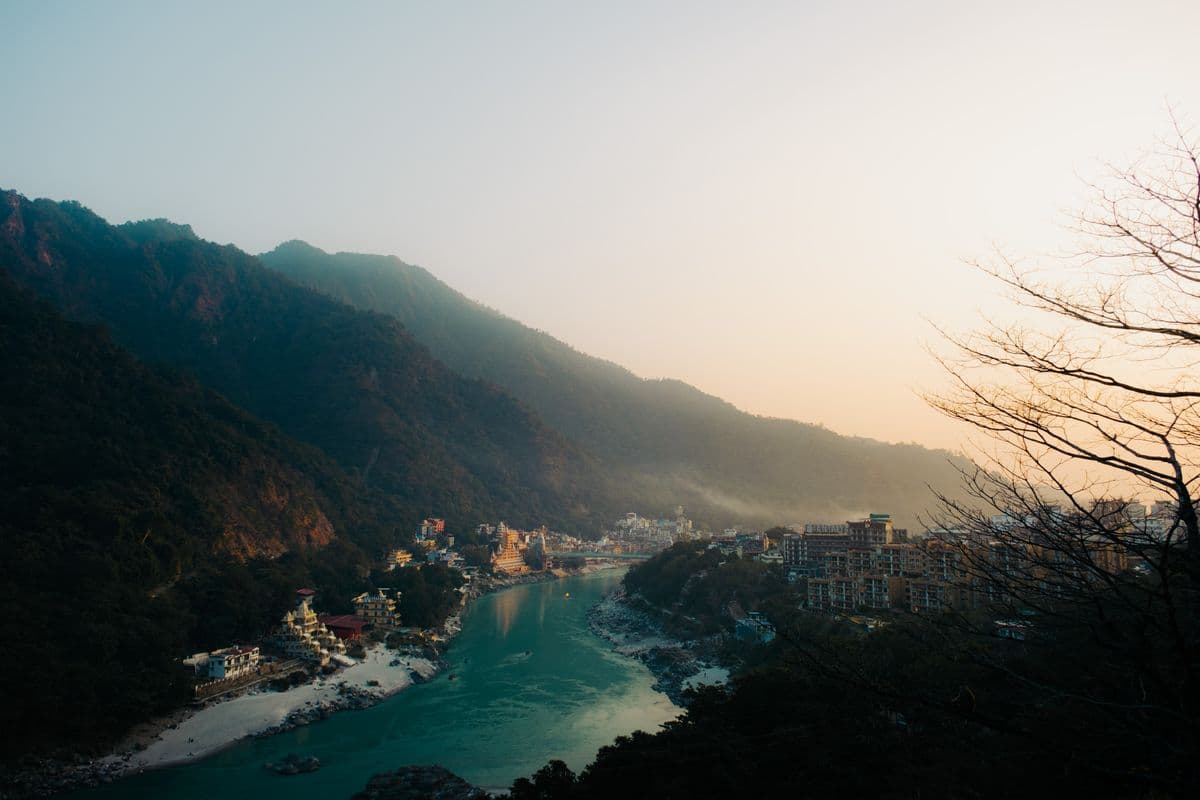
Parmarth Niketan is one of the largest ashrams in Rishikesh, sitting on the Swarg Ashram bank of the Ganga a short walk from the Ram Jhula footbridge. It is a working place rather than a monument — residents, students, visiting pilgrims, kitchens, courses, and young boys who live and study on site.
Most visitors only ever see one part of it: the wide flight of steps down to the water at the front, and the hour that happens there each evening. That is enough. That hour is what most people mean when they say the name at all. If you are working out the whole side of the river, our Ram Jhula and Swarg Ashram walking guide puts the ghat in context with the lanes and the market around it.
The Shiva statue in the river
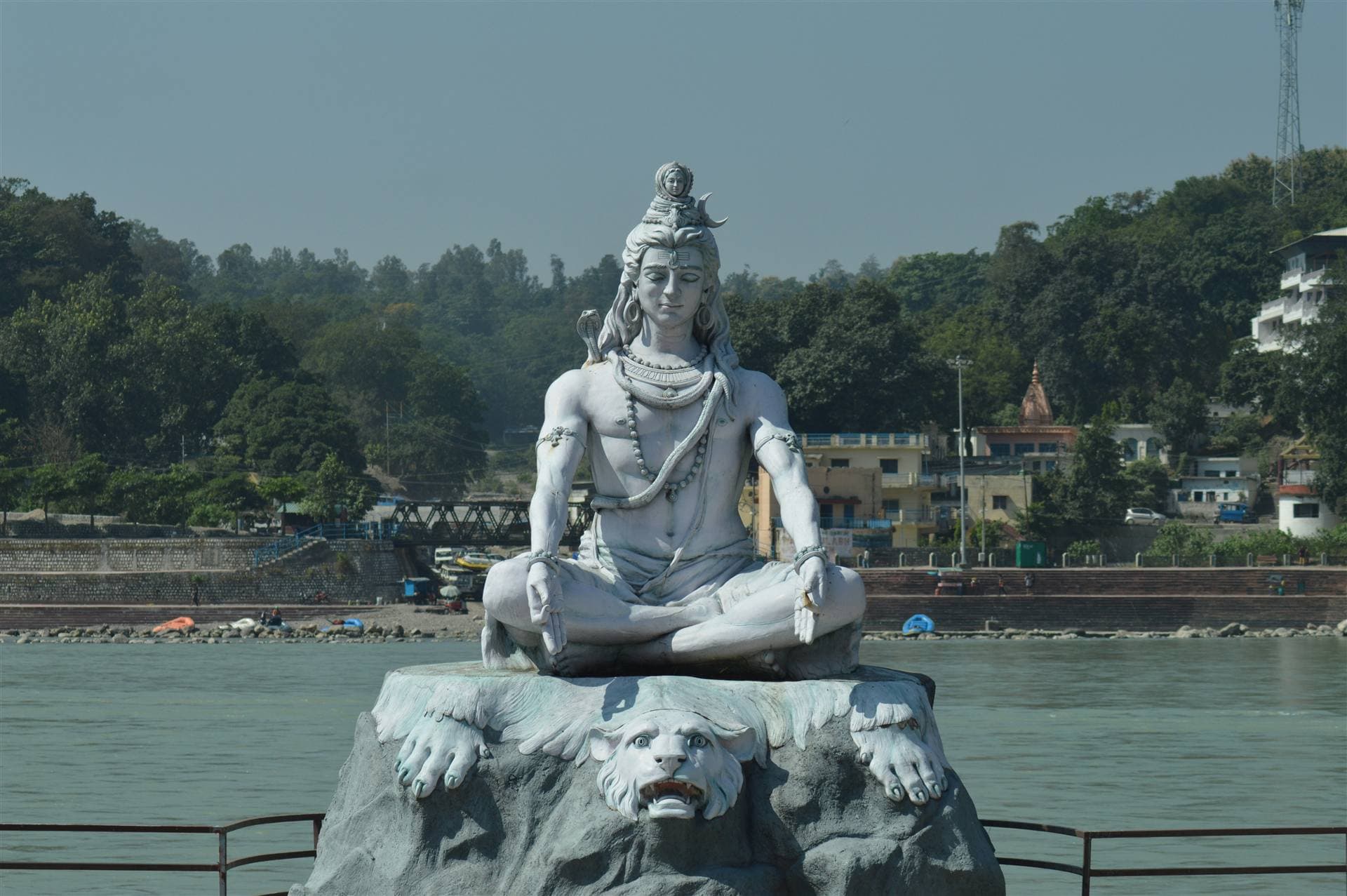
Before anything else, you will see the statue. A large seated Shiva sits out in the water in front of the ghat, just off the steps and in full view of them. When the river is low, rock shows around the base and you can see the whole of it. When the river is high, the water comes up around it and it looks like it is sitting in the current.
It is one of the images people carry away from Rishikesh, and it is the photograph almost everyone takes. Take yours early, in daylight, before you sit down. Once the ceremony starts you will not want to be moving around hunting an angle, and the light will have gone anyway.
What the ceremony actually involves
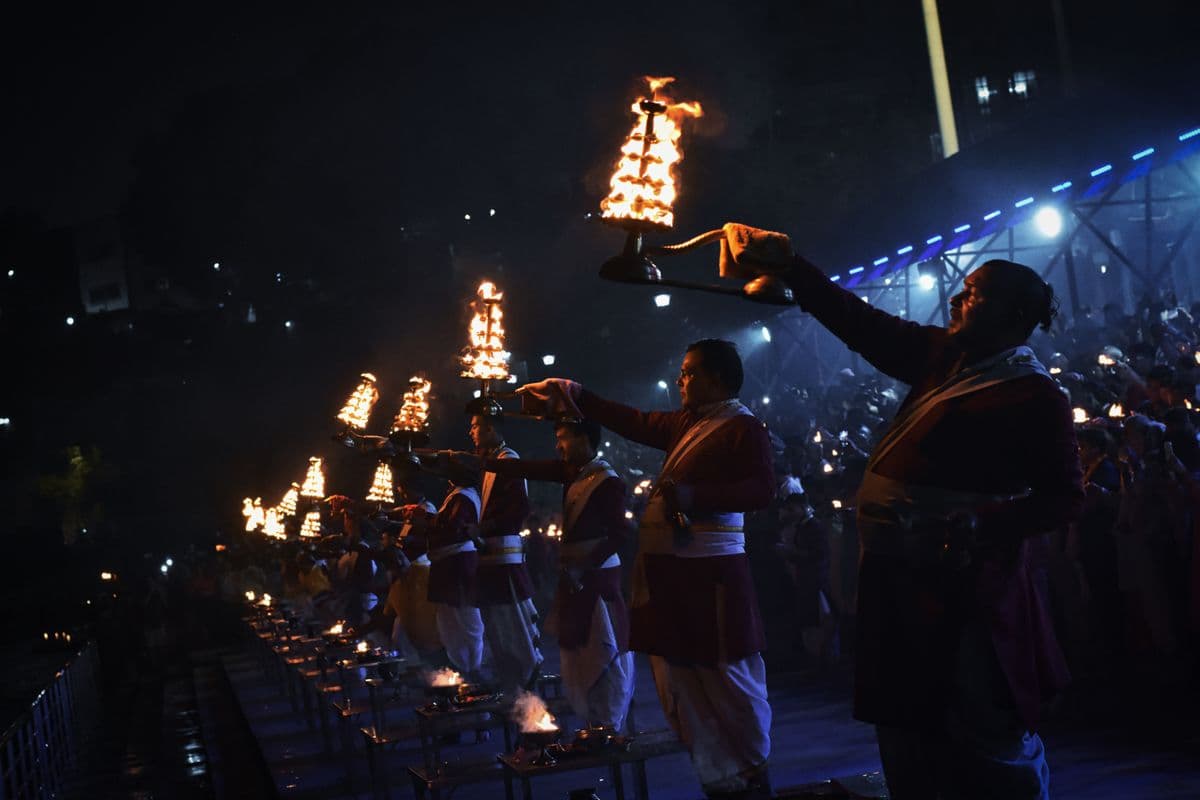
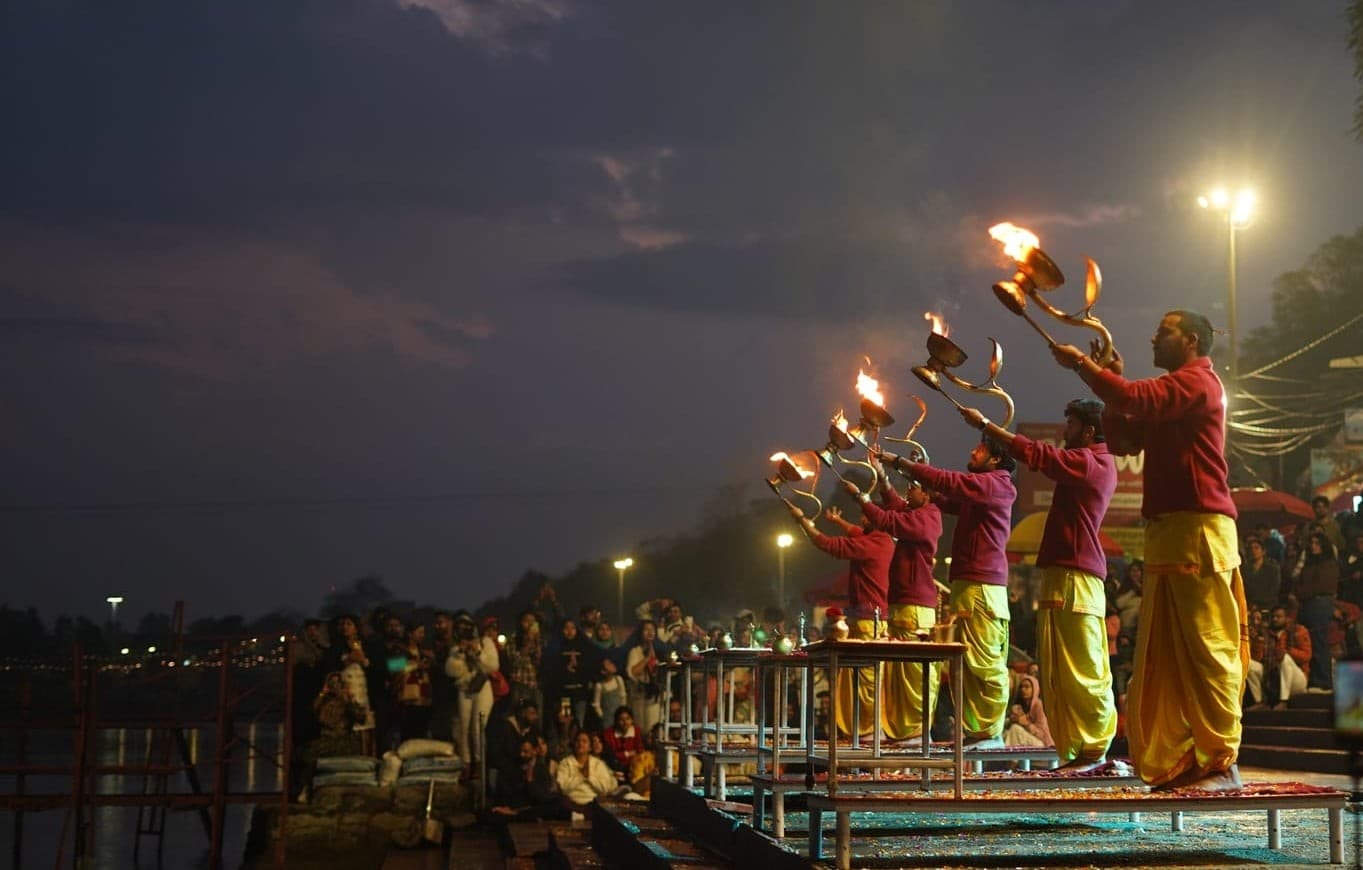
Ganga aarti is an offering of light to the river. At Parmarth it is done at scale and with real organisation, which is what separates it from the smaller aartis further up and down the bank.
Boys from the ashram sit in rows on the steps in robes and sing. A fire is lit at the centre. There is chanting, call-and-response and live music, and the crowd joins in on the lines it knows. Lamps are carried and circled towards the water, and people float small leaf boats with a flame and flowers in them, which drift off downstream in a thin line of light. On some evenings there is a talk or a satsang around it.
It is loud, crowded and genuinely moving, all at once. If you want the other version of the same idea — the small, unmanaged one — read morning vs evening Ganga aarti and our guide to Sai Ghat. Most guests end up wanting both.
This is Rishikesh performing its river, and doing it well. Go once with the crowd before you decide you prefer the quiet version.
Where to sit, and arriving early
The ceremony starts around sunset, so the hour shifts through the year — ask locally on the day rather than trusting a number you read online. What does not change is that the steps fill from the front, and they fill well before anything begins.
Low and central, close to the water, puts you inside it: the singing, the heat of the fire, the diyas going past at eye level. Higher up the steps you lose the detail but see the shape of the whole thing, and you can leave without climbing over anybody. Both are good. Choosing one before you arrive is what stops you standing at the back.
- Arrive: Well before the light starts to go. Late arrivals stand at the back and see very little.
- Wear: Shoulders and knees covered, and shoes you can slip off easily — you will leave them before the steps.
- Bring: A layer. The stone cools fast once the sun is off it and you will be sitting still for a while.
- Please skip: Standing up mid ceremony for photos, and anything plastic going into the river.
- Combine it with: The market lanes and the Bhootnath climb earlier the same afternoon, then walk down.
Leaving afterwards
The part nobody warns you about is the end. Everyone stands up at once, everyone collects their shoes at once, and the lanes back towards the bridge thicken for a while. It is not unpleasant, but it is slow, and if you are tired it can undo the hour you just had.
There are two decent answers. Sit on for a bit and let the steps empty around you — the ghat after the aarti is quieter than at almost any other hour, and the river gets the last word. Or stand up a few minutes early, take the outside edge, and walk back while the singing is still going. Either beats being carried along in the middle of it. Carry a small torch if you have one, keep your bag in front of you in the crush, and agree a meeting point with anyone you came with before you sit down, because finding each other on a dark, full ghat is harder than it sounds.
How this fits into a trip with us
On every Book My Rishikesh retreat — Reset, Restore and Rebirth — the Parmarth aarti is the second day’s evening. It lands at the end of the day that already takes you to the Beatles Ashram, Bhootnath Temple and the market, so you arrive on foot, unhurried, with time to find a step rather than jogging down from a taxi as the singing starts.
Your host walks down with you and knows where to sit. On the other evenings the aarti is at Sai Ghat instead, which is smaller and quieter, so across a retreat you see both versions rather than arguing with the internet about which one is better. The evening on our one-day First Hello package lands here too.