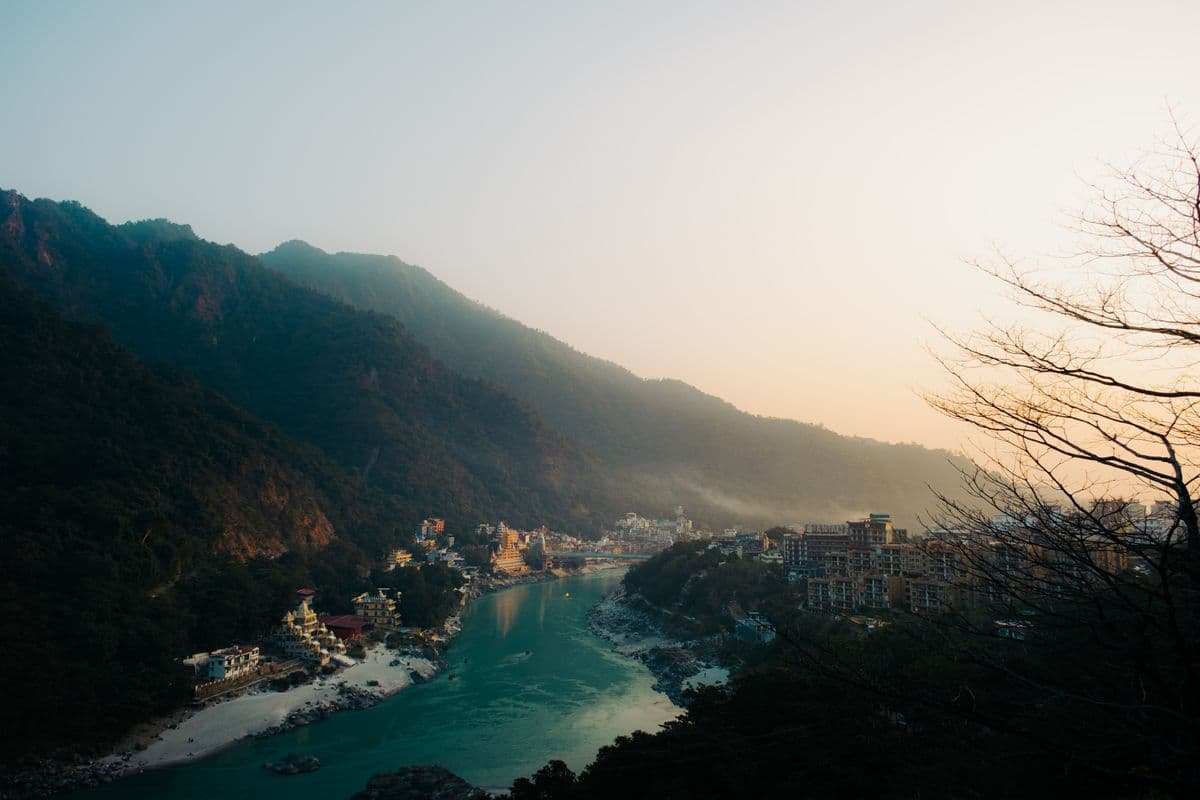
Most people on the Swarg Ashram side of Rishikesh look at the Ganga, the ghats and the big evening ceremonies. Very few look uphill. Bhootnath Temple is the payoff for doing exactly that: a Shiva shrine above Swarg Ashram, reached by a short but genuinely uphill walk. The temple is quiet. The reason to climb is the view.
What Bhootnath Temple actually is
A multi-storey Shiva shrine in the Swarg Ashram area, behind the Parmarth Niketan side of the river. Local and devotional accounts connect the site with a legend that Shiva rested here during the journey associated with his marriage procession. Treat that as temple tradition rather than settled history.
What you can verify as a visitor is the experience: the shrine is quieter than Rishikesh’s headline attractions, and climbing opens progressively wider views over the valley.
The climb: short, but do not call it flat
This is not a trek, and it is not a stroll either. From the Swarg Ashram lanes near Parmarth Niketan, allow roughly 15 to 20 minutes each way at an ordinary pace, depending on where you start, how warm it is, and how often you stop. Wear shoes with a little grip and carry water. It is far more pleasant early, or once the heat has started to drop.
The view is the point
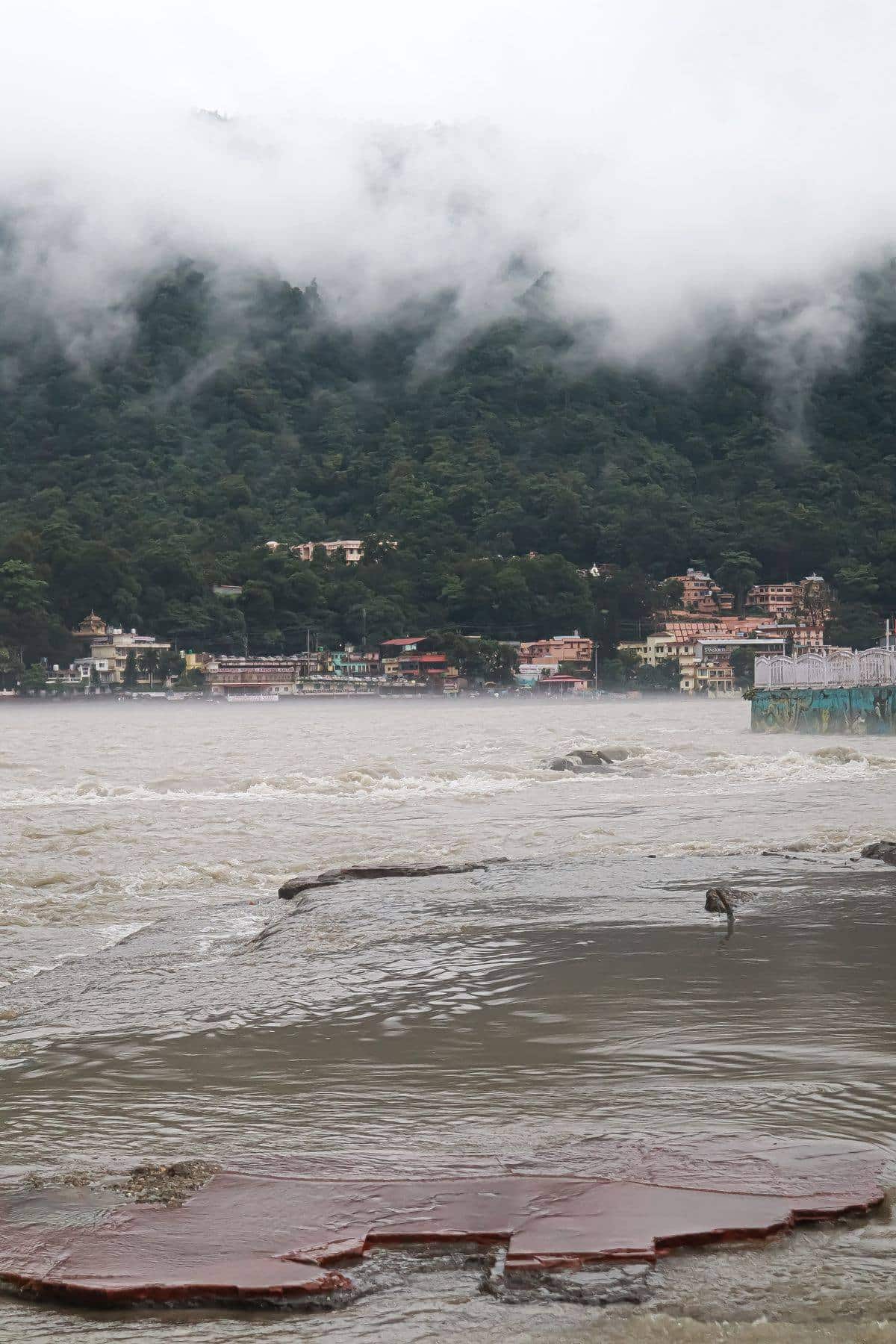
At the upper levels the temple becomes a viewing platform as much as a place of worship. Look down and you have the Ganga and the town. Look across and the hills frame the river. Depending on the level you are standing on, you can pick out the main river crossings and landmarks around Swarg Ashram and central Rishikesh.
That is why Bhootnath works so well in a short stay: a genuine change of elevation without committing half a day to a mountain excursion.
An hour, a few flights of stairs, and the whole town laid out underneath you.
Getting across the river
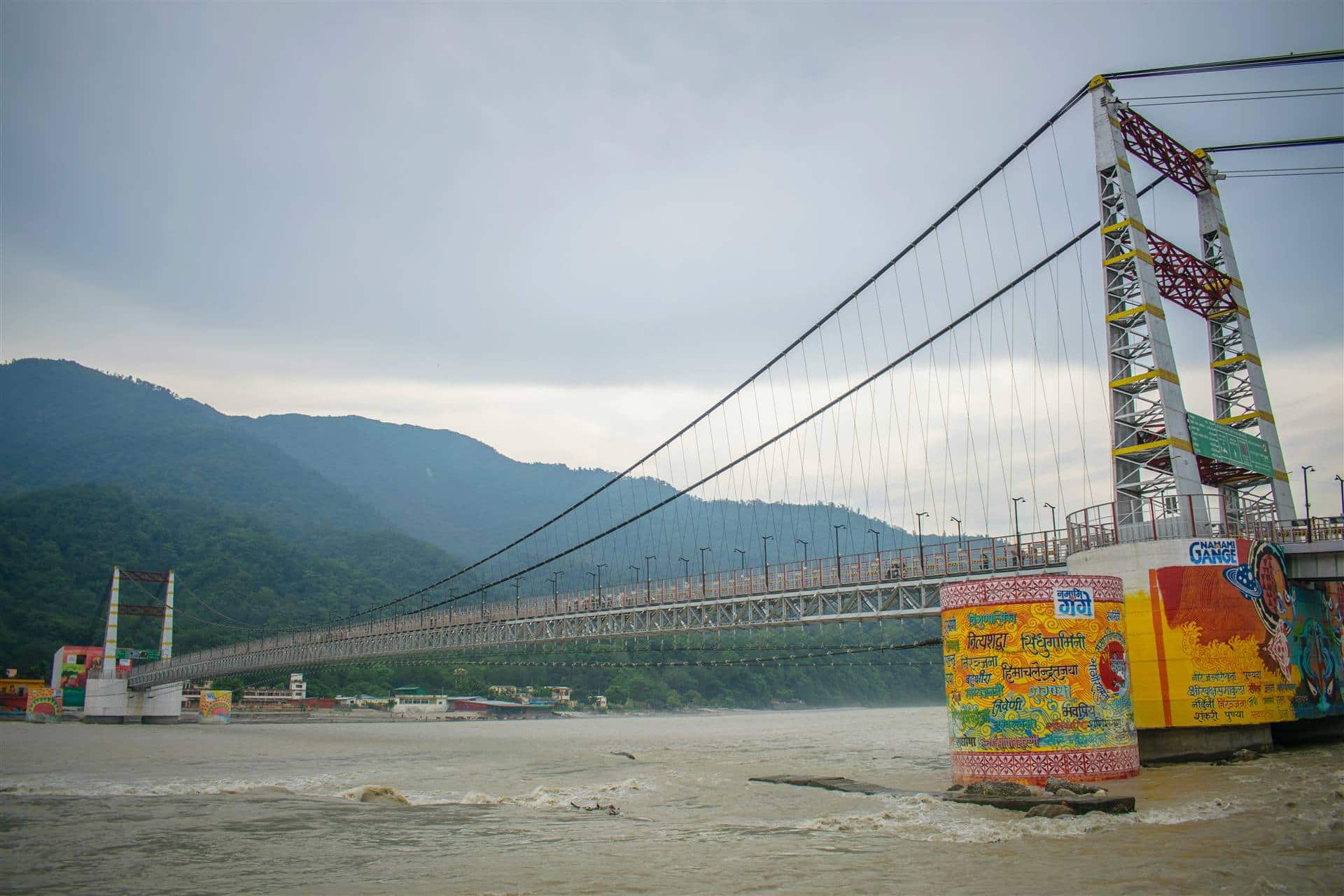
Ram Jhula and the old Laxman Jhula are both currently closed, Ram Jhula for repairs and Laxman Jhula replaced by the new Bajrang Setu glass bridge beside it. So the crossings to use are Bajrang Setu and Janki Setu, which carries people on foot and two-wheelers.
So park on your side if you are riding, cross at Janki Setu, and use the Swarg Ashram lanes as your reference point from there. Bridge arrangements in Rishikesh keep changing, so check locally before you rely on a particular crossing rather than after.
When to go
Early morning is the easiest choice for a cooler climb and a quieter shrine. Late afternoon is better for photographs, when the light in the valley softens. If you are hoping to stay for sunset, do not assume the temple stays open indefinitely after dark: arrangements vary, so check on the day and start back down with daylight left. Avoid the middle of a hot afternoon unless the climb genuinely does not bother you.
Before you go in
Bhootnath is a working shrine, not a viewpoint with a temple attached. People come here to pray. Keep the noise down, follow local instructions, and ask before photographing anyone who is praying.
Wear clothes that cover you properly. Shoulders and legs covered is the simple version, and it means you walk in as a guest rather than as a tourist. And if you can, shower before you go. In Indian homes this is ordinary rather than formal: you bathe before you visit a temple. It is less about being clean than about arriving fresh, having set the time aside for it. Nobody checks, and nobody minds if you have walked up in the heat. But if you are wondering how to show respect in a place whose customs are not yours, this is the thing that quietly counts.
Fitting it into your day
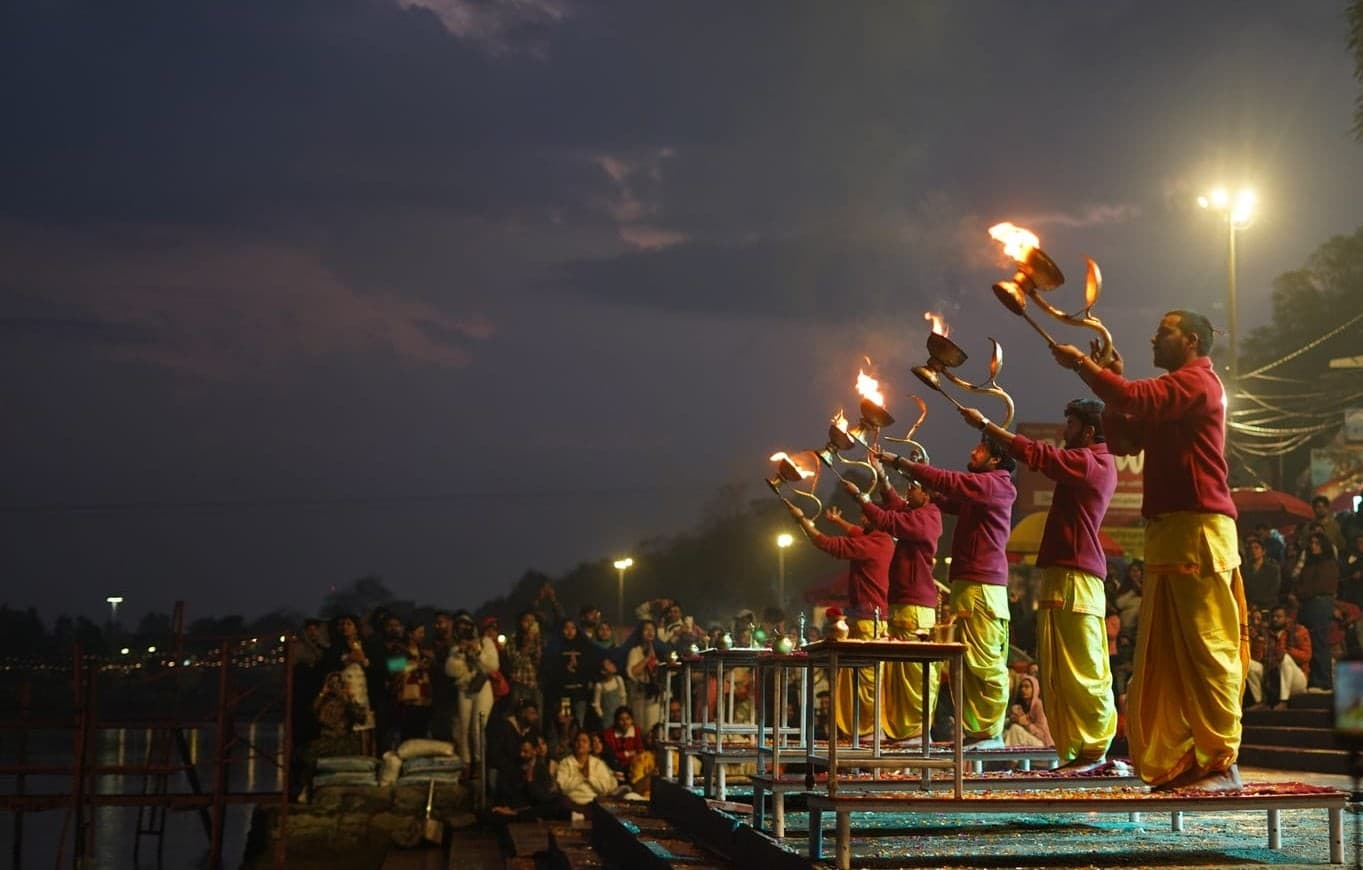
Bhootnath works well as part of a Swarg Ashram afternoon: the lanes, some quiet time around Parmarth Niketan, then the climb, then twenty or thirty minutes at the top rather than rushing straight back down. If you are staying for Parmarth Niketan’s Ganga Aarti, leave enough time to get down and reach the ghat before it fills.
It fits almost any length of stay, which is unusual. On one day it is the cheapest viewpoint you will find, an hour rather than a morning. Over two days it slots into the afternoon before the aarti, and over three you can do it twice, once in the morning light and once at dusk.
Who it suits, and who should skip it
Go if you:
- Want a good viewpoint without a full hill trek
- Are already spending time around Swarg Ashram
- Prefer a quiet shrine to a crowded attraction
- Are a photographer, blogger or content creator after a view nobody queues for
- Are drawn to temples themselves, not only what you can see from them
- Have 60 to 90 minutes spare
Skip it if stairs are uncomfortable, you are carrying luggage, the heat is serious and your time is short, or you mainly want a famous landmark you can photograph from the road.
Bhootnath or Kunjapuri?
They solve completely different problems. Bhootnath is a short local climb with a town-and-river payoff. Kunjapuri is an early-morning mountain outing that takes a far larger part of your day. One free hour, choose Bhootnath. One free morning and a wish for Himalayan views from much higher up, choose Kunjapuri.
How this works with us
Bhootnath sits inside the Swarg Ashram afternoon on First Hello. Your guide (host) walks you over Ram Jhula and starts you from the right Swarg Ashram lane, which is the part an old itinerary gets wrong, and times the climb so you are at the top with the light rather than after it.
Frequently asked questions
Where is Bhootnath Temple in Rishikesh?
It is a multi-storey Shiva shrine in the Swarg Ashram area, behind the Parmarth Niketan side of the river. You reach it by a short but genuinely uphill walk from the Swarg Ashram lanes.
How long is the walk up to Bhootnath Temple?
From the Swarg Ashram lanes near Parmarth Niketan, allow roughly 15 to 20 minutes each way at an ordinary pace, depending on where you start, how warm it is and how often you stop. It is uphill rather than flat, so wear shoes with a little grip and carry water.
What is the best time to visit Bhootnath Temple?
Early morning is the easiest choice for a cooler climb and a quieter shrine, while late afternoon is better for photographs when the valley light softens. Avoid the middle of a hot afternoon, and do not assume the temple stays open after dark, so start back down with daylight left.
How do I cross the river to reach Bhootnath Temple?
Ram Jhula and the old Laxman Jhula are both currently closed, so the crossings to use are Janki Setu, which carries pedestrians and two-wheelers, and the new Bajrang Setu glass bridge beside Laxman Jhula. If you are riding, cross at Janki Setu. Check locally before you set out, as the bridges here keep changing.
What should I wear to visit Bhootnath Temple?
It is a working shrine, so wear clothes that cover your shoulders and legs. Keep the noise down, follow local instructions and ask before photographing anyone who is praying.