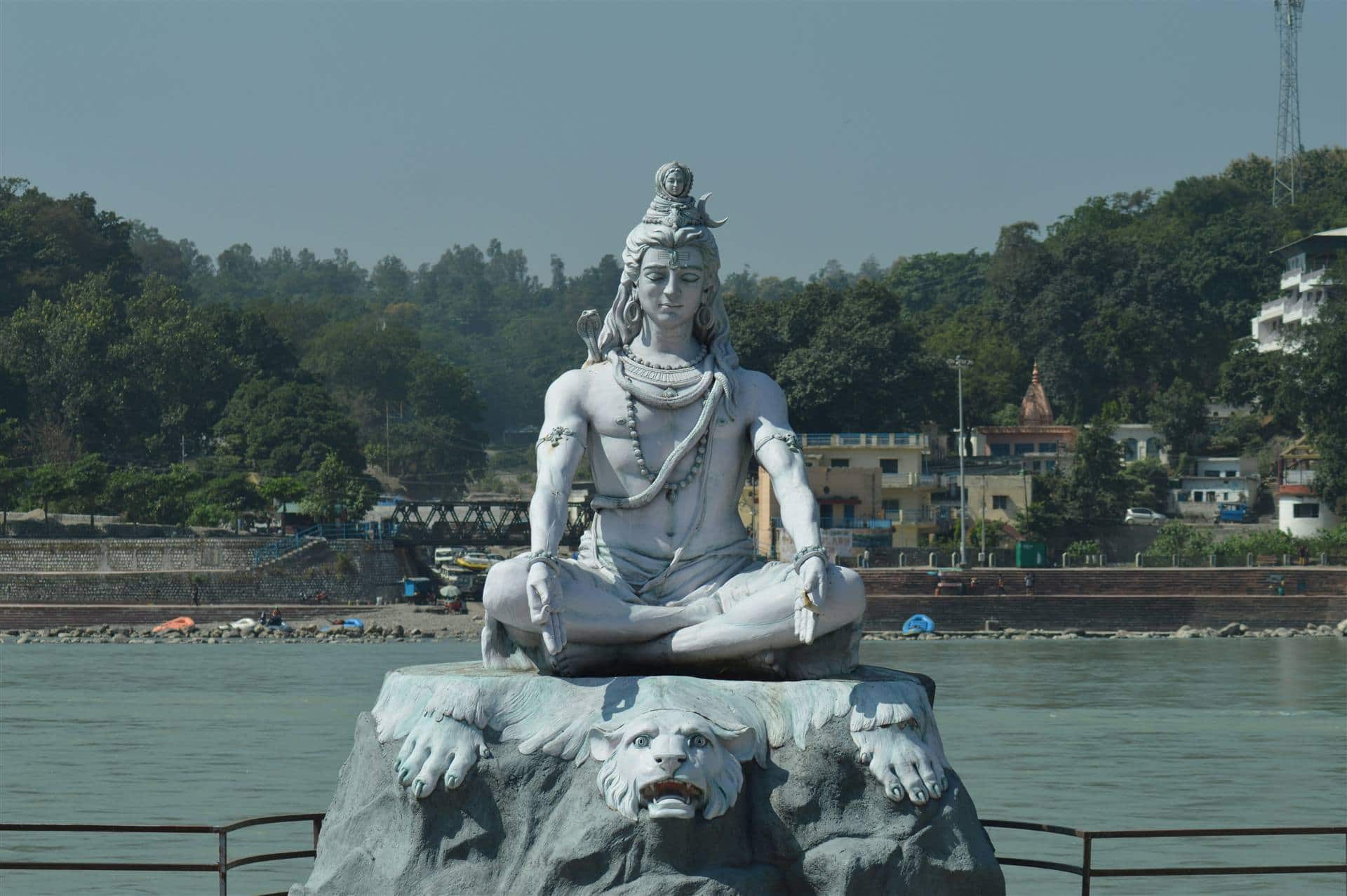
If Laxman Jhula is the postcard, Ram Jhula is the calmer side of the river. It sits a little downstream, and what matters is not the bridge but where it lands you: Swarg Ashram, a stretch of Rishikesh made of ashrams, temples, ghats, market lanes and a great deal of Ganga. Most visitors cross it, photograph it and carry on. This is an attempt to talk you out of that.
Ram Jhula is not the whole story
It is easy to file Ram Jhula as one more suspension bridge for the camera. That misses the interesting part. On the far side are the things that give Rishikesh its character: ashrams sitting right on the water, people arriving for prayer rather than for a view, shops selling puja items to the people who actually use them, old temple buildings, long quiet stretches of river, and the evening aarti at Parmarth Niketan.
Uttarakhand Tourism describes Swargashram as a cluster of ashrams on the eastern bank of the Ganga, many of them offering yoga and spiritual study. That is the honest description. This is the side of the river where you are meant to slow down.
Crossing, while Ram Jhula is closed
One practical thing before you set off: Ram Jhula is currently closed for repairs, so you cannot cross it right now. The crossing to use is Janki Setu, which carries both pedestrians and two-wheelers and lands you close to the Swarg Ashram side. The old Laxman Jhula is also closed now, replaced by the new Bajrang Setu glass bridge beside it. Check locally before you set out, as the bridges here keep changing.
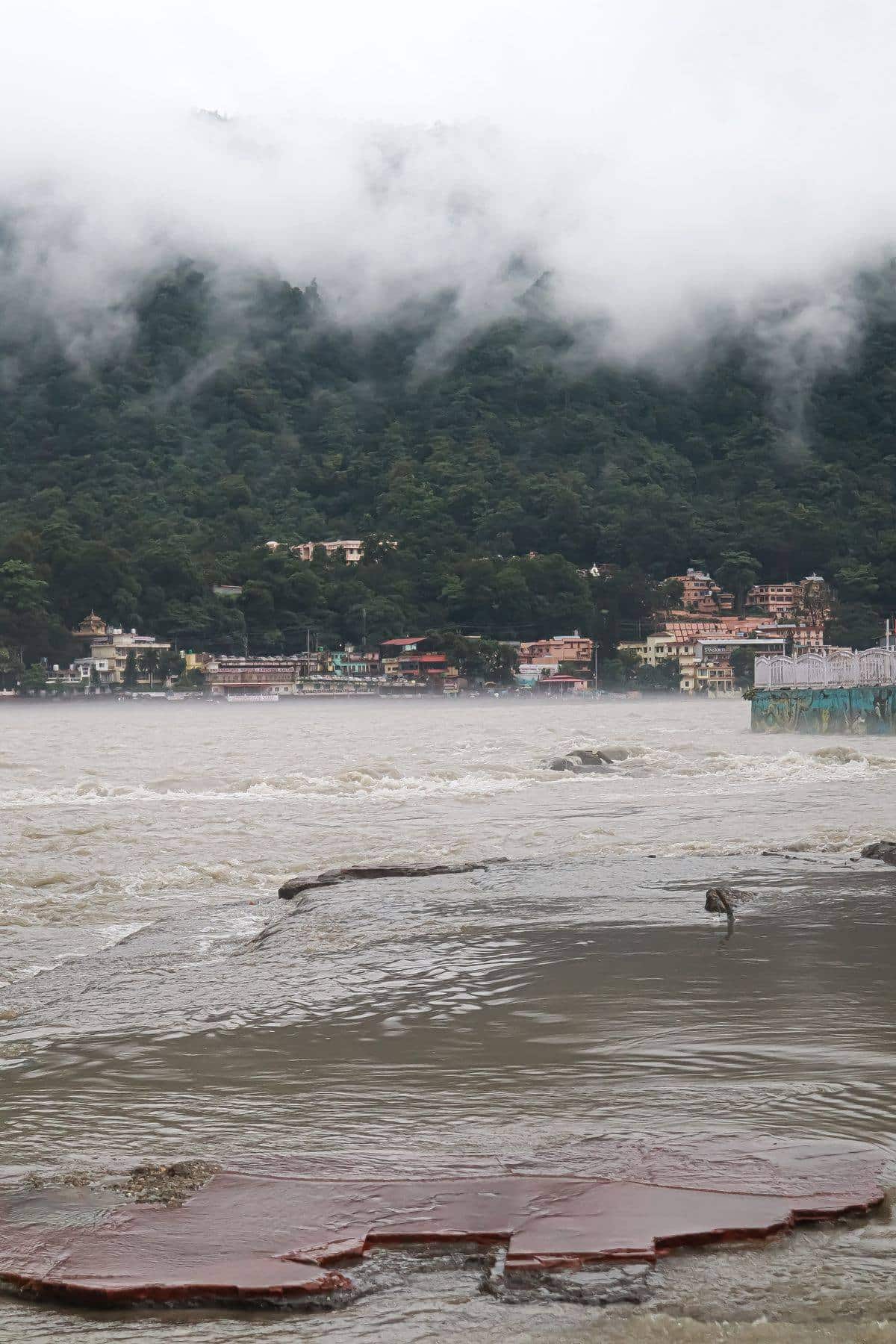
When it reopens, Ram Jhula itself is a pleasure to cross: the Ganga is wide and green underneath, pilgrims and porters pass each other on foot, and the far bank is stacked with ashram rooftops. The pace drops within a few steps of the far side.
The near bank is worth a minute too. The Muni Ki Reti road up to the bridge runs straight past the gates of Sivananda Ashram, home of the Divine Life Society, which almost everybody walks by without looking up. It is a working institution rather than a stop on a checklist, so if you go in, go in quietly.
Swarg Ashram is not Tapovan
Tapovan is cafes, yoga schools, guesthouses and people on month three of a long trip. Swarg Ashram feels devotional instead. People are heading to temples, sitting beside the river, going to ashram programmes, moving through the market because they have somewhere particular to be. It is not silent and it is not untouched. It simply runs at a slower rhythm, and that rhythm is the reason to walk it rather than drive past.
The market lanes
Do not arrive with a shopping list. Just walk. The lanes carry the familiar Rishikesh mix: rudraksha malas, spiritual books, puja items, shawls, handicrafts, and chai in small glasses. Some shops are aimed squarely at visitors. Others are plainly for the people who live and study here. The interesting part is usually not what you buy, it is what you pass on the way to buying it.
Swarg Ashram is the side of the river where Rishikesh stops performing and simply carries on with its evening.
Parmarth Niketan, and the evening aarti
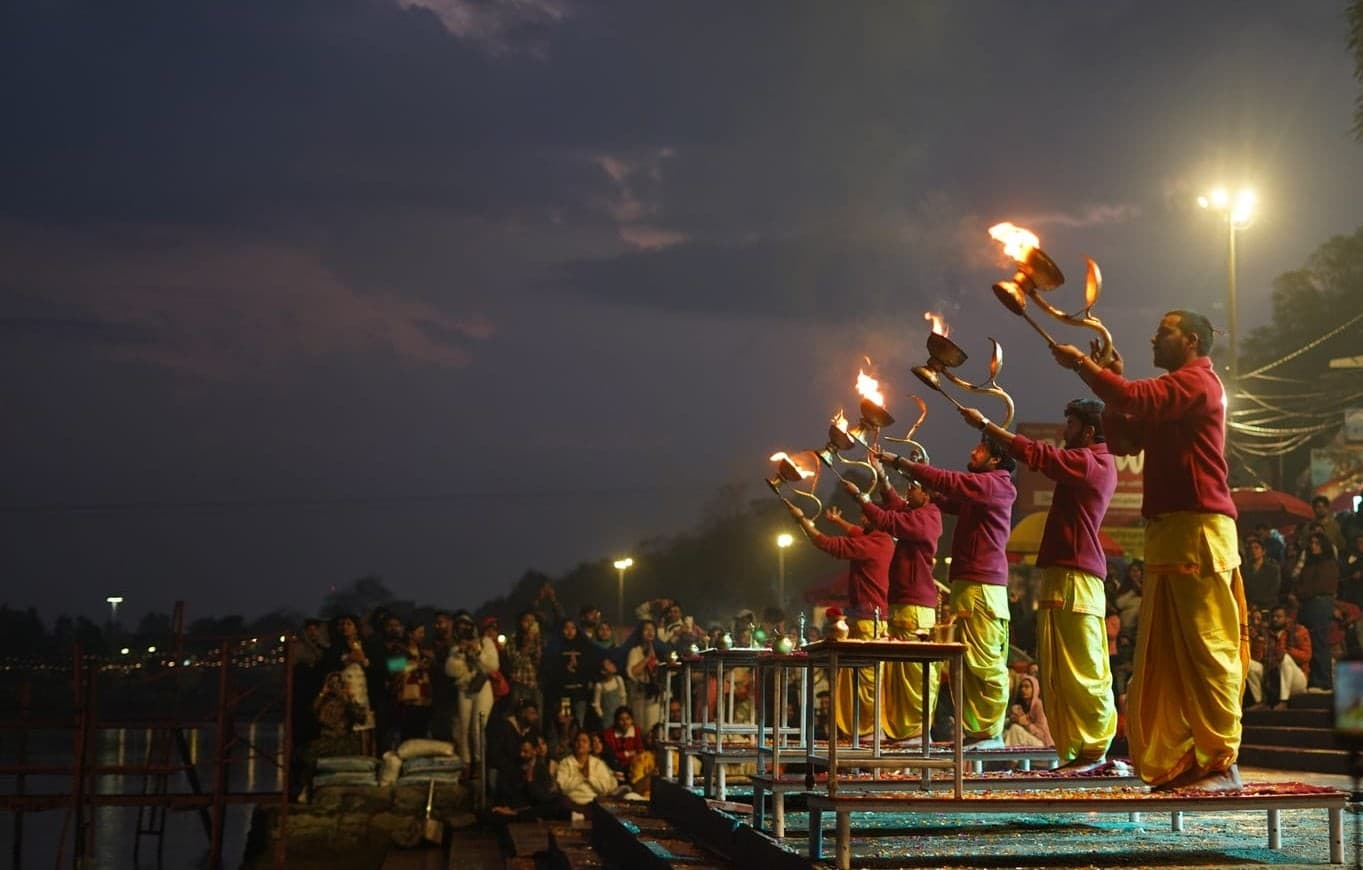
Parmarth Niketan sits directly on the Ganga and anchors this whole side of the river. You are welcome to walk the riverside area, the gardens and the ghats, but keep hold of the fact that it is a working ashram rather than an attraction with a ticket office. Keep your voice down near the spiritual spaces, follow whatever instructions are in place on the day, and do not assume a ceremony was arranged for visitors.
If you have time for only one thing on this bank, make it the evening Ganga aarti at the Parmarth ghats. It happens at sunset, so the hour moves through the year. Come early enough to find a step and watch the river for a while before anything begins, then stay to the last verse. Getting the photograph is not the point of being there.
If you are choosing between ceremonies, our guide to morning vs evening Ganga aarti sets out what is actually different. On our own retreats you see both: the Parmarth ceremony on the evenings your itinerary already has you at Beatles Ashram or Bhootnath, and the smaller Sai Ghat aarti with your guide (host) on every other evening.
The Bhootnath climb
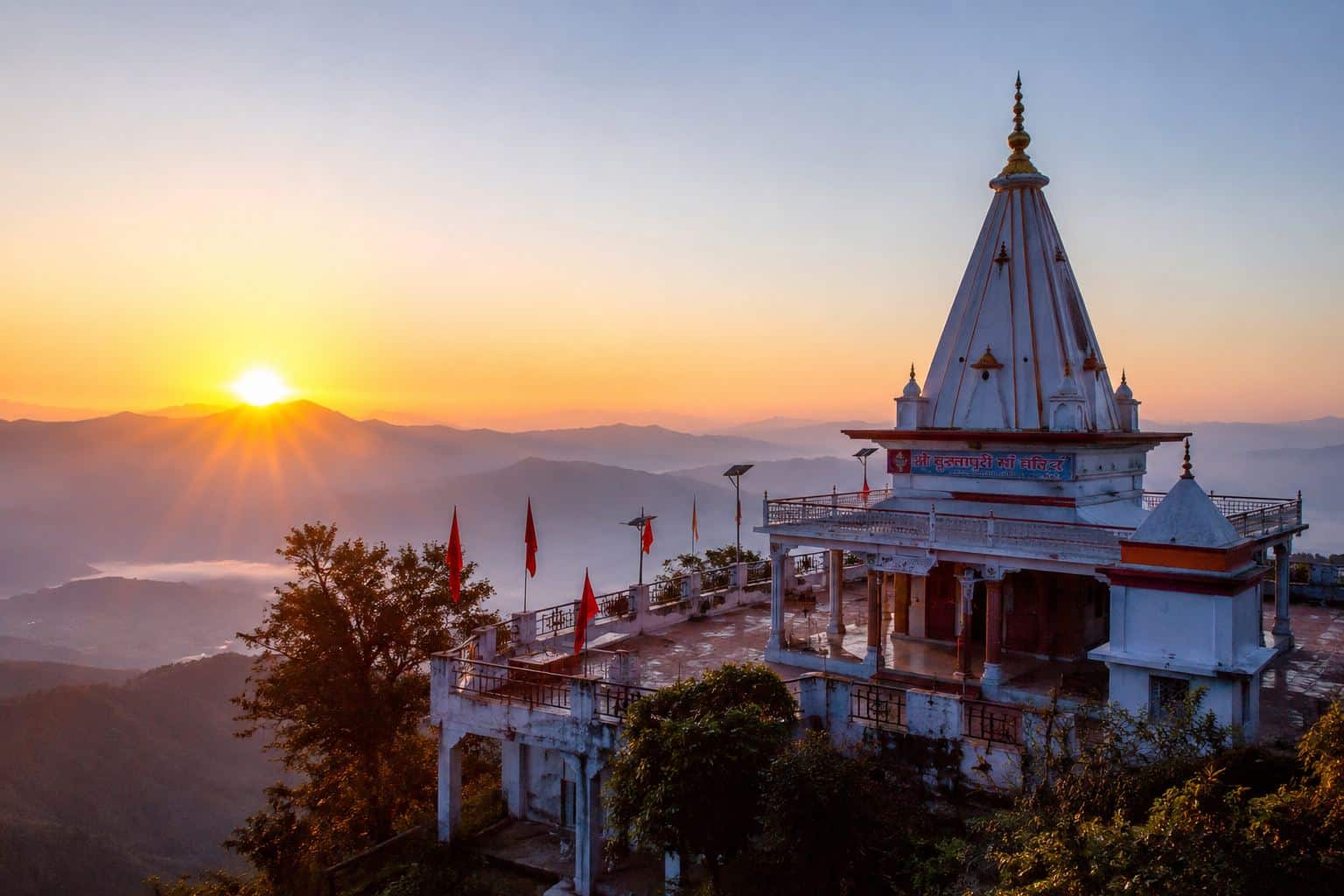
Above Swarg Ashram rises Bhootnath Temple, a multi-storey Shiva temple reached by a short climb through the trees. Short, but noticeably uphill, which is exactly why it works after an hour of flat walking by the water.
Each floor opens onto a wider view, and from the top the geography of Rishikesh finally makes sense: how the river divides the town, where the bridges land, how the ghats and ashrams sit against the hills. If you like a viewpoint but do not want to lose half a day driving into the hills, this is the best effort-to-reward walk in central Rishikesh. It is quietest in the late morning.
Sitting still counts as a plan
The best part of Swarg Ashram is sometimes doing nothing at all. Find a quieter stretch of ghat, sit down, and watch the current go by. Bells somewhere behind you, voices, traffic far off on the other bank. This is one of the few places in Rishikesh where sitting beside the Ganga is the activity rather than the gap between two activities.
What time of day to come
- Early morning. Best for quiet. The river is calmer, the lanes are emptier, and the spiritual character of the place is much easier to notice before the day’s visitors arrive.
- Late afternoon. Best overall. Walk the market, spend time near the river, wander the ashram area, then move towards Parmarth for sunset.
- Midday. Fine for temples, lunch and a slow look around. Less pleasant for a long walk in the hot months.
A good three hour loop
If you have about three hours, do not try to see everything. Start in the market lanes, drift down to the ghats, give Parmarth a proper visit, climb Bhootnath if your legs are willing, then come back to the river for sunset and the aarti.
How much room you give it depends on how long you have. On a single day in Rishikesh this side of the river more or less is the day, and it is better than trying to bolt two more places onto it. Over two days it slots in as one unhurried afternoon that runs into the evening. And over three you can walk it once early for the quiet and come back another evening for the aarti, which is the version we would choose.
That loop is woven into every Explore Rishikesh package, and the one-day First Hello package ends with exactly this aarti evening. Your guide (host) handles the timing so you just walk, look, and sit down at the right ghat at the right hour.
Who this side of the river suits
Come here if you like ashrams, ghats and slow walking. It suits:
- First-time visitors to Rishikesh
- Photographers, bloggers and content creators
- Anyone drawn to temples, spiritual and cultural places
- Yoga and wellness travellers already staying nearby
- Anyone who wants the evening aarti at full scale
- Anyone happy to spend an hour sitting beside the Ganga doing nothing
You can give it less time if your trip is almost entirely rafting, bungee and the rest of the adventure list. But on a first trip to Rishikesh it is still worth making room for, because it shows you a version of the town that Tapovan does not.
One thing to remember
This is a neighbourhood of working temples and ashrams, and Bhootnath at the top of the climb is a temple long before it is a viewpoint. People come to these places to pray. So behave like a visitor to a place of worship rather than someone arriving at a photo spot: keep the noise down, follow local instructions, and ask before photographing anyone at prayer.
Wear clothes that cover you properly. Shoulders and legs covered is the simple version. It costs you nothing and it means you walk in as a guest rather than as a tourist.
And if you can, shower before you go. In Indian homes this is ordinary rather than formal: you bathe before you visit a temple. It is less about being clean than about arriving fresh, having set that part of the day aside for it. Nobody will check, and nobody minds if you have travelled a long way. But if you are wondering how to show respect in a place whose customs are not yours, this is the thing that quietly counts.
The mistake to avoid
Do not treat Ram Jhula and Swarg Ashram as two separate stops on a list. They are one experience. The bridge is the landmark and the neighbourhood is the reason to stay. Walk slowly, stay for sunset, and give this side of the river enough time.
Frequently asked questions
Is Ram Jhula open, and how do I cross to Swarg Ashram?
Ram Jhula is currently closed for repairs, so you cannot cross it right now. Use Janki Setu instead, which carries both pedestrians and two-wheelers and lands you close to the Swarg Ashram side. The old Laxman Jhula is also closed, replaced by the new Bajrang Setu glass bridge beside it. Check locally before you set out, as the bridges here keep changing.
What is on the Swarg Ashram side of Ram Jhula?
Ram Jhula lands you at Swarg Ashram, a stretch of Rishikesh made of ashrams sitting on the water, temples, ghats, market lanes and the evening aarti at Parmarth Niketan. It feels devotional rather than the cafe-and-yoga-school rhythm of Tapovan, and it is the side to slow down on.
What is the best time to visit Ram Jhula and Swarg Ashram?
Early morning is best for quiet, with a calmer river and emptier lanes. Late afternoon is best overall: walk the market, spend time by the river, then move towards Parmarth for sunset. Midday is fine for temples and lunch but less pleasant for a long walk in the hot months.
What is there to do on the Swarg Ashram side?
With about three hours, start in the market lanes, drift down to the ghats, give Parmarth a proper visit, climb Bhootnath Temple if your legs are willing, then come back to the river for sunset and the aarti. If you have time for only one thing, make it the evening Ganga aarti.
What should I wear around Ram Jhula and Swarg Ashram?
It is a neighbourhood of working temples and ashrams, so cover your shoulders and legs, keep the noise down near spiritual spaces and ask before photographing anyone at prayer. At Parmarth, treat it as a working ashram rather than an attraction with a ticket office.