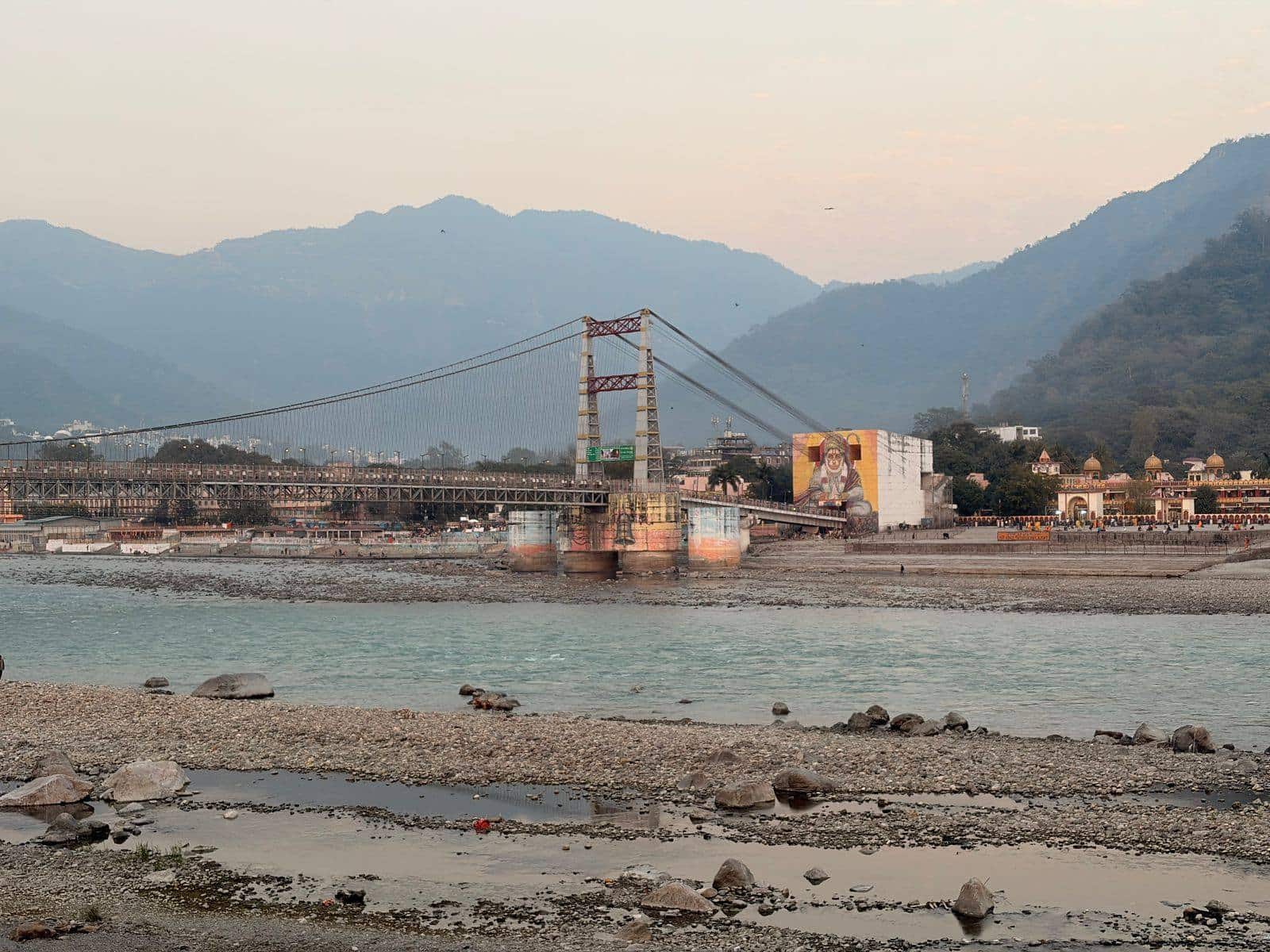
Almost every photograph of Rishikesh has Laxman Jhula somewhere in it: the iron suspension bridge strung across the Ganga, temples rising on the far bank, the green of Tapovan above. The original bridge is now closed, with a new glass bridge called Bajrang Setu built right beside it to carry people across, but the neighbourhood is the real reason to come. Treat this as a place rather than a single landmark and you have one of the best free half days in town.
The name, and the bridge under your feet
The name comes from Lakshmana, brother of Lord Rama, who by tradition crossed the river at this exact point on a bridge of jute rope. The iron suspension bridge that made the crossing famous went up in the 1920s, and the lanes around it grew into the traveller heart of Rishikesh: Tera Manzil standing thirteen storeys on the far bank, the ghats below, and a slow unending procession of pilgrims, sadhus, cows, shopkeepers and backpackers.
The deck moves a little under you as you walk. Everybody notices it on the first crossing, and nobody stops.
There are two Laxman Jhulas
Early morning is the quiet one. The shops are only beginning to open, the lanes are calm and the river takes the softer light. You pass people walking to the temples, yoga students carrying mats, locals starting an ordinary day. Come now if what you want is photographs, or your own thoughts.
Late afternoon into sunset is the lively one, and it is just as good. The cafes fill up, pilgrims move through in groups, the water goes warm and gold, and the whole place feels like somewhere people live rather than somewhere people visit. This is the version that tells you what Rishikesh actually is.
The middle of the day works, but it is not the hour for a long walk in the open. Give the hottest part to lunch and shade, then start again when the temperature drops.
Crossing, while the old bridge is closed
The original Laxman Jhula is now closed, and the new Bajrang Setu glass bridge, built right beside it, is the crossing in use. Ram Jhula downstream is closed for repairs too, so the other working crossing is Janki Setu, which carries people on foot and two-wheelers. If you are riding, Janki Setu is the one for you. Check locally before you set off, as the bridges here keep changing.
How to walk it properly
Do not arrive, take one photograph and leave. Start at the approach on your own side and give yourself a couple of hours you have no plan for. Look at the old bridge from the bank, then cross the river on the new Bajrang Setu beside it. Then follow the lanes behind the temples wherever they go, stop when something is worth stopping for, sit down somewhere for a coffee, and carry on rather than turning back.
The pleasure is in the change of pace. One minute you are at a famous landmark with fifty other people photographing it. Two minutes later you are past a tiny shrine, a shop stringing prayer beads, a yoga school with its windows open, somebody sitting alone by the water with nowhere to be. That mixture is what you came for, and it is in none of the photographs of the bridge.
Tera Manzil, the temple you can see from the deck
The tall thirteen-storey temple on the far bank is the most recognisable building here, and it is worth your time even if temples are not the reason you came to India. Each floor carries its own shrines, and the higher levels give you the bridge, the river and the hills in one view.
If you go inside, go in as a visitor to a place of worship rather than to another viewpoint. Wear clothes that cover you properly. Shoulders and legs covered is the simple version. Leave your shoes where everyone else leaves theirs, keep your voice down, and ask before photographing anybody at prayer.
And if you can, shower before you go. In Indian homes this is ordinary rather than formal: you bathe before you visit a temple. It is less about being clean than about arriving fresh, having set the morning aside for it. Nobody will check, and nobody minds if you have been walking all day. But if you are wondering how to show respect in a place whose customs are not yours, this is the thing that quietly counts.
Cafés within a short walk
The lanes around Laxman Jhula hold some of the best cafes in Rishikesh. Freedom Cafe hangs right over the river. Secret Garden hides down a garden lane and customizes food for whoever walks in. Tulsi was built by hand from reclaimed materials, and Prakriti is so full of plants it feels like a greenhouse. We wrote a full guide to them in the best cafés in Rishikesh, and every one of them works as a rest stop on this walk. The best of them are not really about the food anyway. They are about having somewhere to sit and watch the river go past for an hour.
Laxman Jhula is not a sight you tick off. It is the front door to the whole Tapovan side of Rishikesh.
How it connects to Tapovan
Tapovan, the neighbourhood rising directly above the bridge, is where most yoga schools, guesthouses and long-stay travellers live, and it is where our own guests stay. Before you even cross, the sand at Sai Ghat is a short walk along your own bank, tucked into Lower Tapovan, and worth interrupting the walk for on the way down. From there, drop to the bridge, cross to the temple side, and follow the river path south along the market lanes toward Ram Jhula. That one stretch, bridge to bridge along the Ganga, is the single best introduction to Rishikesh on foot, and it costs nothing. The newer bridge at the far end gives you a quieter way back across to Tapovan. That loop is how a visit to a bridge turns into half a day without needing a second attraction. Walk, eat, sit beside the Ganga, browse the lanes, head back when you feel like it. You do not have to fill every hour.
What is actually worth doing here
- See the bridge from the bank first, then from the middle of it
- Walk the lanes behind the temples, which is where the character lives
- Tera Manzil, from outside at the very least
- One riverside cafe, for as long as you like
- Carry on up into Tapovan instead of turning round at the bridge
Who it suits, and how long you need
Almost anybody here for the first time. It works particularly well for:
- First-time visitors to Rishikesh
- Photographers, bloggers and content creators
- Couples
- Solo travellers, because it is busy and easy to read
- Anyone drawn to temples and spiritual life
- Cafe and food people
- Anybody staying in Tapovan, since it is your neighbourhood bridge
Skip it only if your days are very short and pointed at one specific thing, rafting or a mountain temple. On a single day in Rishikesh an hour here at the right end of the afternoon still earns its place, because it sits on the way to nearly everything else. Over two days it becomes the unhurried afternoon the rest of the trip hangs on, and over three you can come once early and once late and see both versions of the same lanes.
And be sensible about the river
The Ganga looks calm from parts of the bank and it is not. The flow near the bridge is faster than it appears, and it changes with the season and with rain falling somewhere upstream that you cannot see. Do not treat the water here as a swimming spot simply because other people are sitting close to it. If you want to bathe, use a proper ghat with steps and a chain to hold, and stay out of it altogether when the river is running high.
Walking it with a guide (host)
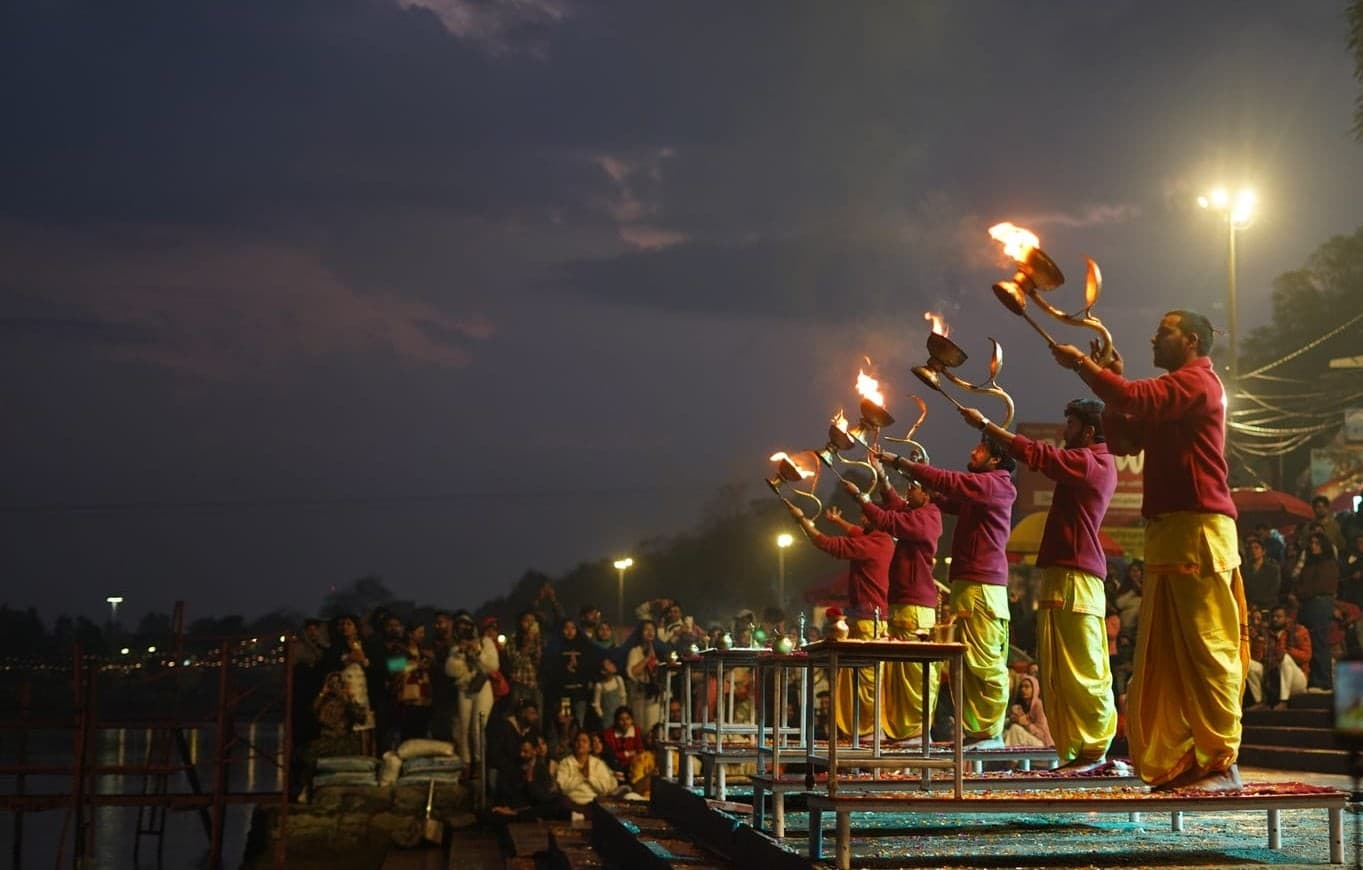
Every Explore Rishikesh package is based in Tapovan, so Laxman Jhula is effectively your neighbourhood bridge for the whole trip. On the Find Your Flow package, the slower second day is made for exactly this walk: bridge, river path, café, and back before the evening Ganga aarti. Your guide (host) points you down the right lanes, tells you which hour to go, and then gets out of the way.
Frequently asked questions
Is Laxman Jhula bridge open?
The original Laxman Jhula bridge is now closed. In its place, a new glass bridge called Bajrang Setu has been built right beside it and is the crossing in use here. Ram Jhula downstream is also closed for repairs, so the other working crossing is Janki Setu, which carries people on foot and two-wheelers. Check locally before you set out, as the bridges here keep changing.
What is the best time to visit Laxman Jhula?
Early morning is the quiet one, with the shops only beginning to open and softer light on the river, good for photographs or your own thoughts. Late afternoon into sunset is the lively one, when the cafes fill and the water goes warm and gold. The middle of the day is not the hour for a long walk in the open.
What is the temple you can see from Laxman Jhula?
That is Tera Manzil, the tall thirteen-storey temple on the far bank. Each floor carries its own shrines, and the higher levels give you the bridge, the river and the hills in one view. If you go inside, cover your shoulders and legs, leave your shoes where everyone else does, and keep your voice down.
Can you swim in the Ganga at Laxman Jhula?
No, do not treat the water here as a swimming spot just because other people are sitting close to it. The flow near the bridge is faster than it appears and changes with the season and with rain upstream. If you want to bathe, use a proper ghat with steps and a chain to hold, and stay out when the river is running high.
What is there to do around Laxman Jhula?
Treat it as a neighbourhood rather than a landmark: see the old bridge from the bank, cross the river on the new Bajrang Setu glass bridge beside it, walk the lanes behind the temples, visit Tera Manzil, sit at one riverside cafe, and carry on up into Tapovan instead of turning round. The riverside walk along the Ganga is the best free introduction to Rishikesh on foot.