Search for a hidden waterfall in Rishikesh and you will find plenty of places described as secret. Most of them are not secret any more. The one worth knowing about is different: you reach the first waterfall, see the people gathered around it, and assume you have arrived. Most visitors stop there. But the path continues.
The waterfall beyond the first falls
This is the whole local secret: the first waterfall is not the destination. Most people arrive, take photographs, sit near the water and turn back. The more interesting part starts afterwards.
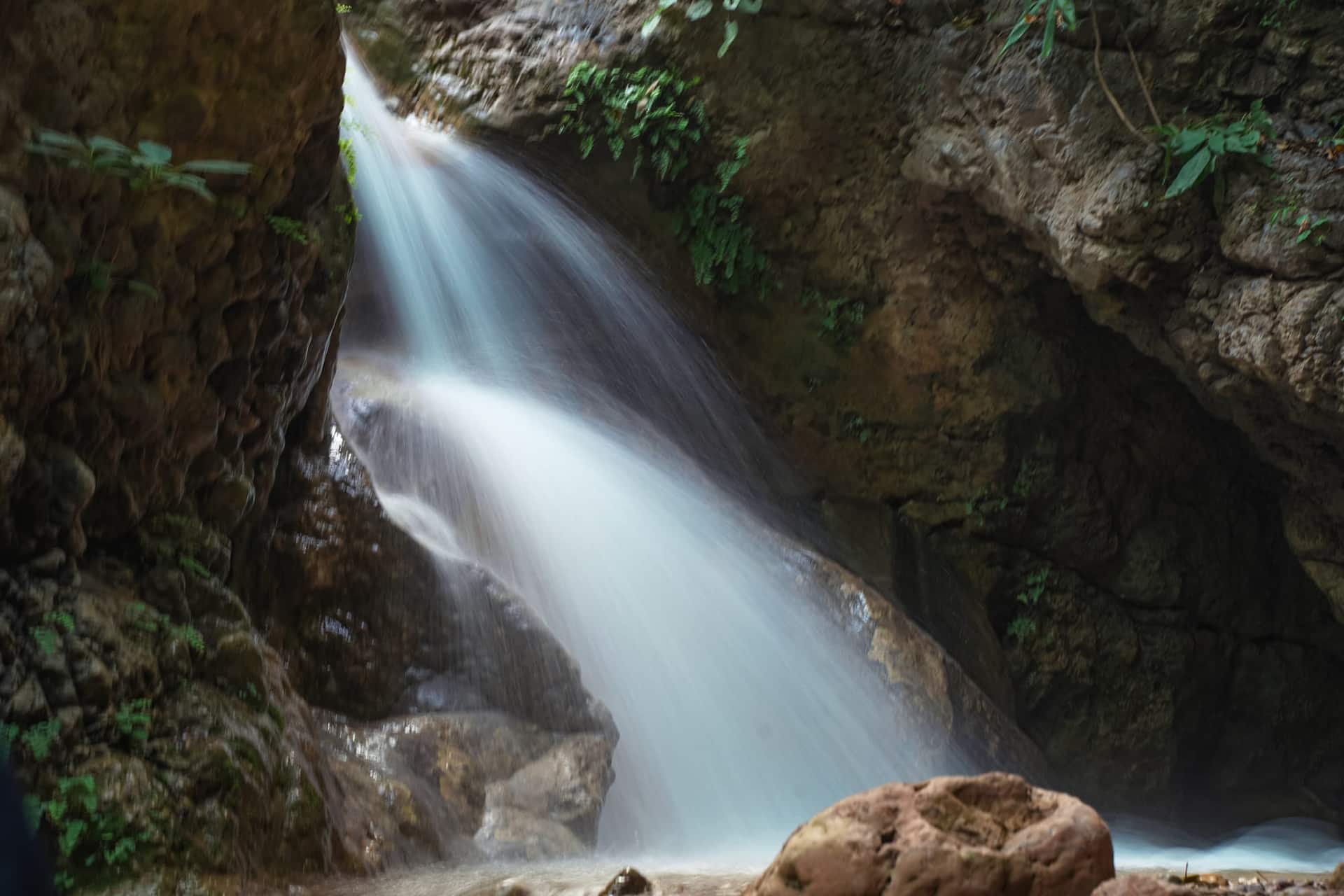
Cross the first fall, climb past the upper section and keep going through the forest. The trail becomes less obvious and more uneven. The surroundings get quieter, the sound of water gets stronger, and eventually you reach the third fall. It is not necessarily huge, and that is not what makes it special. What makes it special is reaching a place most people did not bother to walk to. If you would rather stick to the established walk up to the upper pools, our Neer Garh Waterfall guide covers that gentler route and the guided morning hike.
What makes it different
The atmosphere. There are no rows of stalls around the pool and nobody trying to sell you anything. The forest closes in around the trail, the rocks become part of the route, and the water is the main sound. It feels less like a sightseeing stop and more like a small adventure. That is probably why people remember it: not because it is the biggest waterfall near Rishikesh, but because you had to find it.
The secret is not a location. It is knowing that the first waterfall is not where the walk ends.
The walk is part of it
Do not think of this as a stroll from a car park to a viewpoint. The section beyond the first waterfall is a proper scramble in places. You step over rocks, climb uneven sections and cross wet ground, and the path can feel slippery depending on recent rain.
Which is why footwear matters. Wear shoes with good grip. Sandals are comfortable around town and are not the right choice here. Take your time, especially on wet rock. The point is not to arrive quickly.
Can you swim?
If conditions suit, the natural pool is tempting, particularly on a warm day. But a waterfall pool is not a swimming pool. Flow changes after rain, rocks are slippery and underwater surfaces are not always visible. Check the conditions before getting in and follow local advice. If you do go in, bring a change of clothes. You will be glad of them on the way back.
The best time to go
The waterfall runs for much of the year, but the character of the place changes with the season. Post-monsoon, roughly September to November, is especially good: the forest is green and the flow is strong. In the wetter months the trail is much more slippery. That does not mean you cannot go. It means you treat the walk with more care and allow extra time. Weather changes quickly in the hills, so do not assume a route will feel the way it did last time.
What to bring, and what to wear
You do not need a bag full of equipment. Keep it simple:
- Shoes with grip
- Water
- A change of clothes
- A small towel if you plan to get in
- Your phone or camera in something that handles splashes
- A little cash for a roadside chai on the way back
Wear something you do not mind getting wet or muddy, light and breathable in warm weather, and nothing that makes walking awkward. Leave good jewellery behind. You are going into a forest, not a cafe, and the less you have to worry about the more you enjoy the walk.
Who it suits, and who should skip it
It is a good morning for:
- Anyone comfortable on uneven ground who is happy to take their time
- Photographers, bloggers and content creators, for a place that is not on every feed
- Couples and small groups who would rather walk than queue
- Anyone who wants a morning that is not a temple or a ghat
Skip it if you want an easy, flat nature walk. The scramble is awkward in places and the ground gets slippery after rain. Young children need close supervision, and anyone uneasy on rocks may prefer a gentler waterfall walk. It is always better to turn around than to force a section that does not feel safe.
A named alternative: Patna Waterfall
If the idea appeals but you would rather follow a recognised trail, Patna Waterfall is the other option near Rishikesh, reached along the Neelkanth road with a forest walk of its own. It is easier to plan around because it is a known destination rather than a quiet fall reached by continuing past the obvious stopping point. The secret waterfall is about finding the quieter place. Patna is about following an established route. Both are worth a morning, depending on the kind of day you want.
How it fits into your days here
A waterfall trip does not need a whole day. Start in the morning, walk through the forest, sit by the water, and be back before the heat. On a single day in Rishikesh it competes with the ghats and usually loses, so pick one. Over two days it is the obvious morning for the day you are not by the river, and over three you can wait for the clearest morning and go then. One day temples and ghats, the next wet rocks in the forest: that change is part of what makes a trip here interesting.
Do not expect a tourist attraction
The secret waterfall is not polished. There may be no sign telling you where to stand, and there is certainly no cafe at the end. The trail is rough. That is exactly why it feels different: you are not arriving somewhere prepared for visitors, you are walking into a quieter part of the landscape. For some people that makes it far better. For others it is a lot of effort for a small waterfall. Both reactions are fair, and the point is knowing which one you are.
How this works with us
Your guide (host) knows where the path leaves the obvious route, which is the part that is genuinely hard to work out alone, and whether the rock is worth attempting after the last few days of rain. It is a morning on Live Like a Local and an easy add-on to any trip with a spare one.
Frequently asked questions
Where is the secret waterfall near Rishikesh?
The local secret is not a location but knowing that the first waterfall is not the destination. You cross the first fall, climb past the upper section and keep walking through the forest until you reach the third fall, which most visitors never bother to walk to.
Is the hidden waterfall walk difficult?
The section beyond the first waterfall is a proper scramble in places. You step over rocks, climb uneven sections and cross wet ground, and the path can feel slippery depending on recent rain, so wear shoes with good grip and take your time.
Can you swim at the waterfall?
If conditions suit, the natural pool is tempting on a warm day, but a waterfall pool is not a swimming pool. Flow changes after rain, rocks are slippery and underwater surfaces are not always visible, so check the conditions, follow local advice and bring a change of clothes.
What is the best time to visit the waterfall?
The waterfall runs for much of the year, but post-monsoon, roughly September to November, is especially good, with a green forest and strong flow. In the wetter months the trail is much more slippery, so allow extra time and treat the walk with more care.
What should I bring to the waterfall?
Keep it simple: shoes with grip, water, a change of clothes, a small towel if you plan to get in, your phone or camera in something that handles splashes, and a little cash for a roadside chai on the way back. Wear something you do not mind getting wet or muddy and leave good jewellery behind.