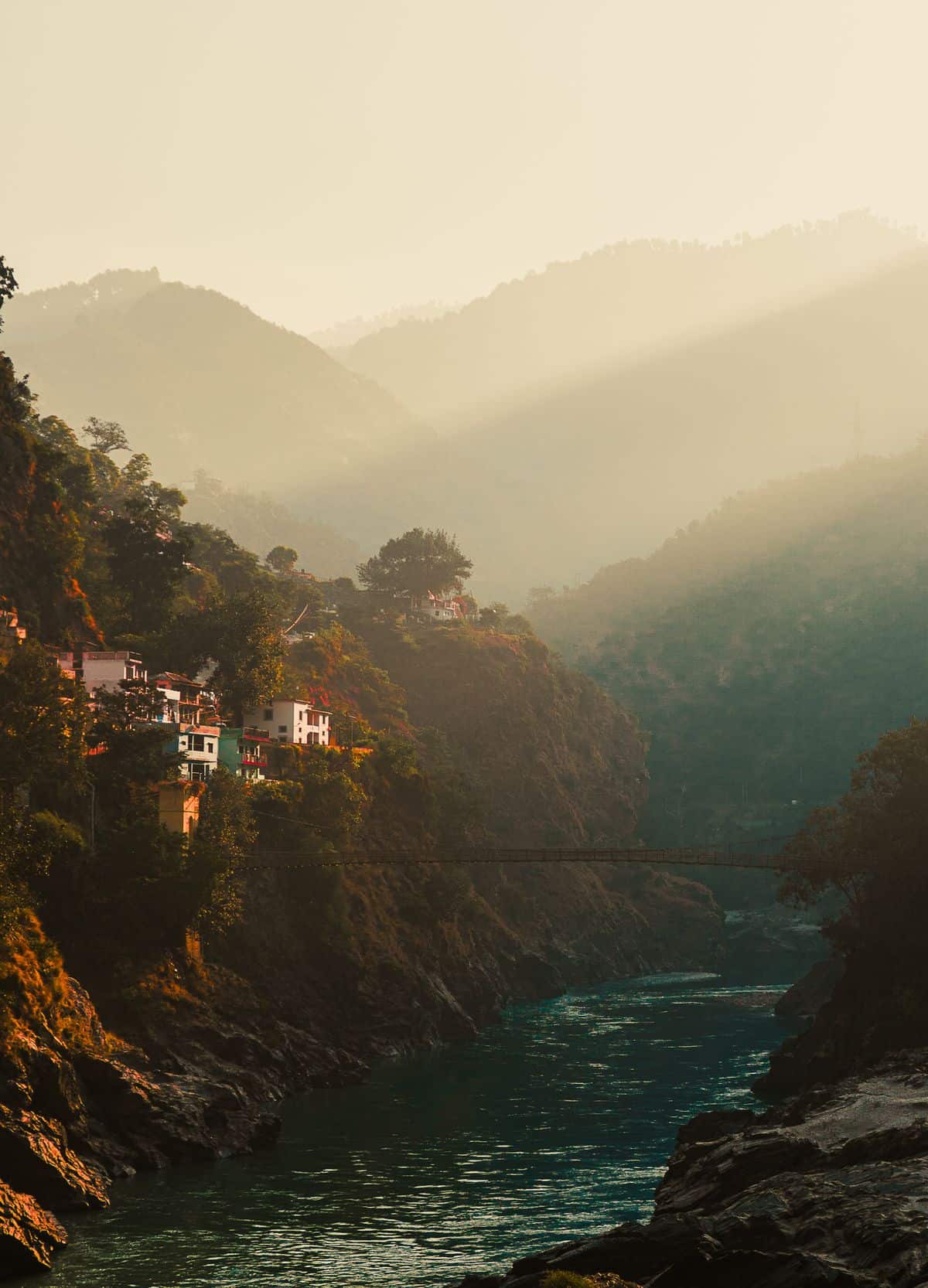
One day here makes you choose between the river and the hills. Two days makes you choose between the Himalayan sunrise and the rapids. Three is the first length where nothing has to be cut, and the first with an afternoon in it that has nothing planned at all. Here are the three days in the order they actually work.
Before you follow this
This is a framework, not a timetable. Weather, traffic, trail and river conditions and opening hours all move a day around, so if something is closed, move the day rather than force it. Rafting is the seasonal piece: Uttarakhand Tourism lists September to June as the season, and monsoon conditions can interrupt it inside that window, so the third morning below is the one to check before you book.
It runs the other way too. Waterfalls run on rainfall rather than snowmelt, so they are best through the monsoon and the weeks after it, while the clearest Himalayan visibility from Kunjapuri is October to March. Which of those you care about should decide your dates before the number of days does. Here is what each season in Rishikesh is actually good for.
The three days at a glance
Two fixed points shape everything: check-in from 2:00 PM, checkout at 12:00 PM. So this is really an afternoon, two full days and a morning, and naming that is what stops you planning a fourth thing into a day with no room for it.
Day one: arrival to aarti.
- 02:00 PM: Arrive and settle in, Tapovan side.
- 02:30 to 03:30 PM: The Beatles Ashram.
- 03:30 to 04:30 PM: Bhootnath Temple, up via Ram Jhula.
- 04:30 to 05:30 PM: Market lanes, down to the river.
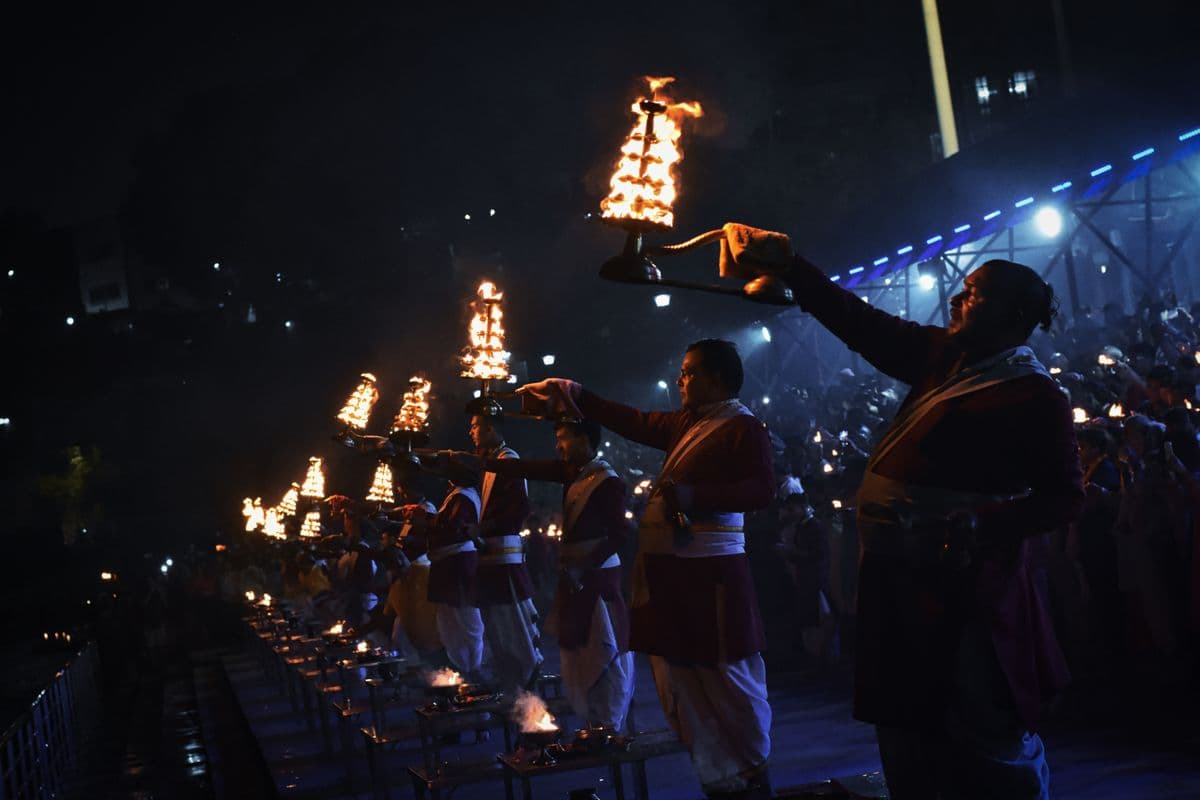
- Around sunset: Ganga aarti at Parmarth Ghat.
- After the aarti: A quiet sit at Sai Ghat, then dinner.
Day two: sunrise, waterfall, empty afternoon.
- 04:30 AM: The drive up to Kunjapuri, in the dark.
- 05:30 to 06:30 AM: Sunrise over the Himalaya.
- 08:00 AM: Back in Tapovan. Breakfast, and a slow hour.
- 10:00 AM to 01:00 PM: The secret waterfall, then lunch.
- 02:00 to 05:00 PM: Nothing. On purpose. See below.
- 05:00 PM: Sunset from Kyarki village.
- Evening: Dinner and live music.
Day three: practice, then the river.
- 06:00 to 07:30 AM: Yoga and breathwork at Sai Ghat.
- 07:30 to 08:00 AM: Freedom Ghat, five minutes across Laxman Jhula.
- 08:00 to 09:00 AM: Breakfast, properly.
- 09:00 AM to 12:00 PM: Rafting, if it is operating.
- 12:00 PM: Checkout, straight off the river.
Those times are the shape of the trip, not a timetable. A day running half an hour behind does not mean you failed the itinerary. It means you are travelling.
Day one, 02:00 PM: arrive, and be in it by the afternoon
The decision that can quietly wreck this trip is your arrival time, and it is made before you get here. The first afternoon runs off being on your feet by half past two. Arrive after 5:00 PM and the honest advice is to go to the aarti, eat, and start properly tomorrow, because day two is full from before dawn and day three ends at noon.
So book the travel backwards from 2:00 PM rather than forwards from your alarm. The run in from Jolly Grant Airport takes longer than the quote you were given, and a hotel described simply as “Rishikesh” can still be a fair distance from where a taxi drops you. This plan walks, so Tapovan or Laxman Jhula decides whether one reaches your door with your luggage.
Day one, 02:30 PM: the Beatles Ashram
Cross to the Swarg Ashram side and keep going past Parmarth Niketan, where the road climbs into forest. Behind a gate is Chaurasi Kutia, which half of Rishikesh calls the Beatles Ashram. The name means eighty-four huts, and the ones everybody photographs are squat stone domes with a chamber inside. The band came in 1968 to study meditation, and much of the White Album was written here. Give it a full hour.
There is an entry ticket at the forest gate: Rs. 200 for Indian visitors and Rs. 1,000 for international visitors, Rs. 100 for senior citizens, Rs. 50 for students under 18 and Rs. 100 for students over 18. Guides still quote the old Rs. 150 and Rs. 600. Forest department pricing changes, and cameras can cost extra, so check the rate and the hours on the day and carry cash. The gate shuts around four, which is why this sits first. Wear closed shoes with grip.
Day one, 03:30 PM: Bhootnath, then the lanes down
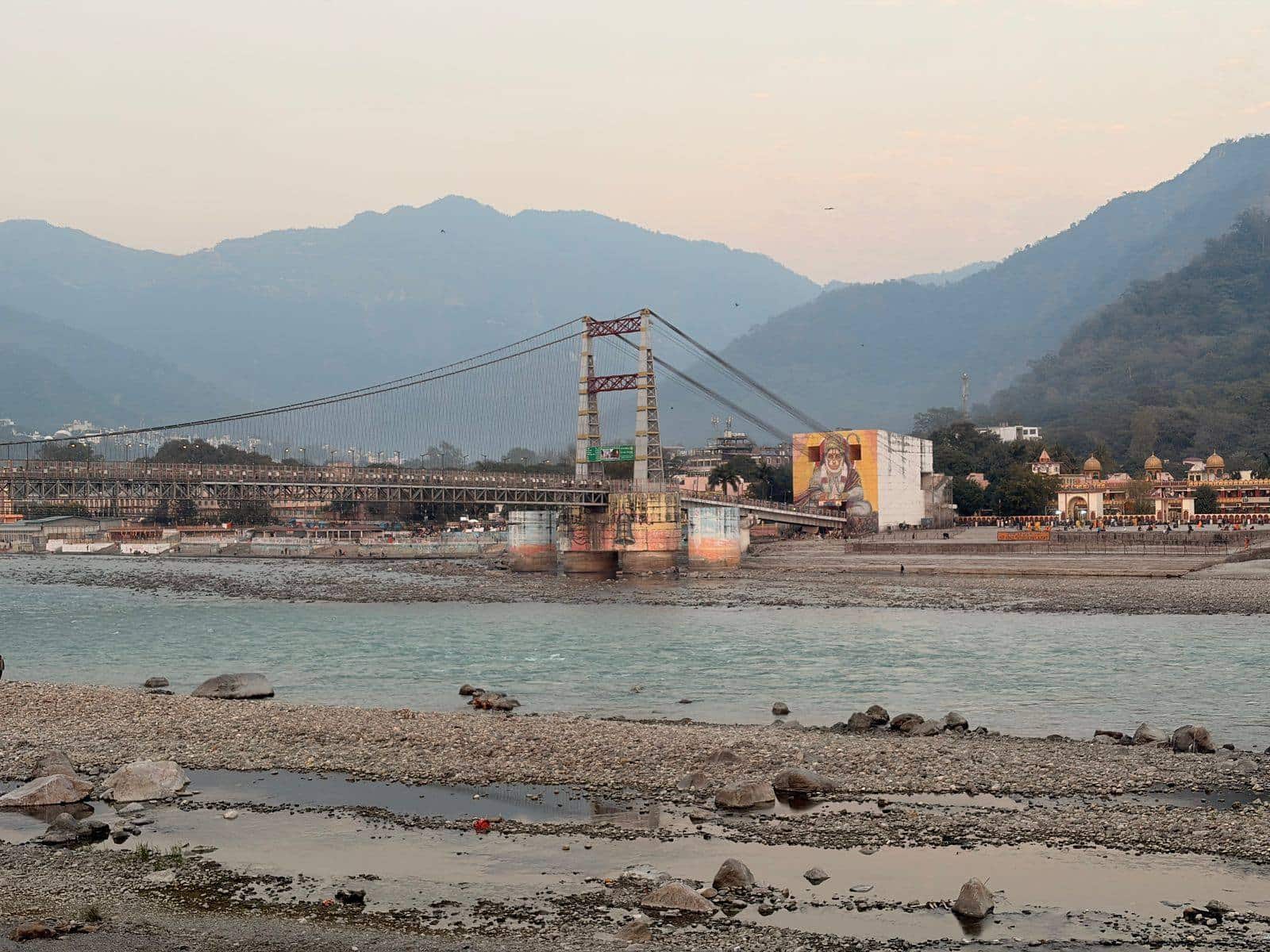
Back down towards the bridge, then up. Bhootnath Temple is a storeyed Shiva shrine most visitors walk straight past, because they are looking at the river rather than up. The approach is a scenic walk over Ram Jhula, open and crossed on foot every day of the year, and the climb after it is short but genuinely uphill. Budget fifteen to twenty minutes each way, with water. Each floor opens onto a wider view until the top gives you the whole river bend.
Then give the hour before 5:30 to the market lanes on the way down: rudraksha malas, singing bowls, wool shawls, chai in small glasses. The point is not to buy something. It is to put you at the ghat on foot and unhurried before the steps fill.
Day one, around sunset: the aarti, and the ghat after it
You will notice the crowd has a direction. Everyone is walking towards the ghat at Parmarth Niketan, where the largest Ganga aarti in Rishikesh happens every evening as the light goes. It begins at sunset, so the hour changes through the year, and Parmarth Niketan tells visitors to check the daily timing. Ask locally rather than trusting a number online, including this one. Cover shoulders and knees, wear shoes you can slip off, and get there early.
Then do the thing almost nobody does, which is nothing. Most itineraries send you somewhere else the moment the lamps go down. Around half past seven, once the ghat has emptied, Sai Ghat is about as still as this town gets: a run of steps, pale sand, nobody selling you anything. Half an hour there closes the day better than a second attraction does. Eat afterwards, and ask what is on: live music turns up all over Tapovan, and the cafés locals actually love are all walkable.
Day two, 04:30 AM: the dark drive to Kunjapuri
Day two starts early. Very early. The drive up to Kunjapuri (a hilltop Shakti temple at roughly 1,676 metres, forty-five minutes to an hour out) leaves around half past four. Bring one warm layer you would not otherwise pack. It is properly cold before the sun clears the ridge.
The sunrise runs from about half five to half six, and it arrives the way weather does rather than the way a show does. On a clear morning the Himalaya come out one ridge at a time: Bandarpunch, Swargarohini, Gangotri. On a cloudy morning you may see very little. You do not control the sky. You are back in Tapovan by 8:00 either way, and the slow hour before breakfast is in the plan because you will want it.
Day two, 10:00 AM: the waterfall past the waterfall
The one everybody means by “secret waterfall” is not the first fall you reach. You cross that one, climb past the upper fall, and keep going: the quiet third fall is the one worth the morning, and the reason this block is three hours rather than one. It is a proper scramble in places, so wear shoes with grip rather than sandals, and in wet months long socks, because there are leeches on the damp trails.
Two cautions, both his. A waterfall is not a swimming pool: depth, current and rock all change with the rain. And if the trail is wet or the conditions are poor, turn around and walk out together. The waterfall is not going anywhere.
Two days asks what else you can fit in. Three days lets you ask what you do not need to fit in.
Day two, 02:00 PM: the empty afternoon is the point
From two until five there is nothing planned. Rest, read, swim if conditions allow, sit in a café, walk beside the Ganga. That is not us running out of ideas. It is the bill for a 4:30 AM start, paid on the same day instead of borrowed from the next one. What it must not become is a drive.
We know, because we tried. Neelkanth Mahadev and Balkumari Devi were written into this afternoon and taken back out. They sit roughly 32 kilometres the other side of the valley from Kunjapuri, on mountain road, an hour to ninety minutes each way. A day that began in the dark cannot reach them and still make the Kyarki sunset. Anything selling you a sunrise at 5:30 AM and a temple 32 kilometres away by mid-afternoon is selling you the vehicle.
Day two, 05:00 PM: Kyarki, and the last evening
If the weather and the road are fine, the last of the day goes up rather than across. Kyarki is a short ride above town to a working hill village: terraced fields, the valley going gold, almost nobody else there. The appeal is not another monument. It is being slightly outside the town, and no list of things to do in Rishikesh mentions it. Leave enough time to come down comfortably rather than turning the sunset into a race. Then dinner and live music, the right night for it, because tomorrow is short.
Day three, 06:00 AM: practice, the river, then the rapids
The last morning is the one people are surprised to find they wanted. Yoga and breathwork at Sai Ghat from six, near the Gangamata statue, while the river wakes up: all levels, nothing needed.
Then at half seven, a five-minute walk across Laxman Jhula to Freedom Ghat. The bridge is open and walked across every day, whatever you may have read elsewhere, and at that hour it belongs to the river. If you go into the Ganga, this is how locals meet it: no soap, no shampoo, nothing plastic left on the sand. Bring a change of clothes, and follow the local guidance on the day, because the river can look calm while it is still moving hard.
Breakfast at eight. Then a taxi to the put-in point and three hours on the rapids until noon, if rafting is operating. Rishikesh’s stretch runs mostly Grade II to Grade IV depending on where you start and the water coming down, and which stretch suits which person is worth five minutes before you book. Pick for your experience, not the longest run on the board. Checkout is at noon, straight off the river, and most hotels in Tapovan will hold a bag if your train is later.
What the third day actually changes
The difference is not the number of places. It is the space between them: day two has an afternoon with nothing in it, day three has a morning practice that earns nobody a photograph. On a shorter trip both are the first things cut, which is why a short trip starts to feel like a checklist even when every item on it is good.
It is also the first length that holds both of the things people travel here for, the Himalayan sunrise and the river, without one taking the other’s slot. They finally have separate mornings. It suits:
- First-time visitors who would rather not pick between the hills and the water
- Couples, and anyone travelling at a walking pace
- Photographers, bloggers and content creators, who need the light twice and a free afternoon to work in
- Yoga and wellness travellers, for whom the quiet last morning is the point
- Anyone who would rather go home rested than go home with a list
If you are still weighing lengths, how many days Rishikesh is worth is the argument in full. Whichever you choose, do not try to prove how much you can see. See the river, see the hills, do one proper adventure, sit through the aarti, and leave a few hours completely empty. That is why three days is the sweet spot: it is where you stop visiting Rishikesh and start being here.
What still does not fit into three days
- Neelkanth, and the temples beyond it. Half a day at minimum depending on your route and the road, on the wrong side of the valley. Do not force it into the empty afternoon.
- Haridwar. Worth visiting, and most people arrive through it, which is why it gets mis-budgeted. Adding it because it looks close on a map turns a relaxed trip into a transport day.
- Two big things on day three. The rapids and a second waterfall walk are each three hours against a noon checkout. There is one slot, and the river wins.
Getting around, once you are here
Day one and day three are almost entirely on foot if you are staying centrally: two bridges, a climb, a market and a ghat in one unhurried loop. Both bridges are open, and both are walking only. Janki Setu is the one that takes two-wheelers, so if you have hired a scooter you walk over Ram Jhula or Laxman Jhula and the scooter goes round by Janki Setu.
Day two runs on wheels, which is why people underestimate it: Kunjapuri, the waterfall trailhead and Kyarki are all outside the core town. We are not quoting auto, taxi or scooty rates, because a rupee figure for somebody else’s service goes stale and is not ours to promise. Agree the fare before you get in. A journey that looks short on a map takes far longer on hill road, and a rider who has never ridden narrow bends in the dark should not learn on the 4:30 AM run.
What to carry
- A warm layer for one morning only. Kunjapuri before sunrise is cold in a way the rest of the trip never is, and it is the most common packing mistake here.
- Shoes with grip, and something you can slip off at the ghat. Forest paths, worn temple steps and a waterfall scramble want the same pair.
- A change of clothes, twice: the waterfall on day two, the river on day three.
- Clothes that cover shoulders and knees, for the temples and the aarti.
- Cash, for the forest gate, chai, prasad and the market.
- Water, sunscreen, a small torch and a phone with battery left at the end of day two. You walk back from the ghat in the dark on both evenings.
Or have the three days run for you
Everything above is yours to run and most of it is free. If you would rather not hold the timings, the tickets, the pre-dawn driver and the trailhead in your head across three days, that exact plan is what our Live Like a Local is: the same hours, with a guide (host) beside you at every far-off piece of it.