Three days is the sweet spot for most first-time visitors to Rishikesh. Two days can work for a weekend. One day is enough if you are only passing through. Five or seven days are better if you want to slow down and see more than the usual highlights.
That is the short answer. The rest of this page is what each of those lengths actually gives you, and what it quietly takes away.
Why three works
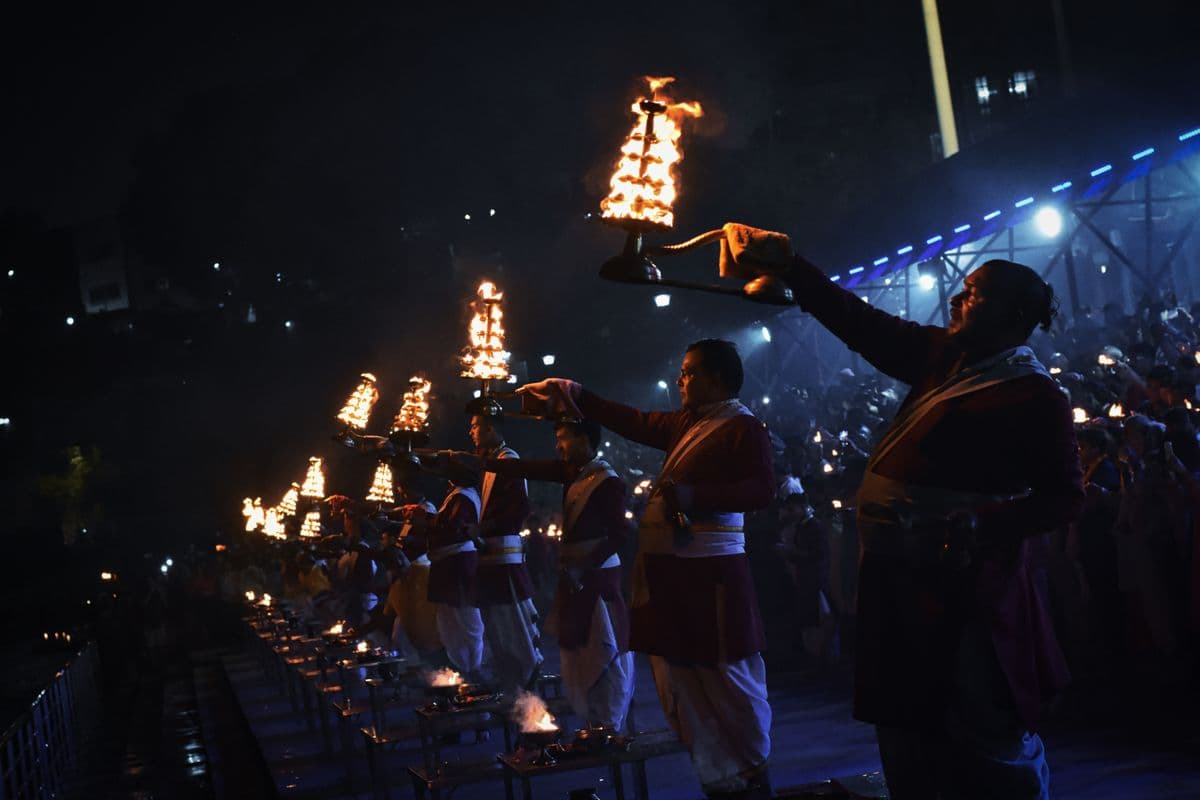
The reason is simple, and it is about the clock rather than the map. Rishikesh keeps its best experiences at opposite ends of the day. A Kunjapuri sunrise starts before dawn. Rafting takes most of a morning. The Ganga aarti happens in the evening. Trying to fit all of that into one or two days means constantly choosing what to leave out. Three days gives you enough room to have the lot without spending the trip watching the time.
One day in Rishikesh
One day is enough to get a taste of the place, but you have to choose carefully. You can fit in a morning practice, some time by the Ganga, one major activity, a little sightseeing and an evening aarti. Our own one-day plan, First Hello, does exactly that, and it still runs from six in the morning to a dinner table.
What does not fit is quicker to say. You will have to choose between rafting and the waterfall, because they want the same morning and both include getting out of town and back. A Kunjapuri sunrise is hard to combine with a day this full: the drive leaves in the dark and you pay for it by mid-afternoon. Neelkanth Mahadev is half a day on its own, and a single day has no half to give.
So who is one day for? Someone passing through Rishikesh who wants to feel the atmosphere and decide whether to come back, and plenty of people do come back. It also suits bloggers and content creators working to a tight shooting schedule, because the river, the ghats, the ashram lanes and the evening lamps all sit within a walk of each other, which is not true of anywhere else on this list. If that is your day, the one-day itinerary sets out the hours.
Is two days enough for Rishikesh?
Yes, if you plan it properly, and two days works especially well for a weekend. But your arrival time matters more than anything else on this page. Arrive early in the afternoon and the first day holds the Beatles Ashram, Bhootnath Temple, the market lanes and the evening aarti. The second morning is then yours for yoga, time by the river, and one major activity such as rafting or a waterfall. The important word is one.
Two days does not give you room to fit everything in comfortably. Add a Kunjapuri sunrise, rafting, the temples and a long run out to Neelkanth, and you will spend more time travelling than you spend in Rishikesh. Our two-day plan, Find Your Flow, is built around that one honest choice, and the two-day itinerary writes both days out if you would rather see the hours than the argument.
If you land late, the first evening is not lost, it is just smaller. Sai Ghat holds the same ceremony at a fraction of the scale: fewer lamps, fewer people, nobody directing where you stand. It is the one to take when the big ghat is already an hour gone.
Two days is a real trip. It is simply a fast one, and three is the first length where you stop looking at the clock.
Three days: the sweet spot
For most first-time visitors this is the answer we give. The extra day does not just buy you more places. It gives the whole itinerary room to breathe.
You arrive and spend the first afternoon out walking: the Beatles Ashram, the local lanes, the evening aarti. The second day starts early with the Kunjapuri sunrise, then a slower morning, a waterfall or another outdoor thing, and free time later on. The third gives you one more morning for rafting before you go. Live Like a Local is the version of those three days we run, and the three-day itinerary is the same three days hour by hour, with nothing to book.
The free time is the part people underestimate. After a sunrise that got you up before four, you may want an afternoon where you simply sit by the Ganga, eat lunch slowly, find a cafe or do nothing at all. That empty time is not wasted. It is what an early start costs, paid on the same day instead of borrowed from the next one.
Three days is also the first length that shows you both evenings, the big one at Parmarth Ghat and the small one at Sai Ghat, so you never have to decide which version you prefer in advance. It is the first length where the river, the hills, the spiritual side of the town and ordinary local life all fit without one of them pushing another out.
What about four days?
Four days is not dramatically different from three, and that is a good thing. Use the extra day to slow down rather than forcing another list of attractions into it. You could add:
- A yoga or meditation session
- A local workshop
- More time by the Ganga
- A relaxed cafe day
- Neelkanth Mahadev, which finally has the half day it needs
- A nearby village, or a morning out in the forest
If you enjoy slow travel, that one day makes a real difference. We do not sell four days as a trip of its own, because there is nothing honest to put in the extra day except rest, and inventing a fourth itinerary to justify the number would be the opposite of useful. Tell us you have four nights and the spare day is handed back to you rather than filled.
Five days in Rishikesh
Five days is where the trip stops feeling like a holiday checklist and starts feeling like a stay. There is time for adventure, sightseeing, yoga, nature and local life without putting everything back to back. You can take an early sunrise one morning and still have a relaxed afternoon. You can spend a whole day further out of town. You can leave an afternoon completely free. Our five-day Restore retreat is built on exactly that idea. If you do not like rushing while you travel, five days is an excellent choice.
Seven days in Rishikesh
A week is for people who want to see more of the area, or who simply do not want to hurry. You can get beyond the main tourist spots, put real time into yoga and wellness, sit in on local workshops, take longer trips into the hills, and still keep days with very little planned in them.
At that point the question stops being what can I see and becomes how do I want to spend my time here. That is when Rishikesh gets much more interesting, and it is also the honest reason a week is not for everybody.
The season matters too
How many days you need also depends on when you come. Through the monsoon, outdoor plans change with the rain and the river level, and rafting typically pauses altogether, so a short adventure trip has to be rebuilt rather than simply booked. In the cooler months the early mornings pay best, and Kunjapuri is at its finest when Himalayan visibility is good. Do not settle your trip length without looking at your dates. Pick the dates from what you want most, then pick the number of days.
Do not forget the travel time
The other mistake is counting only the time you spend in Rishikesh. Coming from Delhi, a large part of a day can disappear on the road. Arrive late in the afternoon and the two-day trip you booked really gives you one full day. Your arrival and departure times matter almost as much as the number of nights, which is why we ask for them. The route options are set out here, with the drives and the overnight buses side by side.
So how many days should you spend in Rishikesh?
- One day: you are passing through and want a quick taste of Rishikesh.
- Two days: you are coming for a weekend and do not mind keeping the itinerary compact.
- Three days: it is your first visit and you want the best balance of experiences and free time.
- Five days: you want a slower trip with adventure, nature, yoga and local life in it.
- Seven days: you want to go deeper, and to have time left over to do nothing with.
- None of the above: tell us the nights you actually have and we will build backwards from them. That is what Build my trip is for.
For most people visiting Rishikesh for the first time, three days is the sweet spot. Long enough for the river, the hills, the spiritual side of the town and a couple of adventures, without turning a holiday into a race. And if you do have more time, do not feel you have to fill every hour of it. Sometimes the best part of Rishikesh is the hour you did not plan.