Two days in Rishikesh is not forty-eight hours. It is one arrival afternoon and one proper morning with a night in between, and that is a very good trip so long as you stop trying to fit three days inside it. Check in at two, the aarti at dusk, practice at six, on the river by nine, gone by noon. It is the two days we run for guests, and none of it needs booking through us.
What the second day buys you
The honest answer to “is two days enough” starts somewhere else: almost nobody’s one day in Rishikesh is a real one. Our one-day plan opens with yoga at 6:00 AM and is still going after the evening aarti, and you only get a day that shape if you woke up here. Travel in, and your first day is an arrival afternoon. A good one. Not the river.
The second day buys the river back, and the morning practice with it. Two days is not one day with more sights bolted on. It is the arrival afternoon plus one uncompressed morning, and the morning is the half people remember.
The one decision that makes or breaks it
Arrive by early afternoon. Check-in is from 2:00 PM and the whole first day hangs off it. Land at two and the afternoon runs as one unbroken walk. Land at five and the honest advice changes: go to the aarti, have dinner, let the rest go. Squeezed into an hour, you will have technically visited the Beatles Ashram and Bhootnath without enjoying either.
So it is a travel decision before it is an itinerary one. Delhi is around 240 kilometres away, five to seven hours by car, so a morning drive eats the afternoon; the overnight buses arrive with the sunrise and hand you the whole day. Jolly Grant Airport is about 21 kilometres out, and the last stretch is fiddlier than the distance suggests. We quote no fares here. Agree yours before you get in.
And it cannot be monsoon
Updated 7 September 2026, so treat the date as part of the information. Rishikesh is still inside the monsoon window as this is written, roughly July to mid-September, and it matters more on a short trip, because two days holds exactly one river slot. Rafting typically pauses through it, because the river is not safe to run, and the hill roads carry a real landslide risk. September to November is when the season is properly back.
The waterfalls are the swap, and not a consolation prize: they run on rainfall rather than snowmelt, so they are at their best through the monsoon and just after it. For the month-by-month version, pick your dates from what you want most, then pick the number of days.
Day one at a glance
- 02:00 PM: Check in, drop the bags, leave again.
- 02:30 to 03:30 PM: The Beatles Ashram, while the gate is still open.
- 03:30 to 04:30 PM: Bhootnath Temple, walking over via Ram Jhula.
- 04:30 to 05:30 PM: The market lanes, on foot, down to the river.
- 05:30 to 07:00 PM: Ganga aarti at Parmarth Ghat.
- 07:15 to 08:00 PM: Sai Ghat, once the crowd has gone.
- 08:00 PM: Dinner, and whatever is on in Tapovan tonight.
That is the shape of the day, not a timetable. Weather, traffic and opening hours all get a vote, and a late arrival means simplifying rather than sprinting. The instruction that matters at two o’clock is not to sit down: drop the bags, change into shoes you can walk a hill in, go. Whether a taxi reaches your door is worth settling before you travel, and we wrote the Tapovan versus Laxman Jhula version of that honestly.
02:30 PM: the Beatles Ashram
Out where the lanes thin and the road climbs into forest is Chaurasi Kutia, which half of Rishikesh calls the Beatles Ashram. Maharishi Mahesh Yogi built it as a meditation ashram; the name means eighty-four huts, and the huts everybody photographs are squat stone domes. The band came in 1968, much of the White Album was written here, and the meditation halls are graffiti-covered now. Give it a full hour. It rewards wandering and punishes a rush.
There is a ticket collected at the forest gate, and we are not going to print a figure for it. Forest department pricing changes, cameras can be charged separately, and half the guides online still quote rates that expired years ago. Check the price and the hours on the day, and carry cash. The gate shuts around 4 PM, which is why this sits at half past two: it is the only thing in the afternoon with a hard door on it, so the rest is arranged around it. Closed shoes with grip, for uneven floors and worn steps.
03:30 PM: the climb up Bhootnath
A walk back over Ram Jhula brings you to Bhootnath Temple, a storeyed Shiva shrine most visitors walk past because they are looking at the river rather than up. Short but genuinely uphill: fifteen to twenty minutes each way, with water. Each floor opens onto a wider view, until the top looks out over the whole river bend. An hour before sunset is when the light does the work.
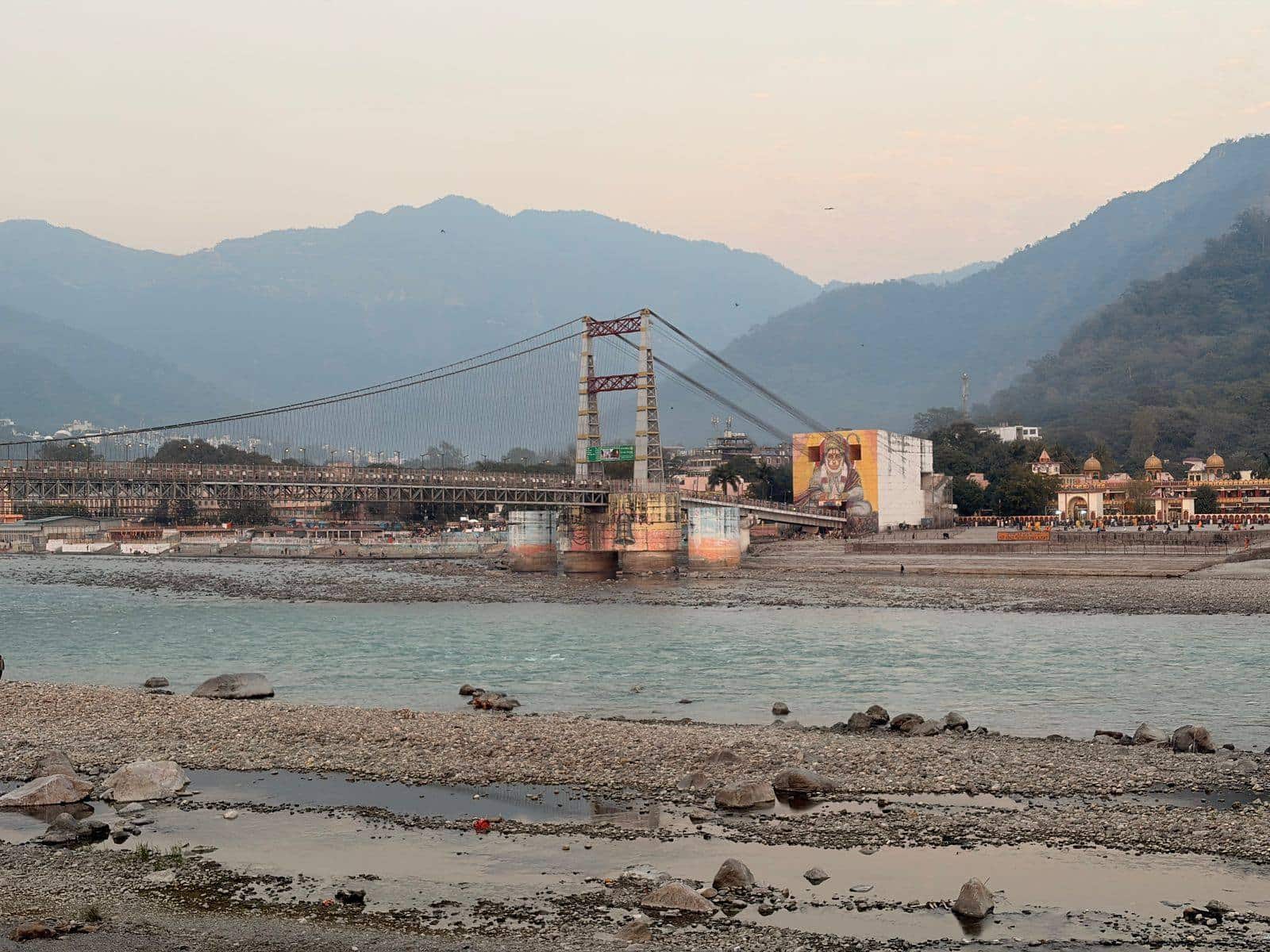
One thing about the bridges, because the internet is confused about it and we live here. Ram Jhula is open, and it is walking only. No scooter, no motorbike. Laxman Jhula is the same. You walk across, and anything on two wheels goes round by Janki Setu. Nothing is shut, and there is nothing to check on the day.
It is a working shrine, not a viewpoint with stairs. Cover your shoulders and legs before you climb, and if prayers are under way, stand aside rather than walk through them. Checking in an hour ago took care of the other half: in an Indian home you shower before you visit a temple, less about being clean than about arriving fresh. Nobody checks. It is simply the thing that quietly counts.
04:30 PM: the market, walking down
Come off the hill with an hour in hand and spend it in the lanes on the way down: singing bowls, woollens, rudraksha malas, chai in small glasses. The point is not shopping. It is that it puts you at the ghat on foot and unhurried, before the steps fill. Some people spend the hour flat on a table instead, and a sound healing session or a massage fits the same slot.
05:30 PM: the aarti at Parmarth
You will notice the crowd has a direction. Everyone is walking towards the ghat at Parmarth Niketan, where the largest Ganga aarti in Rishikesh happens every evening. It starts around sunset, so the hour shifts through the year: ask locally on the day rather than trusting a number you read online, including this one. We put guests on those steps from about half past five.
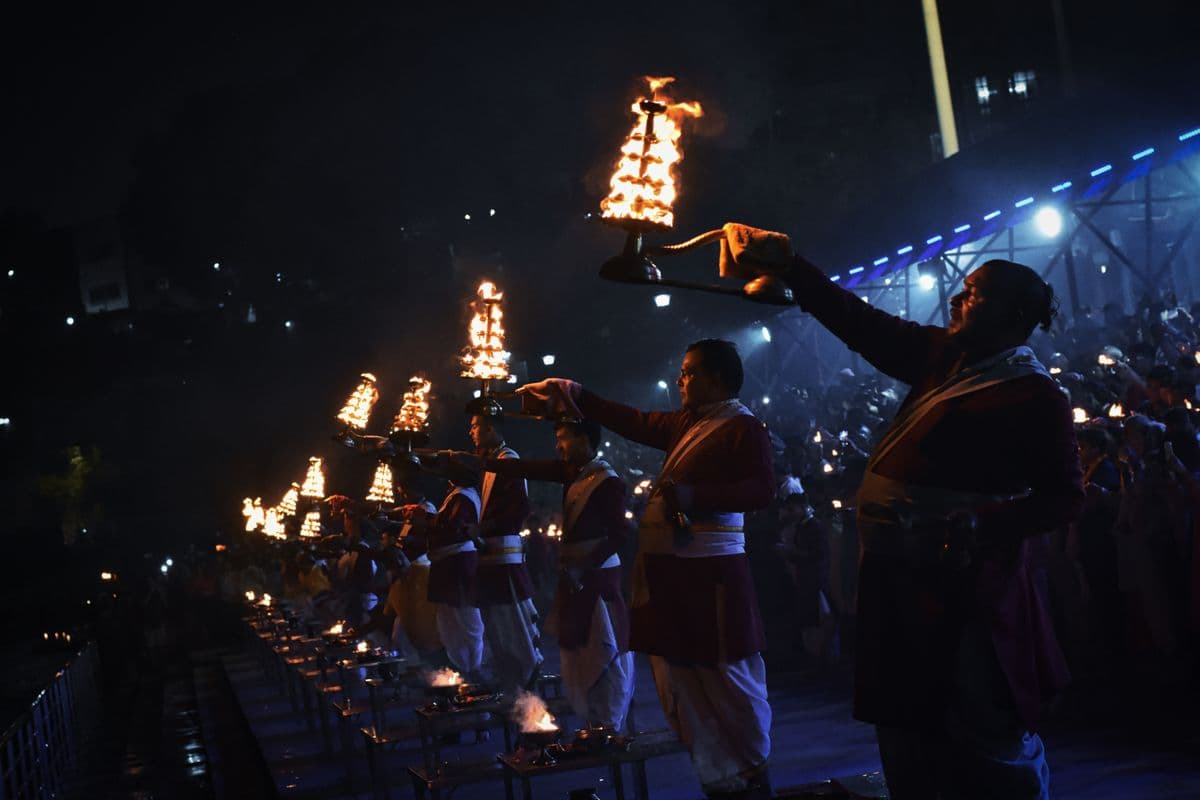
Boys from the ashram sing, a fire is lit at the centre, and lamps are circled towards the water. Low and central puts you inside it; higher up you lose the detail but see the shape of the whole thing and can leave without climbing over anybody. Photograph the Shiva statue out in the river early, in daylight. Our guide to morning versus evening aarti is the one to read on the train.
07:15 PM: the ghat after everyone leaves
This half hour is the part a one-day trip has no room for, and it costs nothing. Walk back to Sai Ghat once the crowd has thinned: no ticket window, nothing arranged for visitors, just steps down to the water and pale sand. Sit for twenty minutes. You do not need another viewpoint.
Then eat. Ask whoever serves you which café has live music tonight; it changes night to night, especially at weekends. Freedom Cafe hangs over the water and VJ’s Pizza looks out at the bridges lit up. The rest are in our guide to the cafés locals actually love.
The night in between is not filler. It is the only reason the second morning is possible.
Day two at a glance
- 06:00 to 07:30 AM: Yoga and breathwork at Sai Ghat.
- 07:30 to 08:00 AM: The river at Freedom Ghat, five minutes across Laxman Jhula.
- 08:00 to 09:00 AM: Breakfast, somewhere you can be out of by nine.
- 09:00 AM to 12:00 PM: Rafting, or the walk out to the secret waterfall.
- 12:00 PM: Checkout, straight off the river.
Note how tight that is at both ends. The morning block starts at nine rather than ten because checkout is at noon and the river will not be hurried. Pack before you go to bed.
06:00 AM: practice on the sand
Start at Sai Ghat, downstream of Laxman Jhula, near the Gangamata statue facing the water. Before the bridge traffic thickens it is about as quiet as Rishikesh gets. This is where we hold our own practice, and you do not need us to use the hour: if you have a class booked, use it, and if not, a simple riverside practice or a slow walk does the same work. Leave the ground around the statue clear, and if a ritual is under way, wait.
07:30 AM: the river before breakfast
From Sai Ghat it is about five minutes across Laxman Jhula to Freedom Ghat, and at this hour the place belongs to the river: mist on the water, temple bells, almost nobody else.
If you go in, go in carefully. The Ganga can look calm while it is still moving hard, and other people already standing in it is not evidence that it is safe where you are. Ask locally, stay where you can feel the bottom, and treat a strong pull as the answer. Done properly the dip is bracing, humbling and short, and it is how locals meet this river: no soap, no shampoo, nothing plastic left on the sand. Then eat properly, because the next block is three hours with nothing to buy in the middle of it.
09:00 AM: the rapids, or the waterfall
This is the one real fork in the trip, it takes three hours either way, and two days holds only one of them. Decide before you arrive, because deciding at nine costs you the slot, and the slot is the day.
Rafting. A taxi collects you and a professional crew runs the river: cold spray, big laughs, the best kind of adrenaline. Rishikesh’s stretch of the Ganga runs mostly Grade II to Grade IV depending on where you put in, with the shorter Shivpuri and Brahmpuri runs staying in the gentler water. Book a licensed operator, choose by what you are honestly comfortable with rather than by whichever trip is longest, and do what your crew says on the day. Our guide to the grades says which stretch suits which person.
The waterfall. This is also the answer on the days the river is closed. The one everybody means by “secret waterfall” is not the first fall you reach: you cross that one, climb past the upper fall, and keep going to the quiet third fall. It is a proper scramble in places, so grippy shoes rather than sandals, and long socks in wet months, because there are leeches on the trails. Wet rock is slippery, a waterfall is not a swimming pool, and if it looks wrong when you get there, turn round. It will still be there another day.
12:00 PM: checkout, straight off the river
You come off the water and check out in the same movement, which is the one genuinely rushed hour of the trip. It is fixable with one question: most hotels in Tapovan will hold your luggage at reception for the day if you ask, so an evening bus does not mean carrying a wet bag around the market for six hours. With those spare hours, do not start anything that needs a vehicle. Everything out of town is a half day, and a half day is what you no longer have.
What two days does not hold
Being straight about this is more useful than padding the list. Three things people expect to fit do not, and day one at 3:00 PM is the wrong time to find out.
- Kunjapuri sunrise: a hilltop Shakti temple at about 1,676 metres, 45 minutes to an hour’s drive out, leaving around 4:30 AM. It takes the slot the practice and the river are using. If the Himalayan sunrise is why you are coming, two days is the wrong number.
- Neelkanth Mahadev: roughly 32 kilometres out, an hour to ninety minutes each way. Half a day minimum, and a two-day trip has no half to give it.
- Both morning options. Each is a three-hour block and the trip holds one. Attempting both is how people miss checkout.
The fourth thing it does not hold is the tourist map, which has enough on it to fill a week. That trap catches bloggers and content creators hardest: two days gives you the aarti, the lanes and one river morning, and it will not also hand you the sunrise ridge, the temple up in the hills and a waterfall. If two of those matter to you, the fix is a third night rather than a tighter schedule. The three-day version is written out the same way as this one, how many days Rishikesh needs is the argument behind it, and a third night is what opens up the Kyarki village sunset.
What to carry
- Cash. The forest gate, chai and the market all run on it.
- Closed shoes with grip, and something you can slip off easily at the ghat. One good pair does both days.
- A change of clothes, a light layer, covered shoulders and knees, a small torch. Day two puts the river and the morning block back to back, and on day one you walk home in the dark.
The honest answer
Is two days enough in Rishikesh? Yes, if you understand what two days means: one good arrival afternoon, one proper morning, one night in between. That is the Ganga, the aarti, a little culture, a little walking and one adventure. What you do not get is everything, and that is fine. Trying to see everything is exactly how two days becomes exhausting.
Or have the two days run for you
Everything above is free or close to it, and none of it needs us. If you would rather not hold the gate times, the taxi and the checkout clock in your head on a trip this short, that pair of days is what our Find Your Flow is: the same hours, with a guide (host) beside you. If your dates have a third night in them, Live Like a Local is where most trips land.