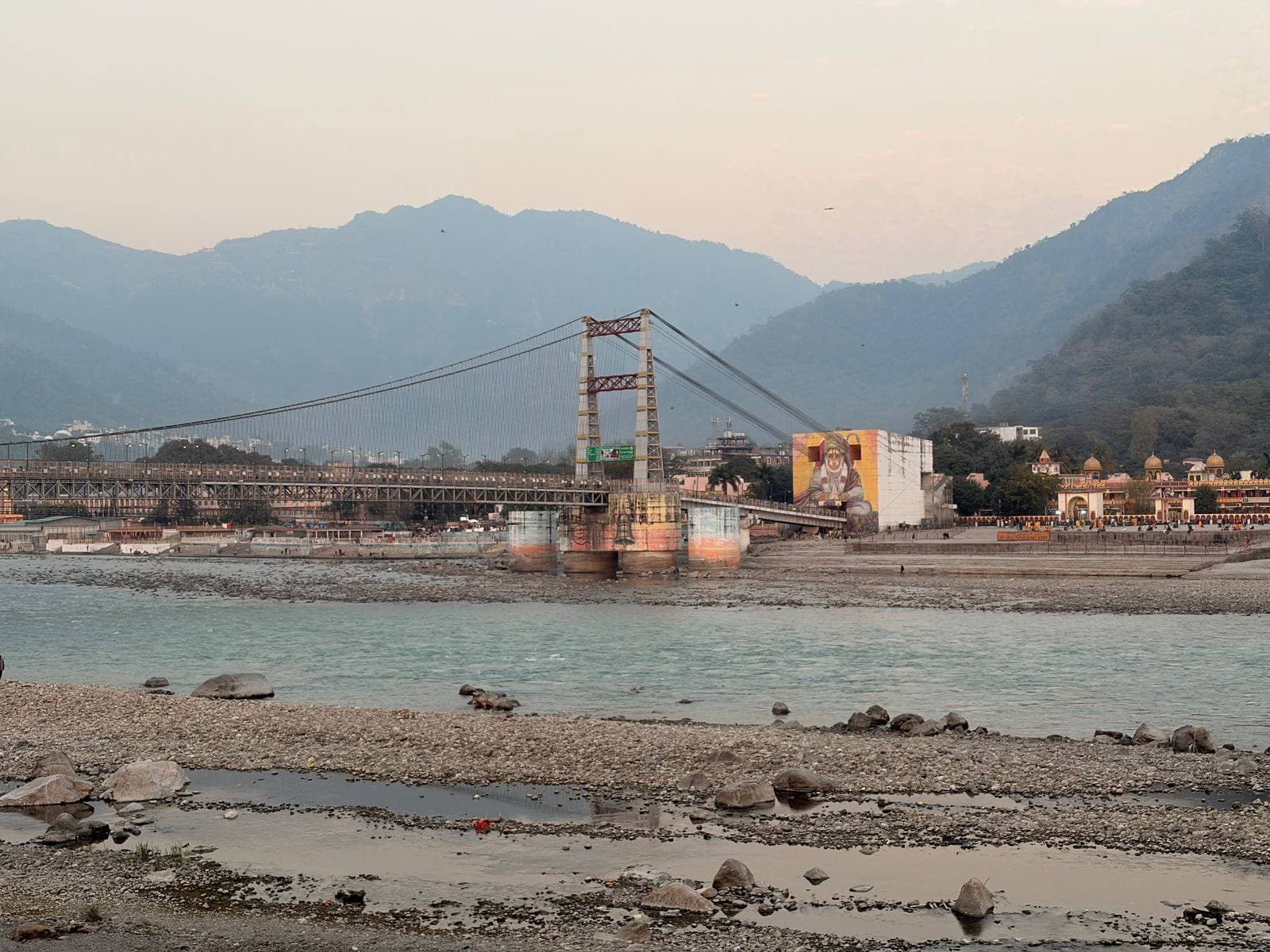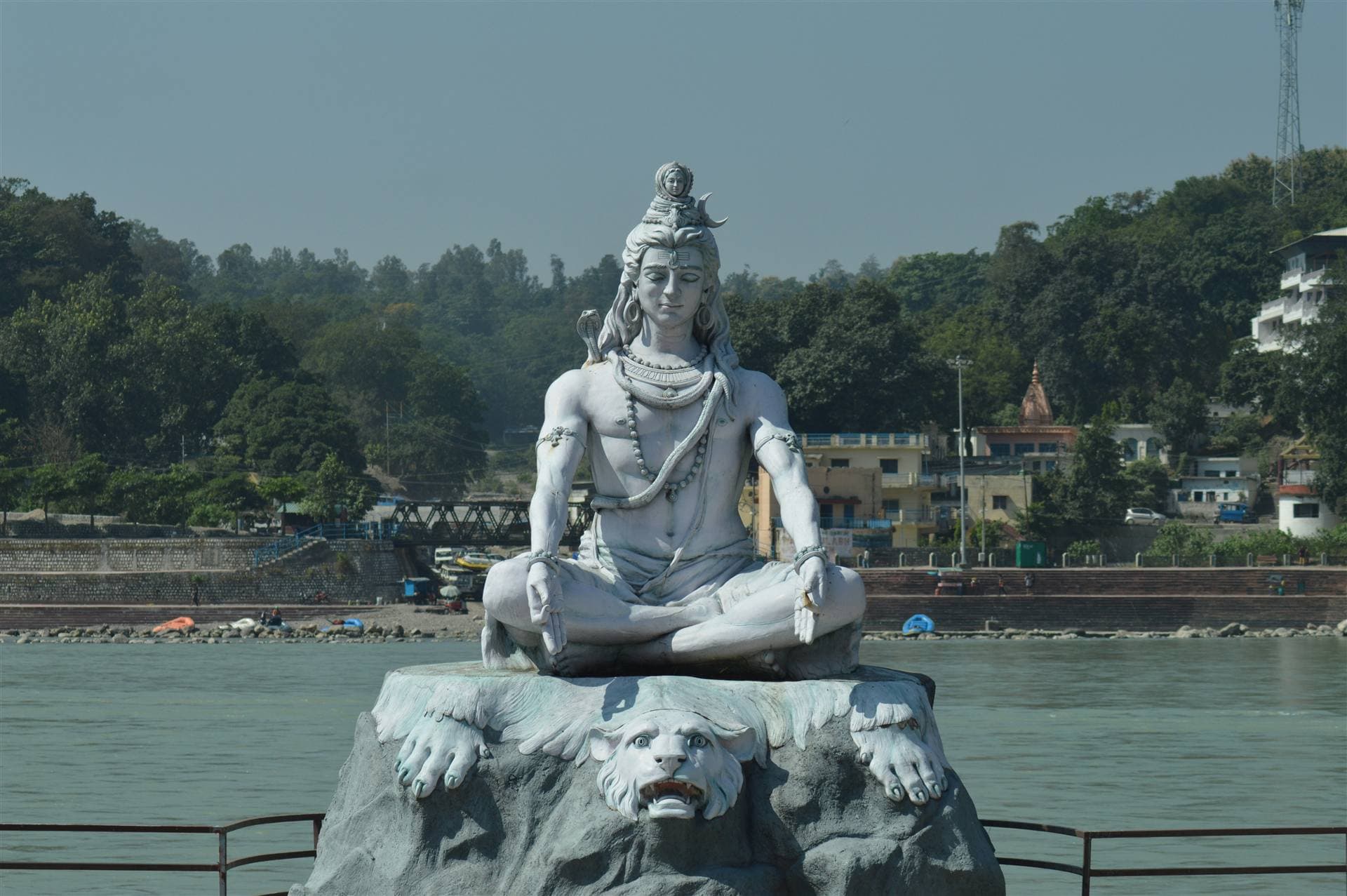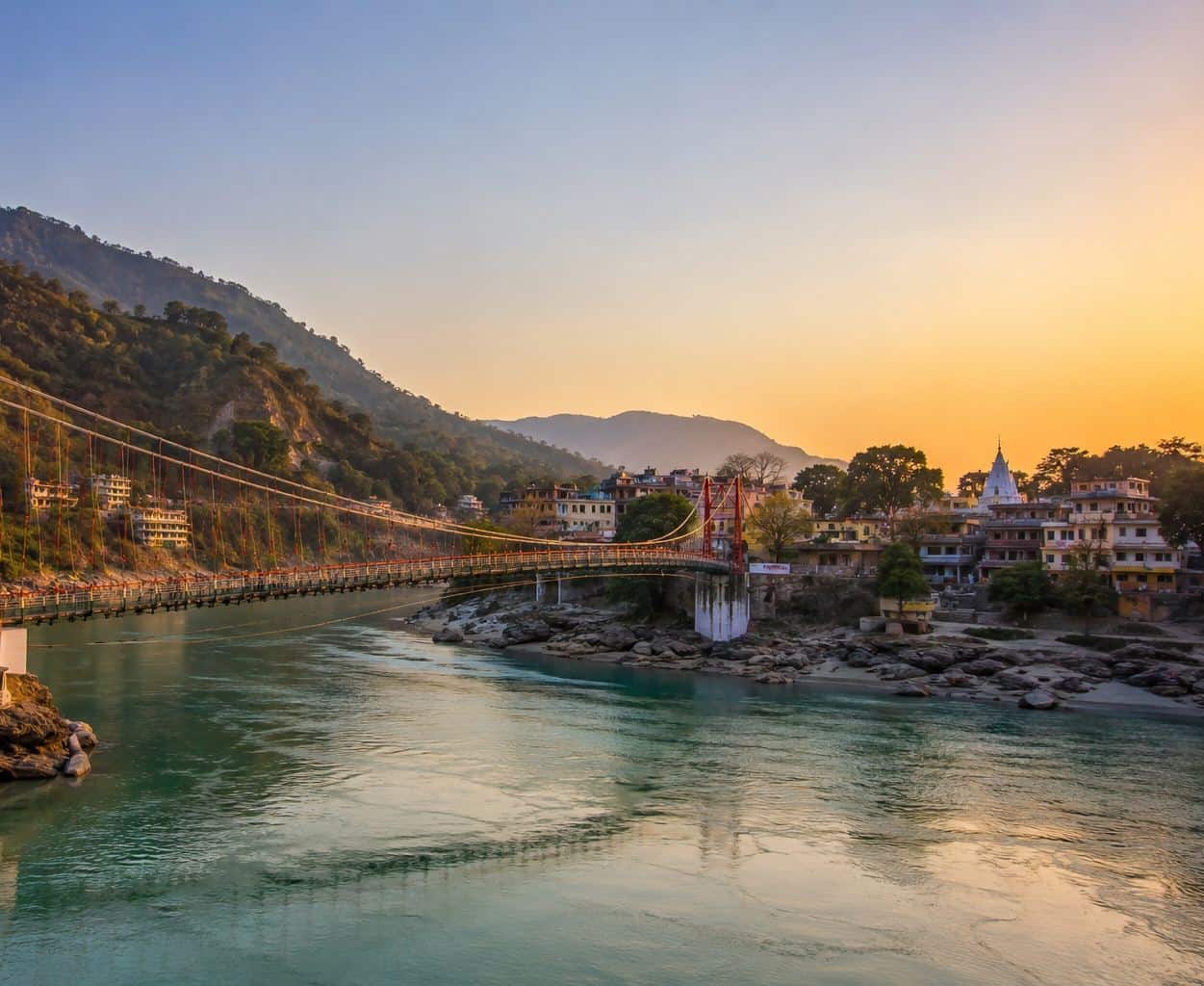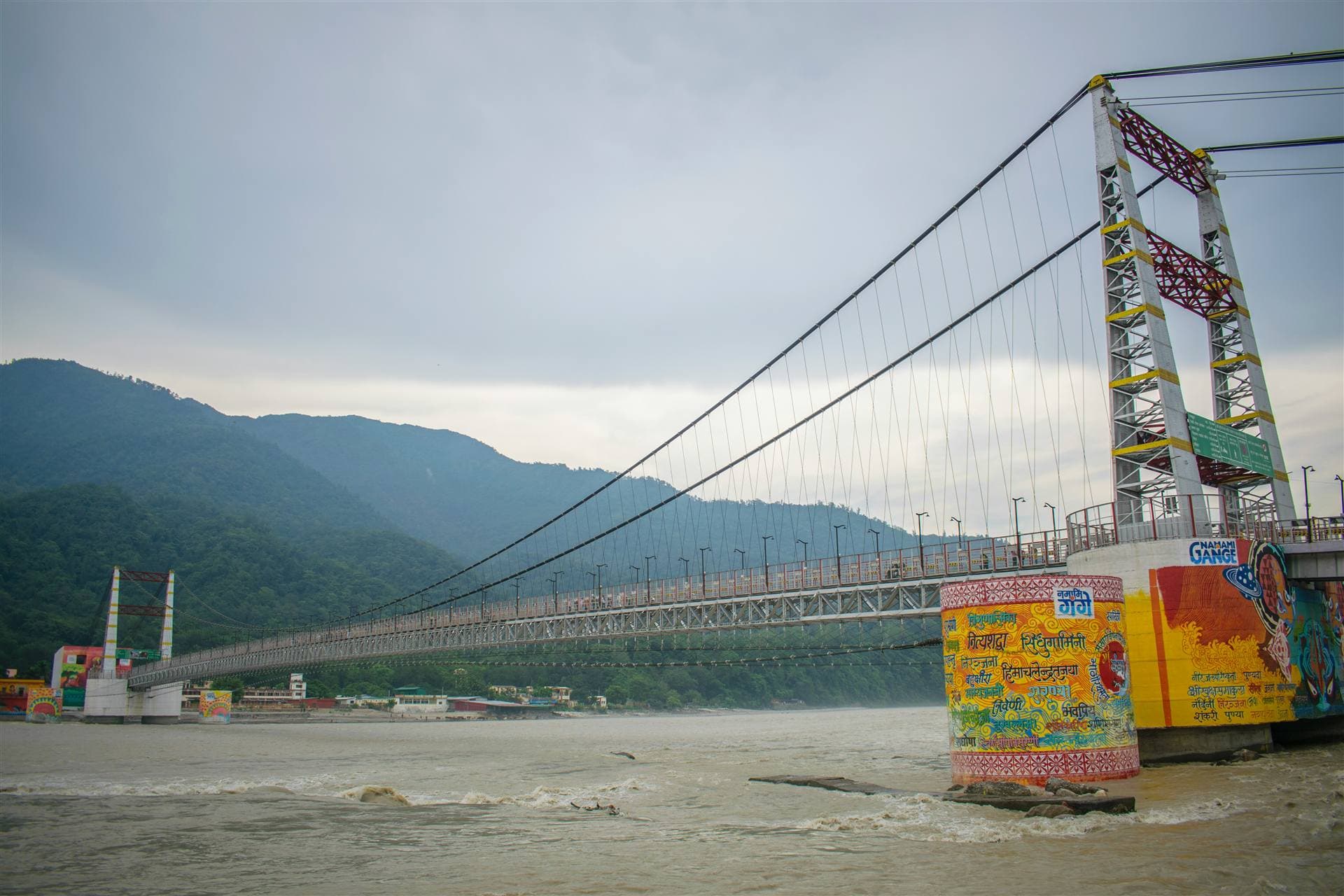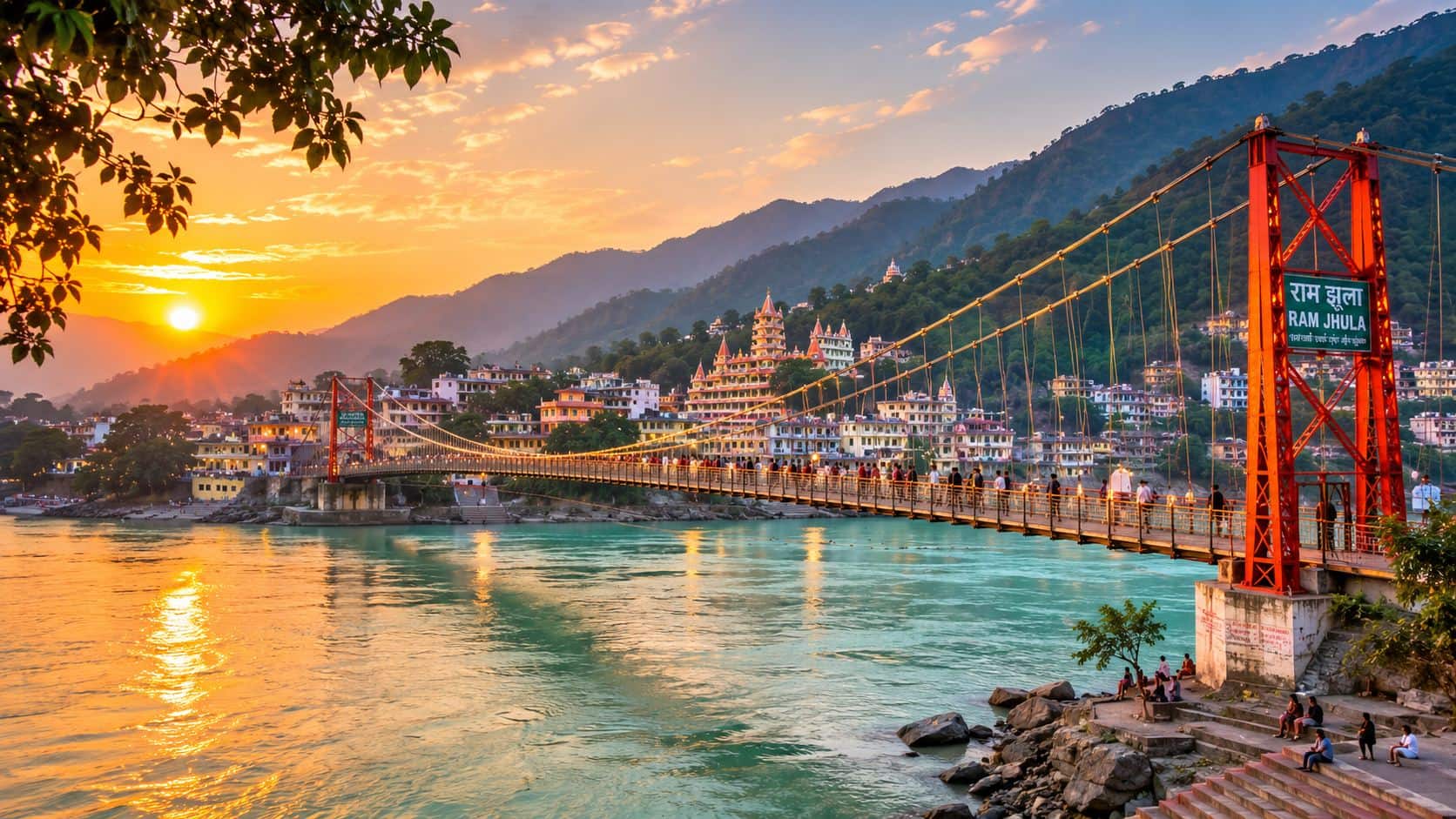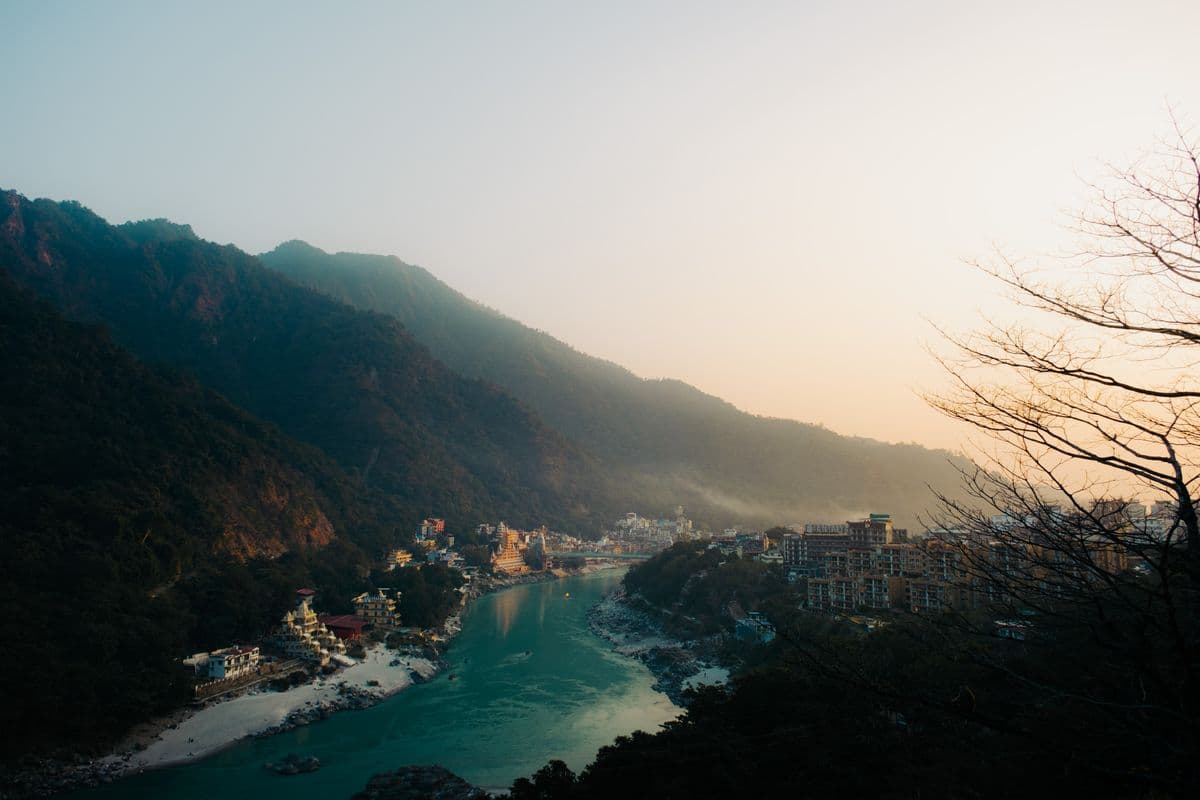
Rishikesh does not have a sunset problem so much as a crowding problem. The light is often superb. It is just that almost everyone watches it from the same short stretch of riverbank, shoulder to shoulder, in the run-up to the aarti bells. The Kyarki village sunset is the alternative almost no itinerary mentions.
The village most itineraries skip
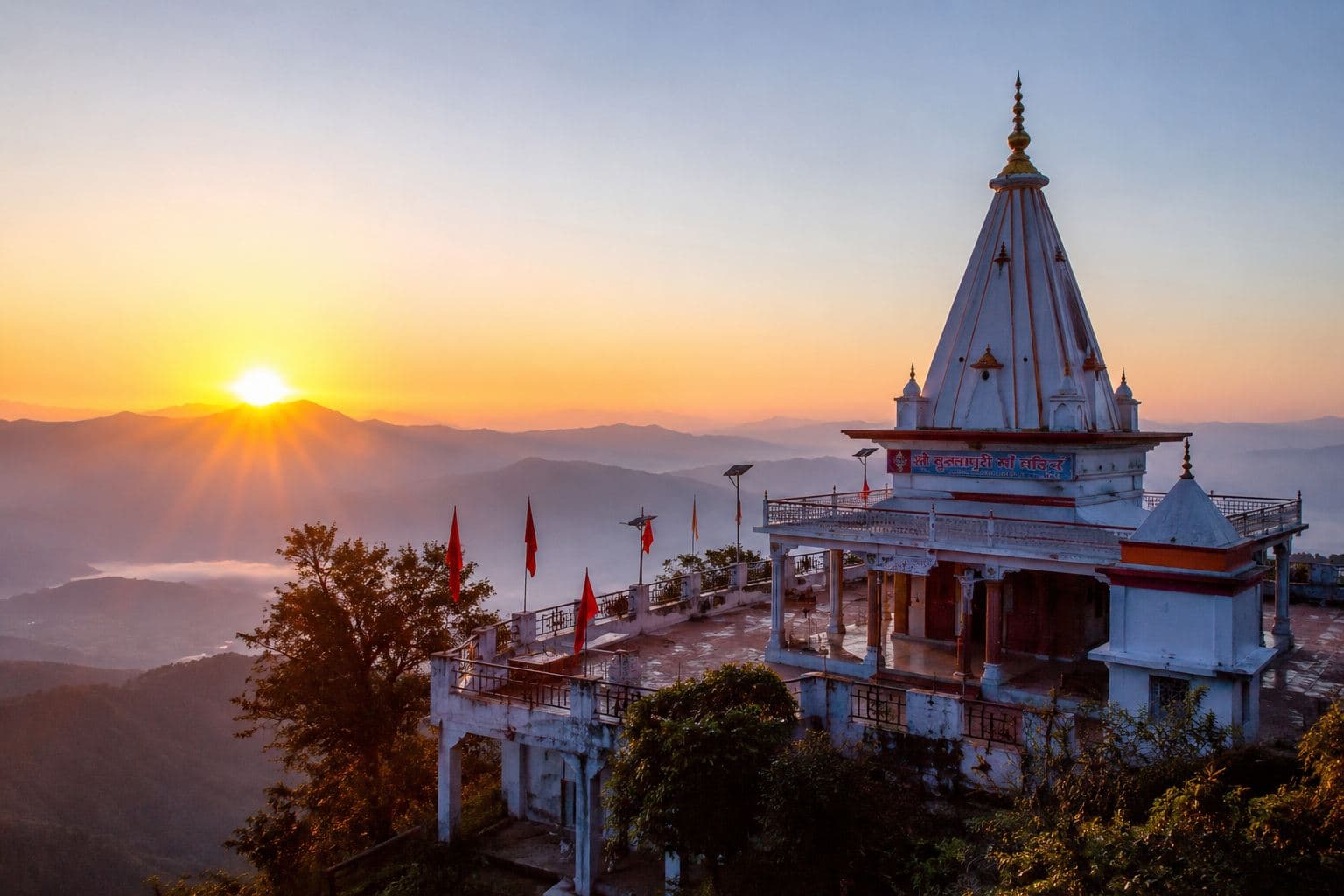
Kyarki sits in the hills above town, up in the Himalayan foothills of Uttarakhand, away from the bridges and the market lanes. It is a village first and a viewpoint second, which is exactly why it works. Nobody is selling anything. There is no ticket queue and no designated photo spot. You ride up, you find a place to sit, and you wait for the light to do what it does.
That absence of infrastructure is the whole appeal. Rishikesh has a handful of genuinely famous viewpoints, and fame here means buses. Kyarki has stayed quiet because it is inconvenient in the mildest possible way — a little too far uphill, a little too unmarked, and not on the list anyone hands you at check-in.
The ride up
The road climbs out of the valley and then starts folding back on itself. It is a scooty ride — that is how we build it into the day — and the character of the trip changes as you gain height: the traffic thins, the air cools, and the noise of town drops away behind you until all you can hear is the engine and the wind.
Two honest notes before you go. First, ride up while there is still good daylight — you want to be settled at the top before the light turns, not still negotiating hairpins. Second, the ride back down happens in the dark. Hill roads here are lit by whatever your headlight gives you, so go slow, and do not attempt this on your first day if you are not already comfortable on two wheels in Rishikesh traffic.
What you actually see
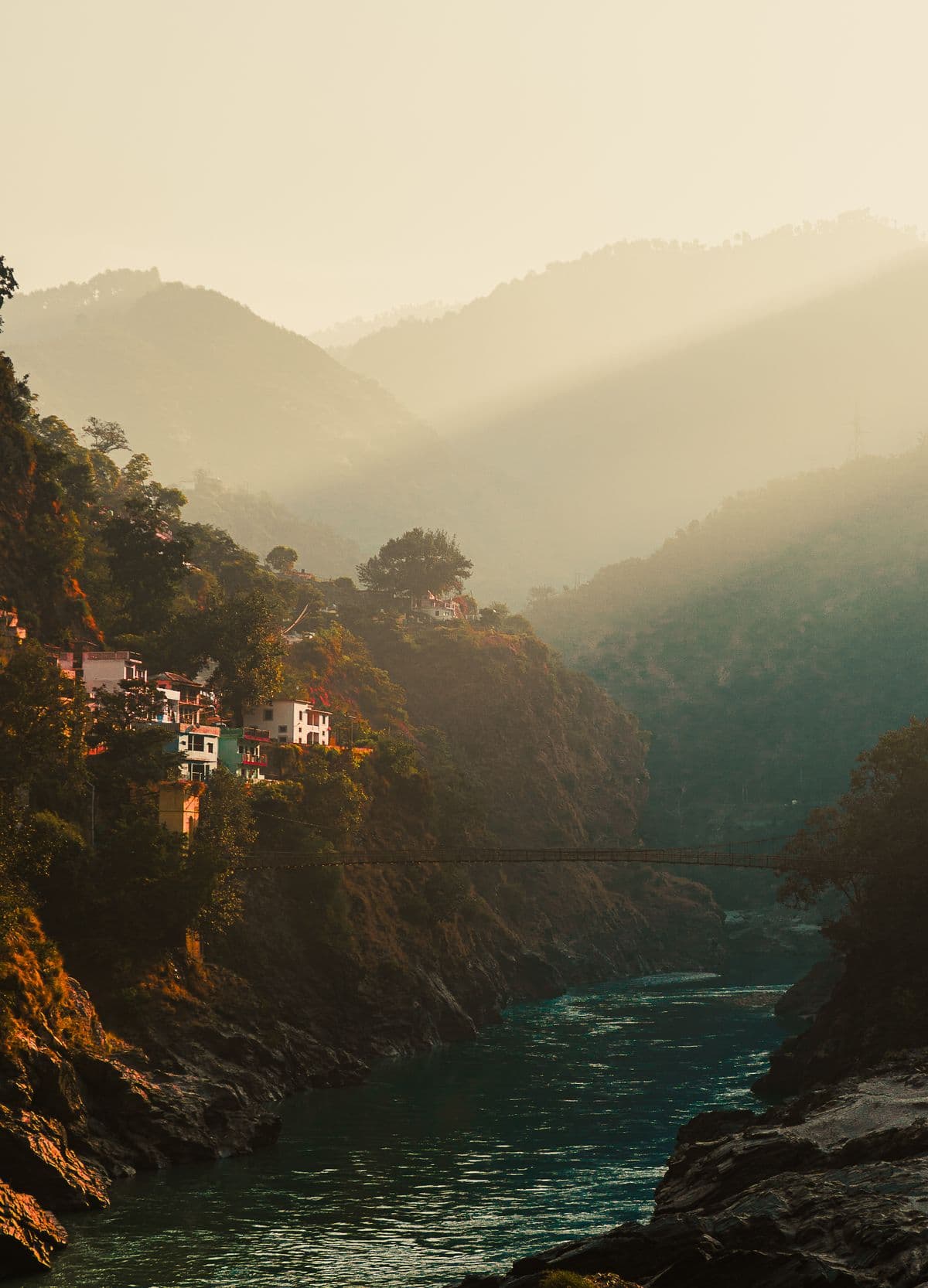
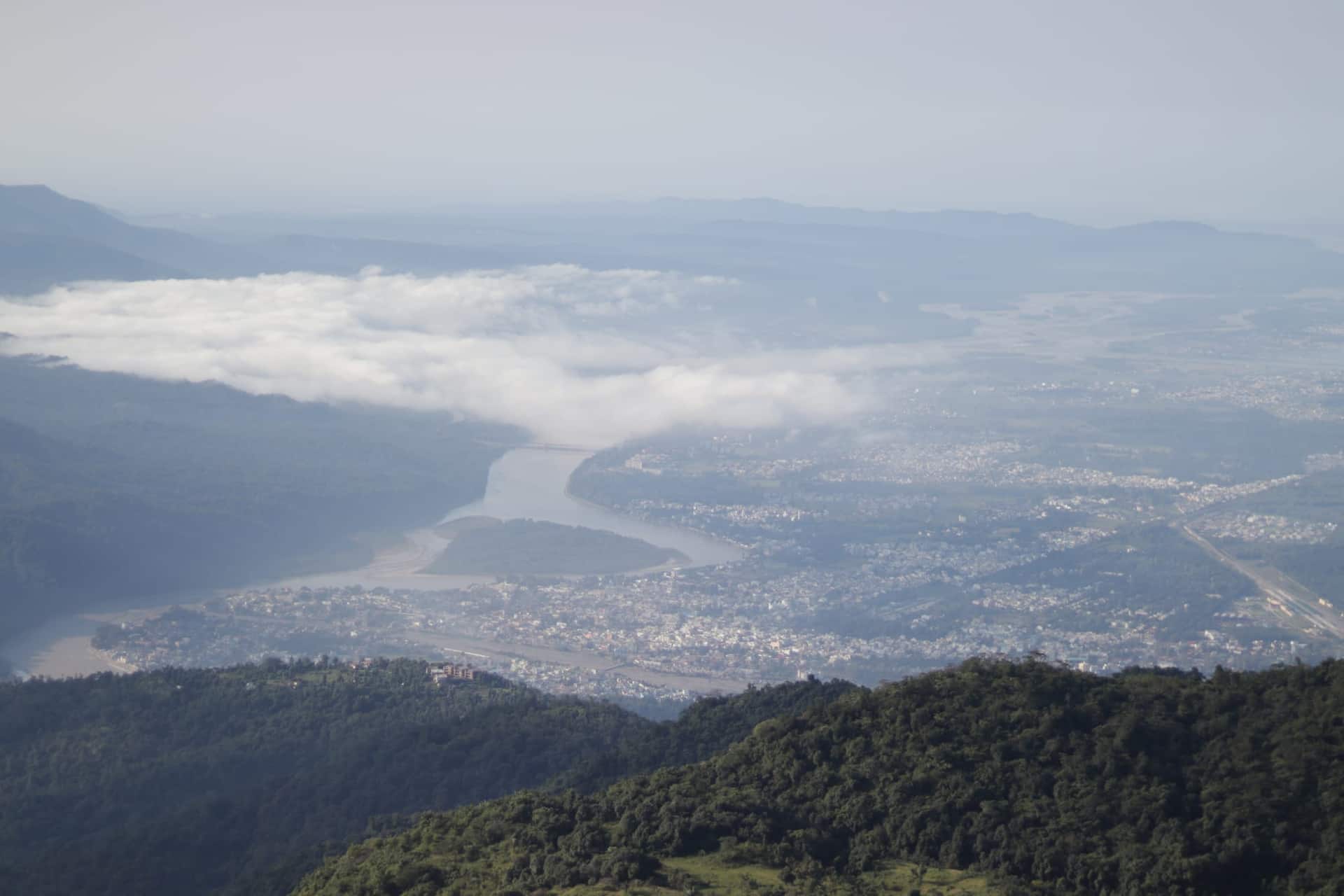
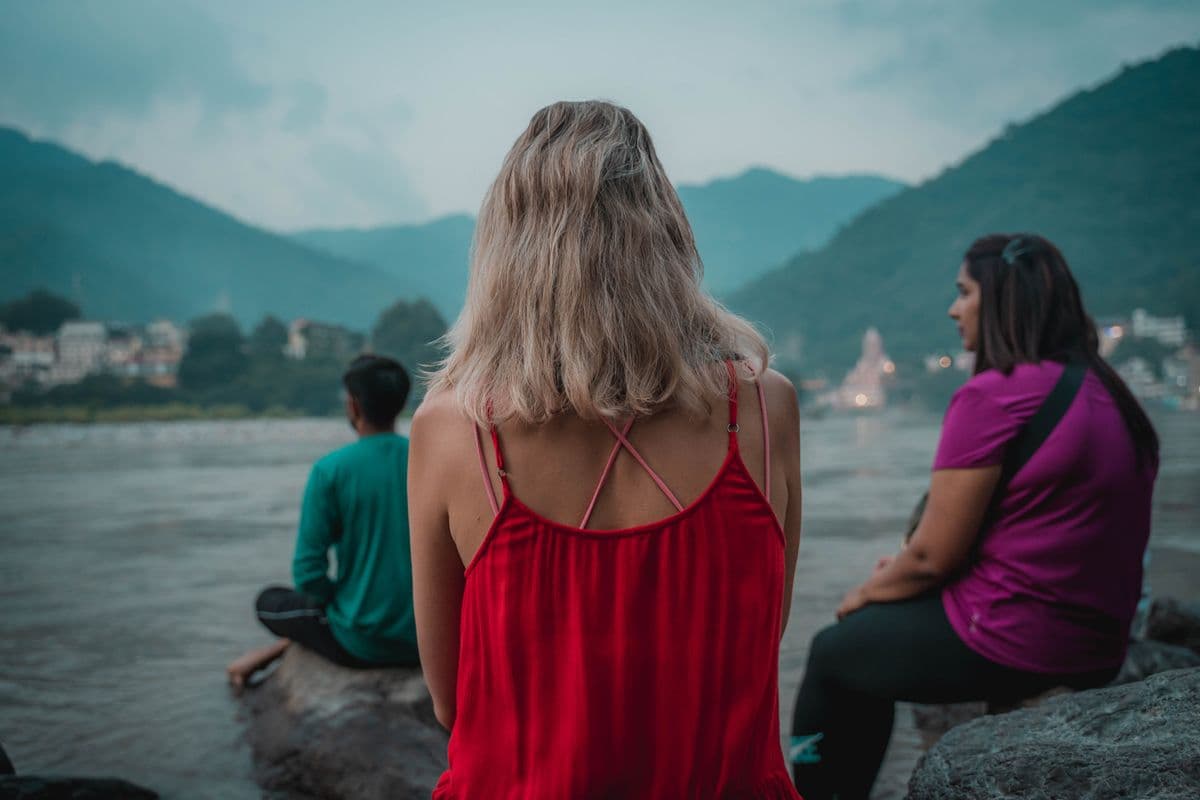
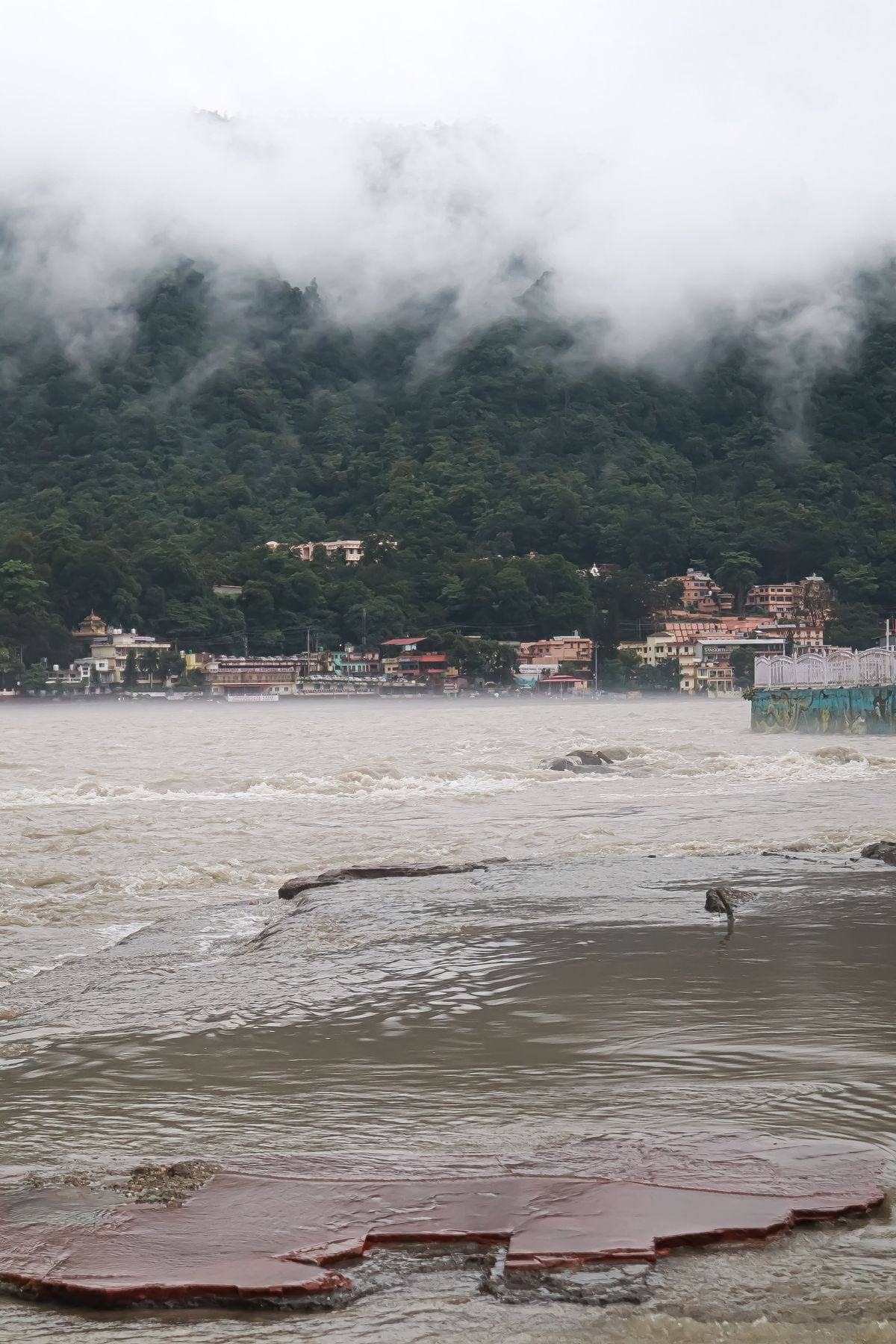
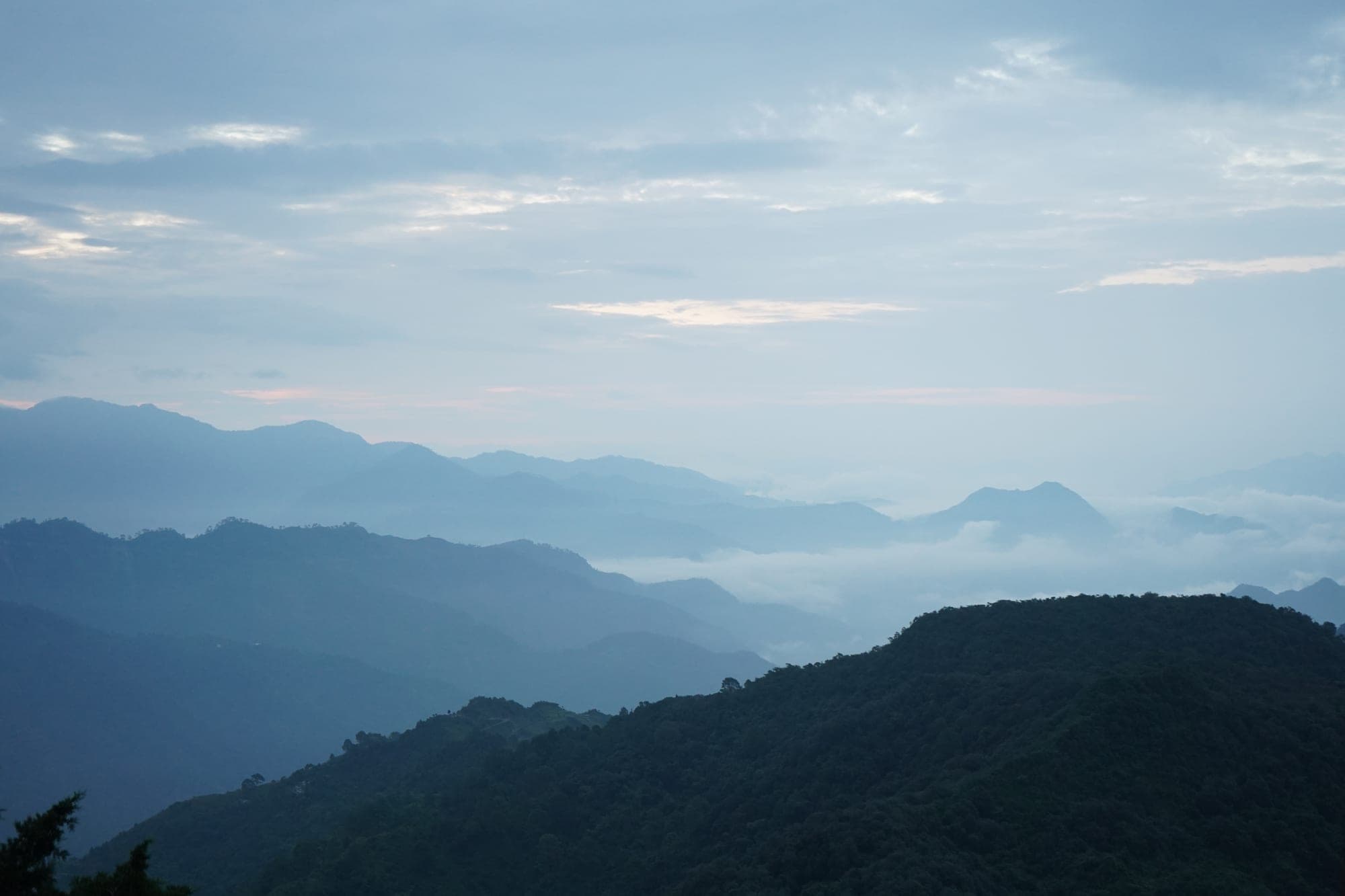
The valley opens up beneath you. The Ganga is down there, threading through the foothills, thinner and quieter than it looks from the ghats. Ridge after ridge stacks up towards the horizon, and as the sun drops the near hills go dark blue while the far ones hold the colour. The town becomes a scatter of lights somewhere below and to one side, which is a strange and useful thing to see — Rishikesh from the outside, for once.
What most people remember is not the sun itself but everything that happens after it goes. The sky keeps working long after the disc has dropped behind the ridgeline, and because there is nothing to walk back to in a hurry, you actually stay for it.
The village carries on around you while this happens, which is part of why it does not feel like a viewpoint. Someone walks cattle home along the lane. A door opens somewhere below and closes again. You are not at an attraction that has been arranged for you; you are sitting at the edge of a place where people live, on an ordinary evening, and the view happens to be enormous. That distinction is most of the difference between this and the organised sunsets on the tourist circuit.
At the ghats you watch the sunset with a crowd. At Kyarki you watch it with whoever you came with, and the valley.
Why it beats the ghats
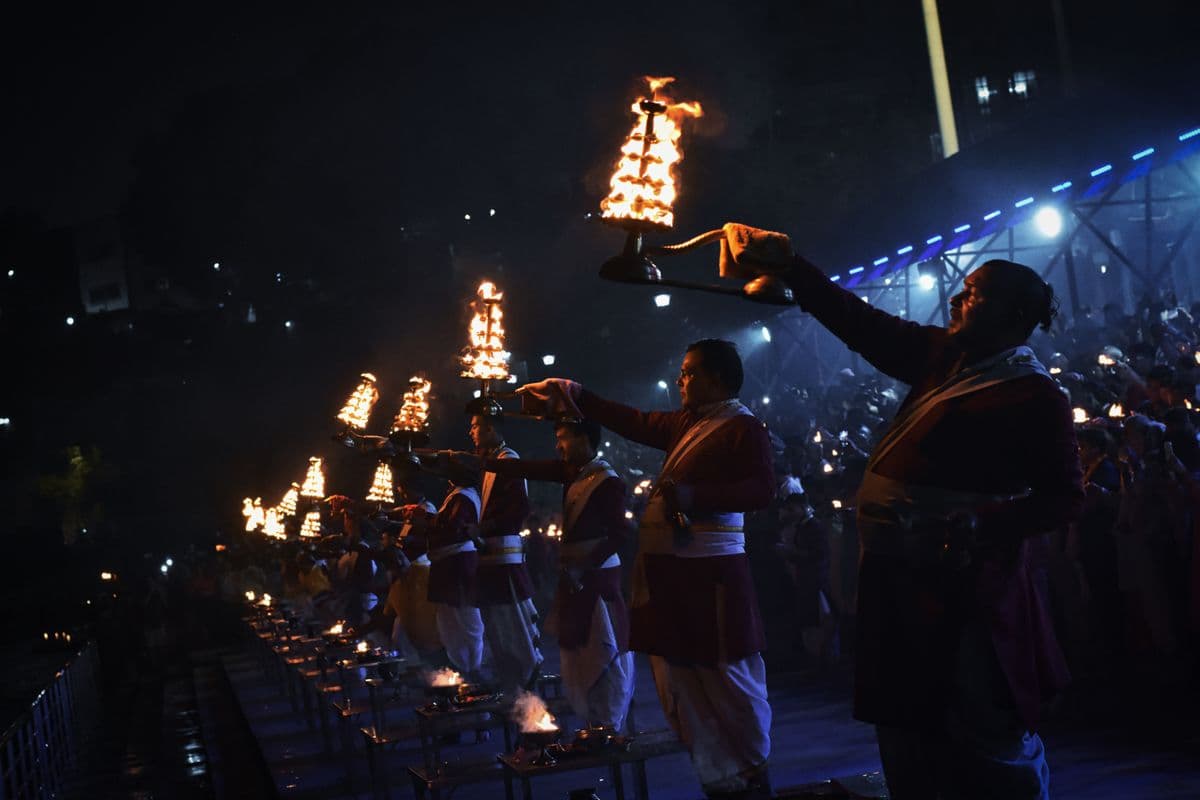
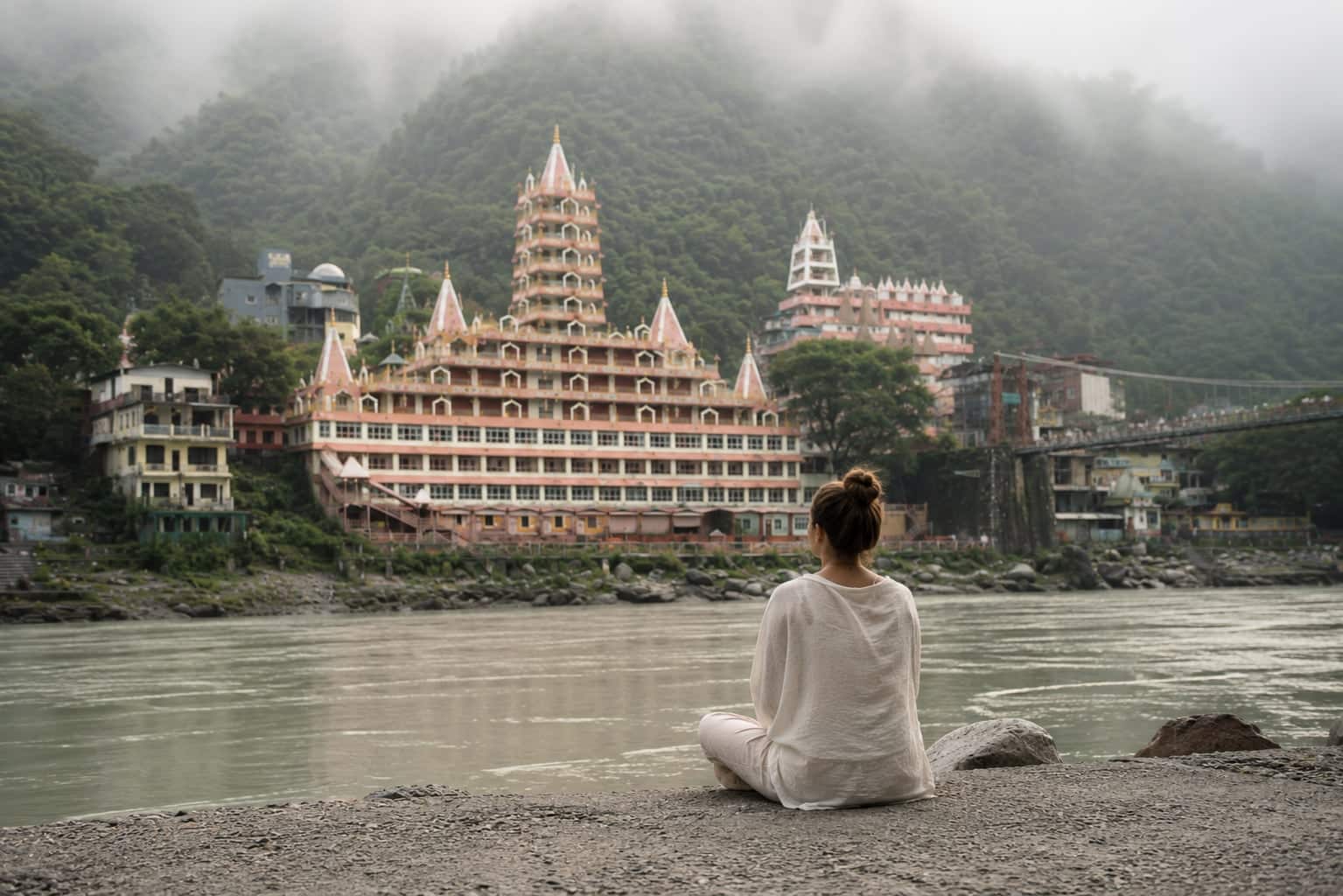
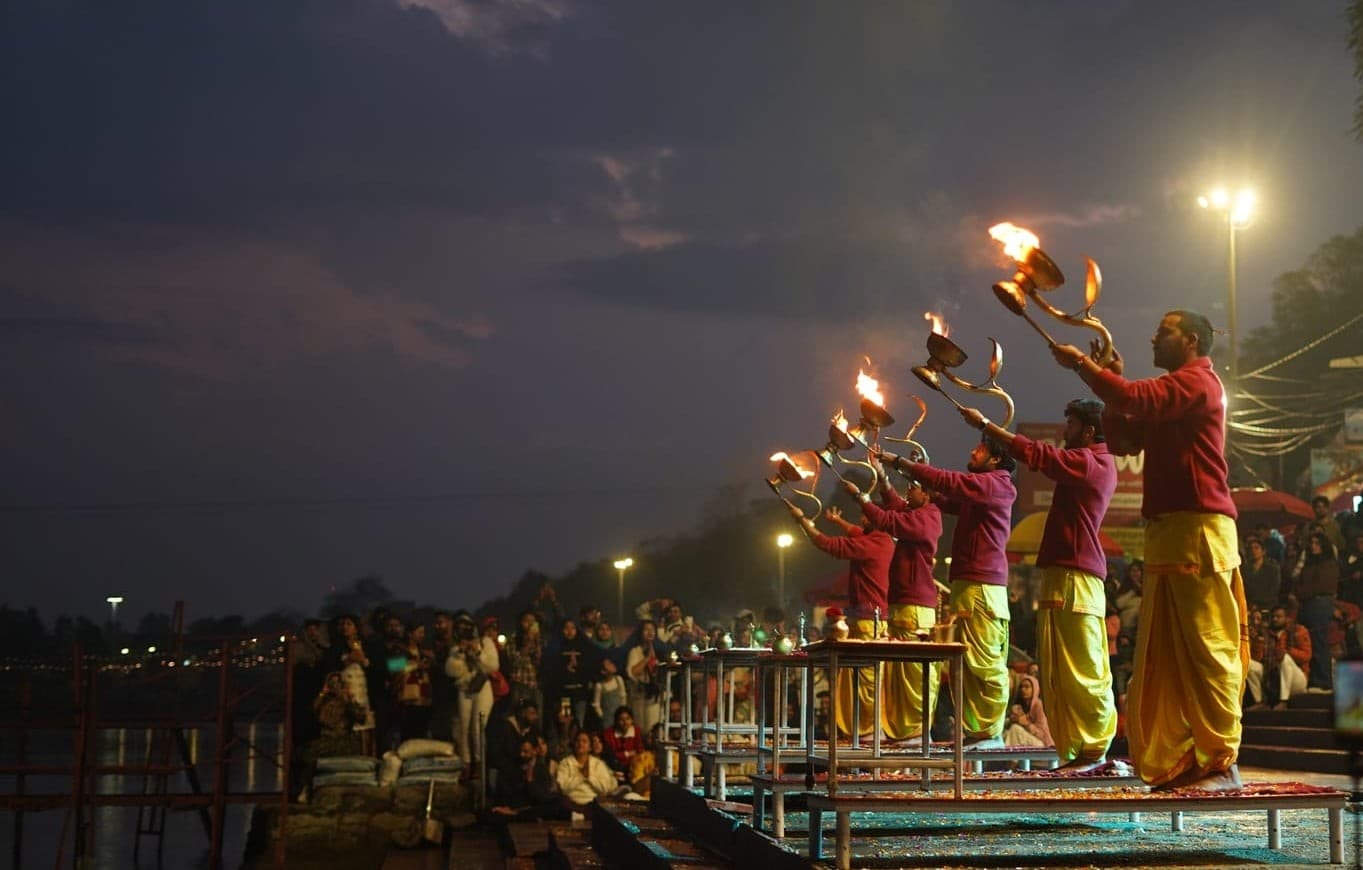
This is not a criticism of the riverside. Evening by the Ganga in Rishikesh is one of the great experiences in Uttarakhand, and the aarti deserves its reputation. But the two are doing different jobs. The ghats give you ceremony, crowd, and sound. A Kyarki village sunset gives you altitude, distance and quiet — the same river, seen from far enough away that you can take in the whole shape of the place at once.
If you have one evening in Rishikesh, take the aarti. If you have several, spend one of them up here. They are not competing for the same slot, and doing both is how you end up with a fuller picture of the place than either gives you alone.
- Leave early: Start the ride with plenty of daylight in hand rather than racing the sun uphill.
- Bring a layer: It is noticeably cooler up there than in town, and colder again once the sun is gone.
- Check your headlight: The descent is in the dark. This matters more than anything else on the list.
- Go with someone who knows it: The turning is easy to miss, and it is not a road to be hunting for in fading light.
How this fits into a trip with us
The Kyarki village sunset is built into two of our retreats — Restore and Rebirth — and in both it is paired with Vashisht Cave the same afternoon. That pairing is deliberate. You sit in the dark and quiet of the cave, then ride on and up to open sky and a long view, and the two halves of the afternoon set each other off. Your host rides out with you and handles the timing, so you are in position before the light turns rather than arriving after it.
It is also a signature moment in our Live Like a Local package, where it lands on the same day as the Bhootnath Temple climb — a quiet view over the town in the late afternoon, then a much wider one from higher up as the light goes. On anything else — a shorter retreat, one of the other packages — ask. Tell your host you want a sunset that is not the ghats, and they will work out whether it fits the days you have.