Nobody plans a trip to Rishikesh around Balkumari Devi Temple. There is no queue, no row of stalls, and nothing at the roadside that announces itself as an entrance. It is a small shrine on a hillside, on the road that brings you back down from Neelkanth Mahadev, and the reason to stop is that almost nobody does.
A local shrine, not a sight
Rishikesh has temples that come with crowds, aarti timings and a line of shops outside. Balkumari Devi Temple is the other kind — the sort of Devi shrine that is kept by the households living on that hillside, used by them and largely ignored by everyone else. There is very little written about it anywhere, which tells you most of what you need to know about how it is used.
Shrines like this one matter most to the villages closest to them. They fill on the days that matter locally and sit quiet for the rest of the year. What you are stopping at is somebody’s ordinary place of worship, not an attraction that happens to be religious. You will sometimes see the name written with a V, but Balkumari is the spelling to use when you are asking anyone on the road for directions.
Where it sits on the Neelkanth road
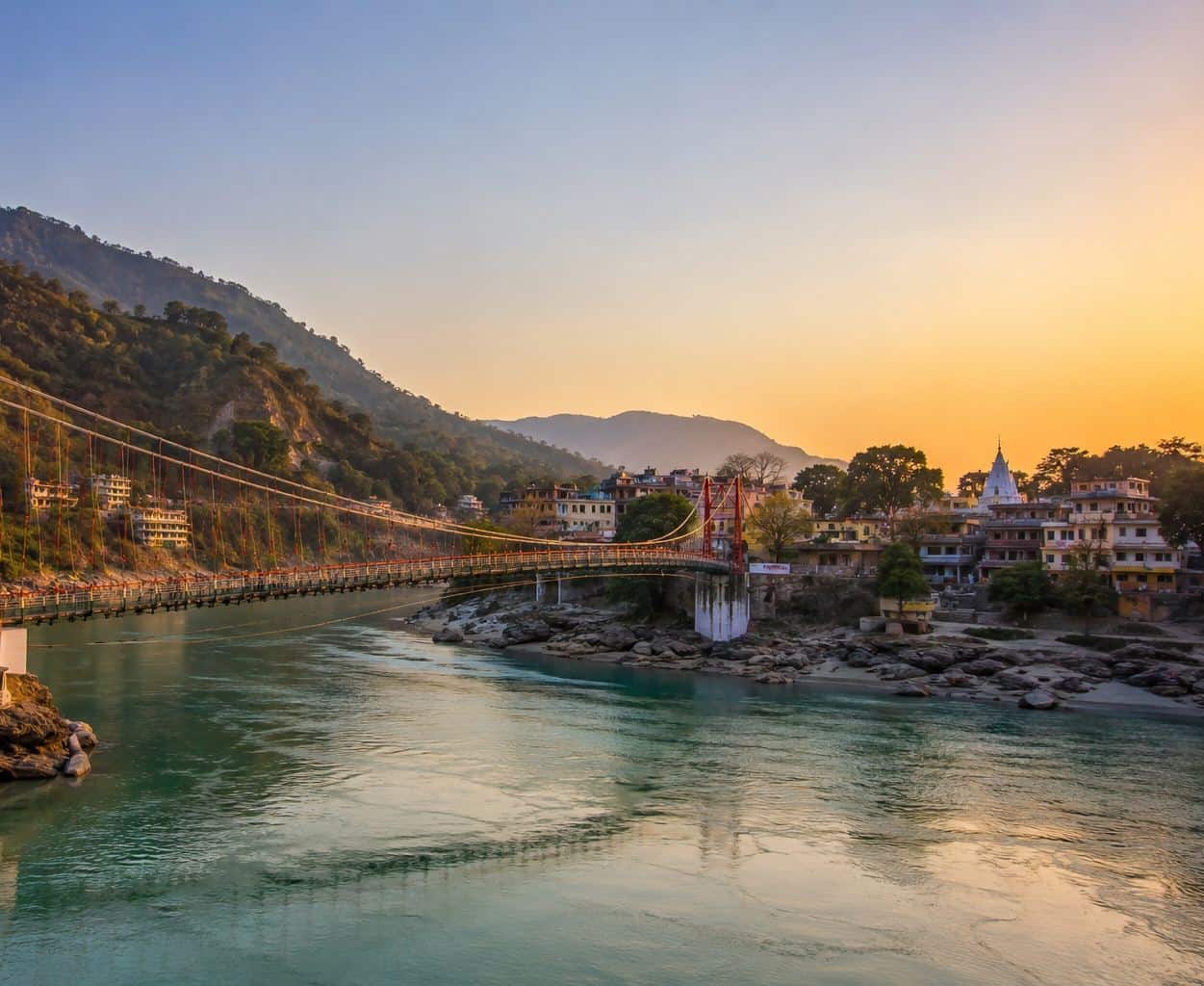
The road out of Rishikesh to Neelkanth Mahadev climbs steadily through forest, and unless you take the long way round, you come back down the same way. Balkumari Devi Temple sits on that stretch, above the tarmac in the Himalayan foothills of Uttarakhand.
That road is narrow and full of hairpin bends, which is worth saying plainly if you are riding it yourself. It is a good ride and an unforgiving one: blind corners, a steady climb, monkeys sitting on the warm tarmac, and vehicles coming the other way that are not expecting you. Take it slowly, and do not plan to be on it after dark.
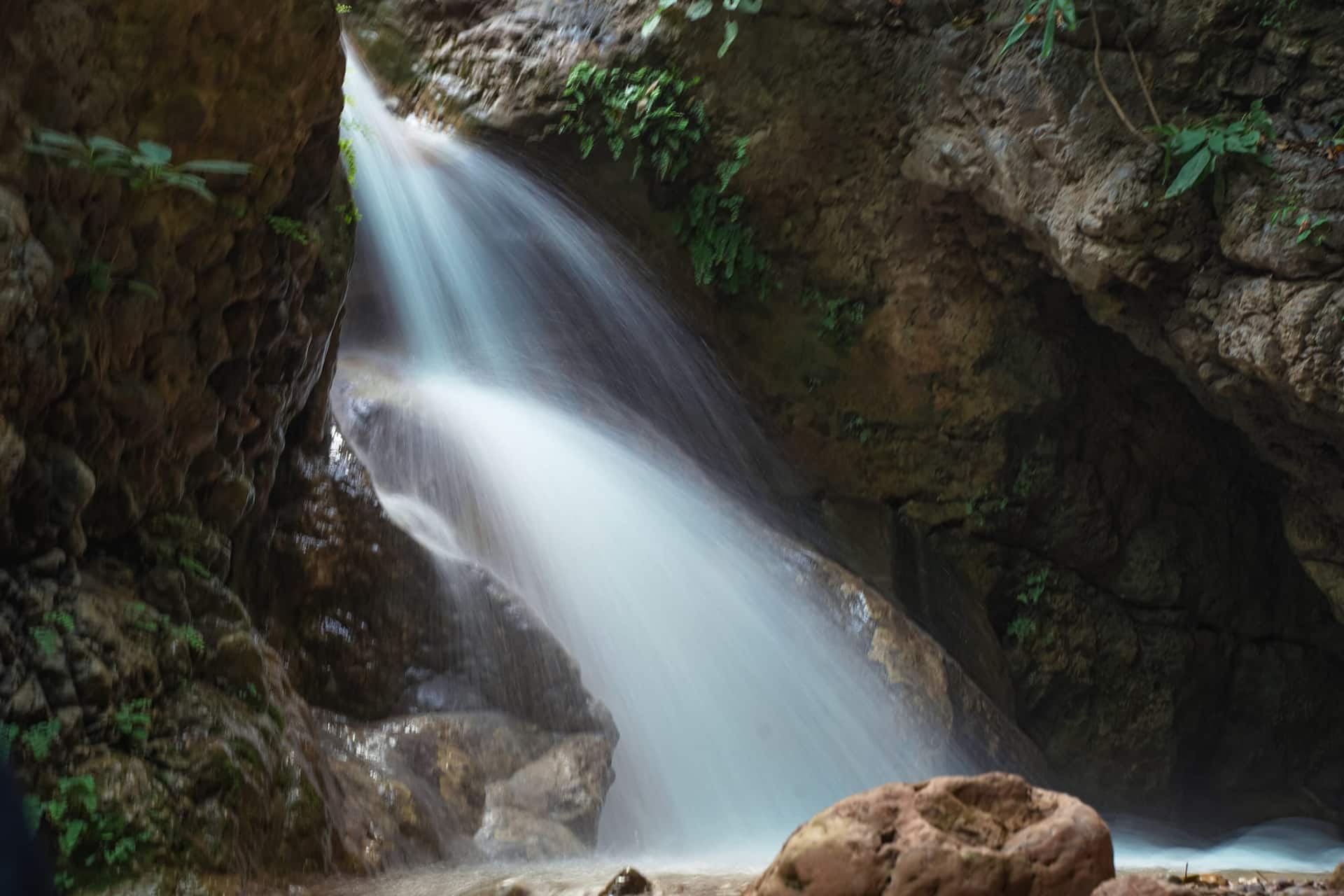
Almost everyone on that road is going somewhere else — pilgrims heading up to Neelkanth, day-trippers turning off for Patna Waterfall, riders enjoying the corners. The shrine gets passed at speed all day long. On a scooty it is the easiest stop you will make: pull in, switch the engine off, and the noise of the road goes off with it.
What the stop actually feels like
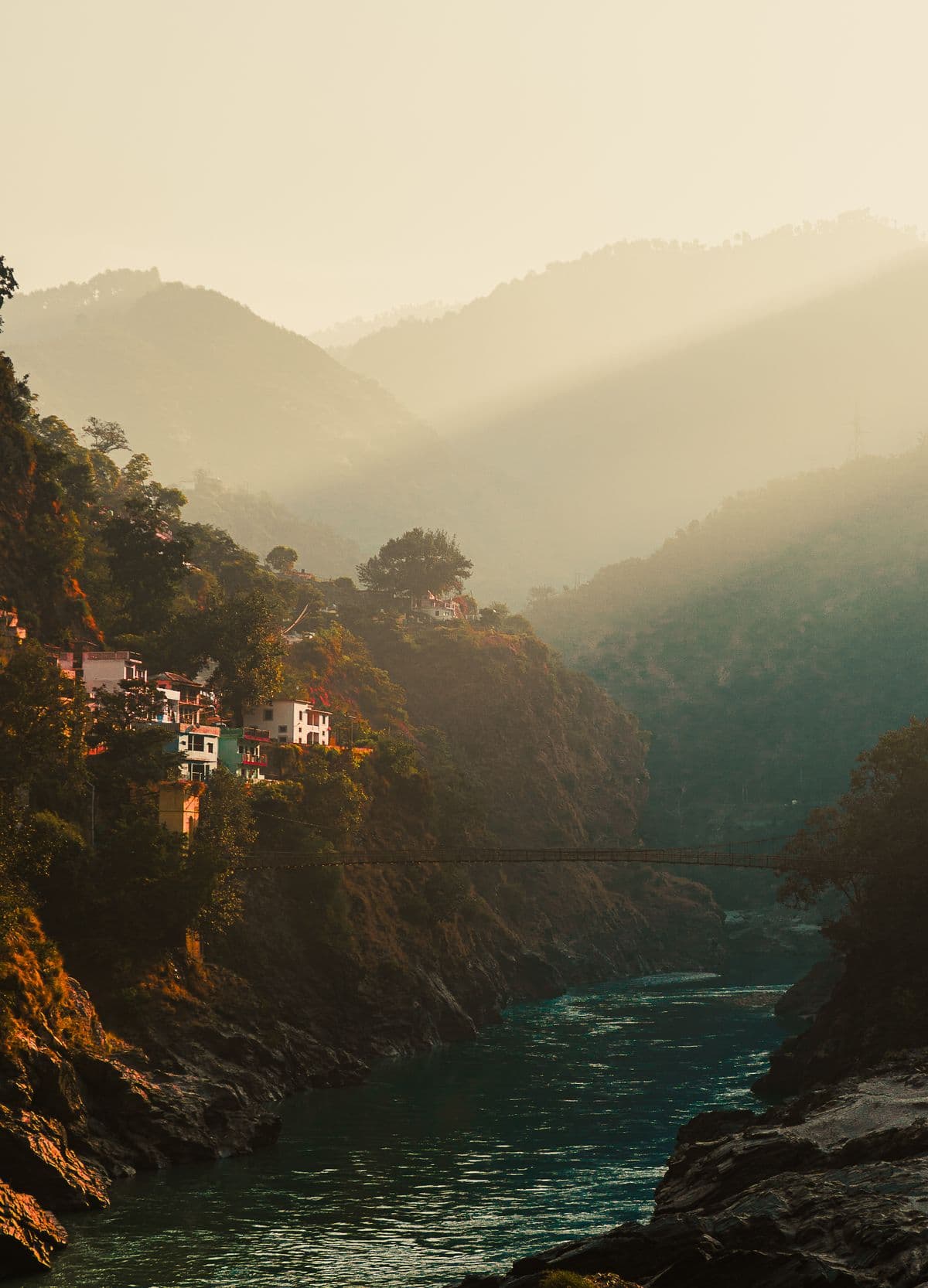
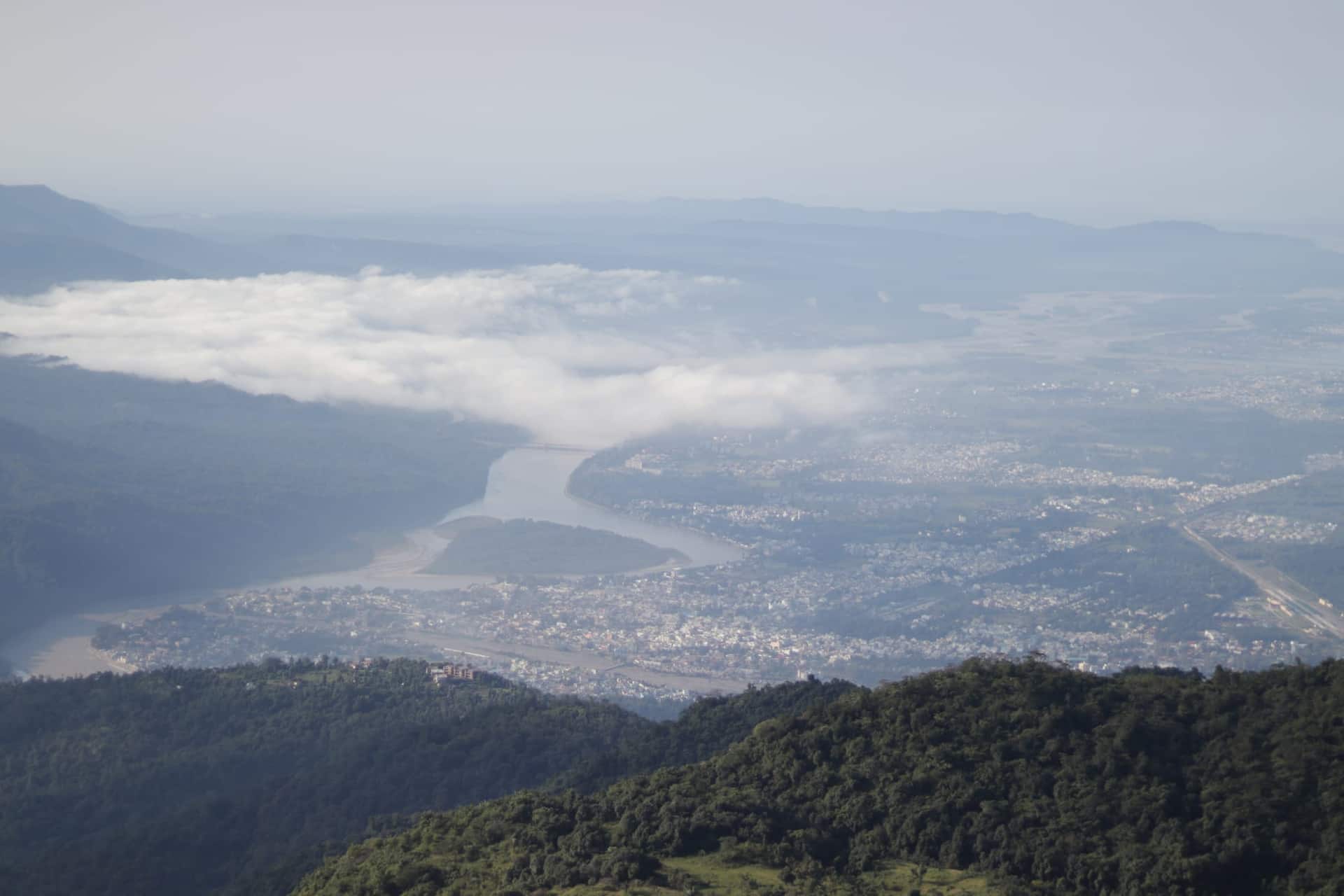
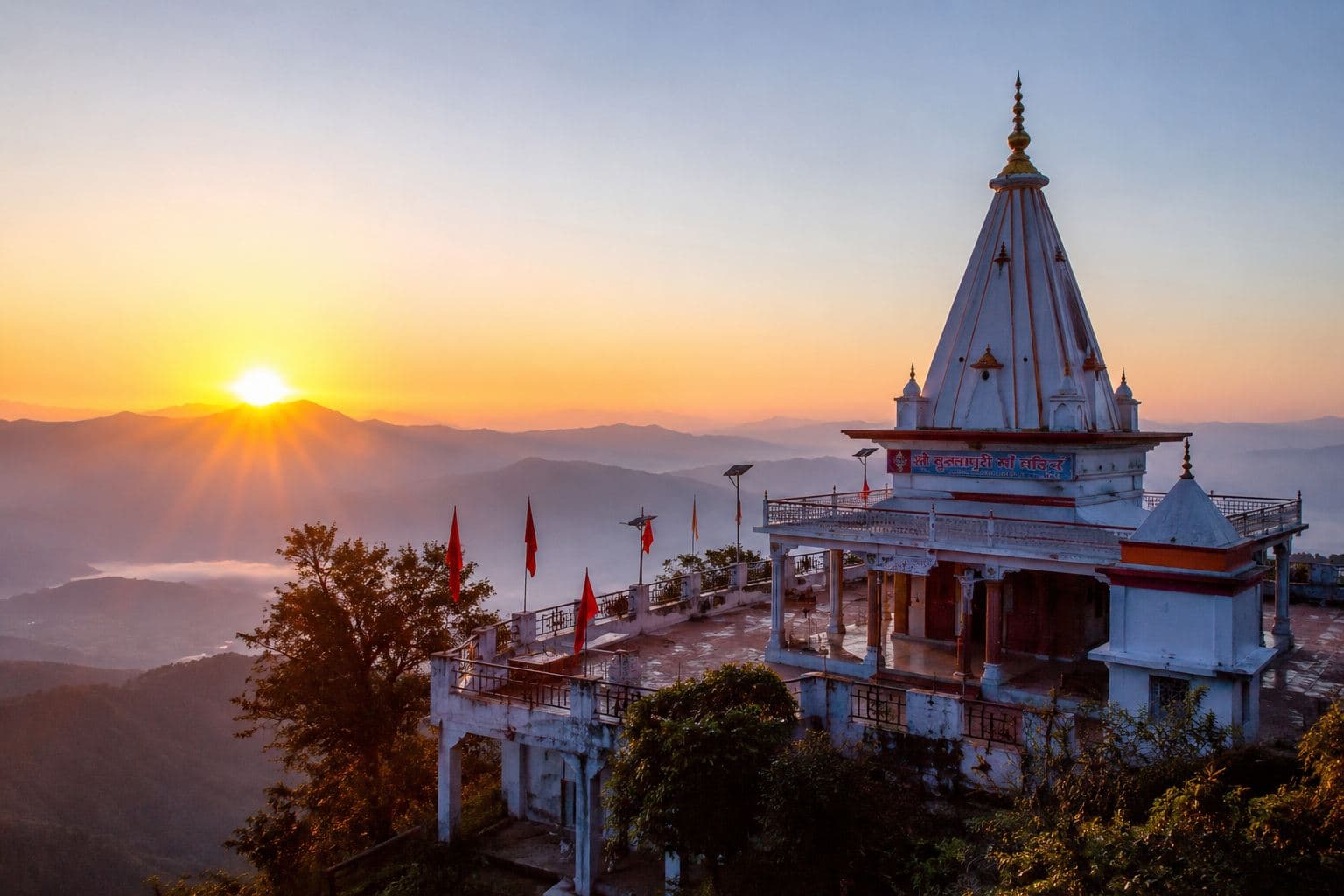
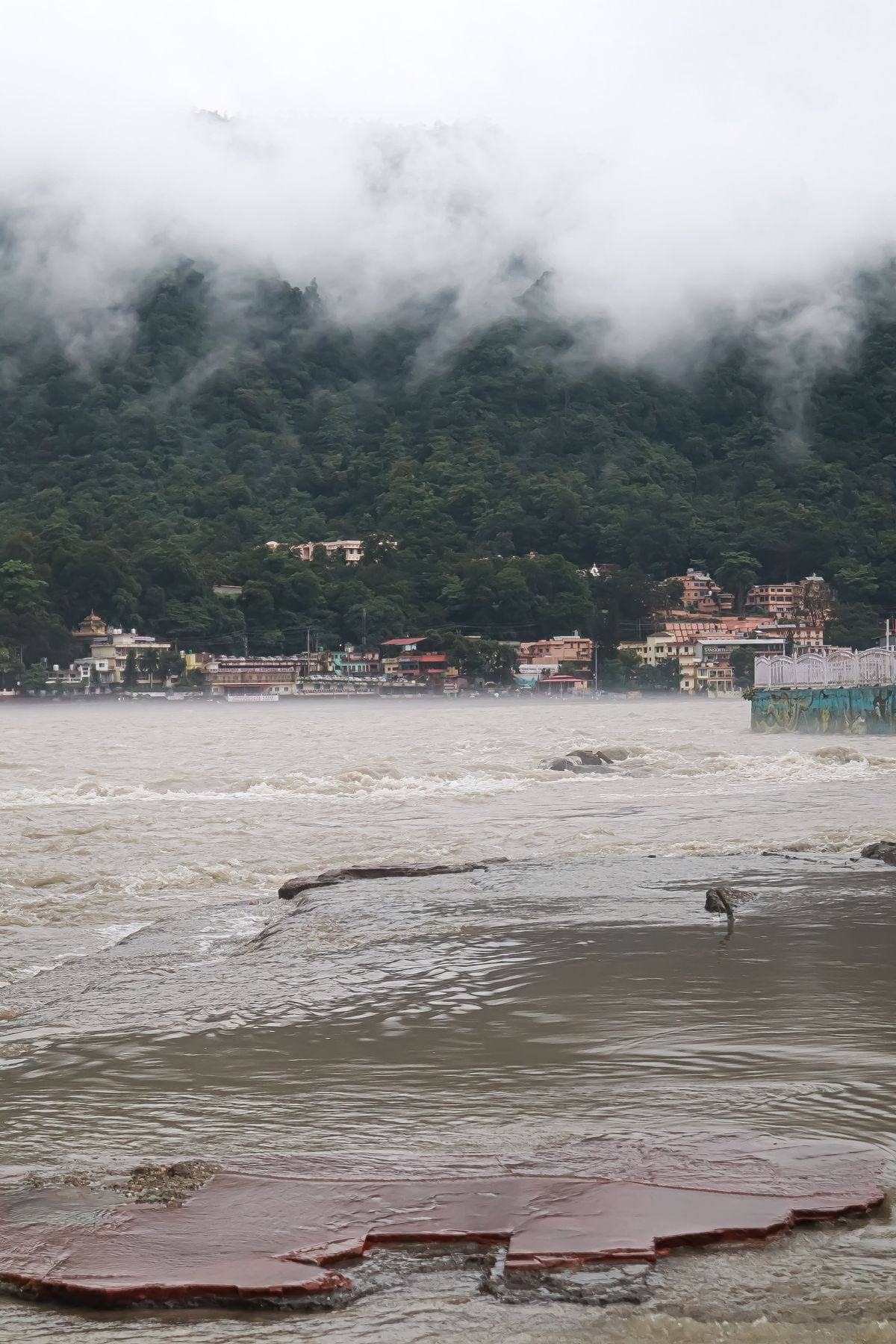
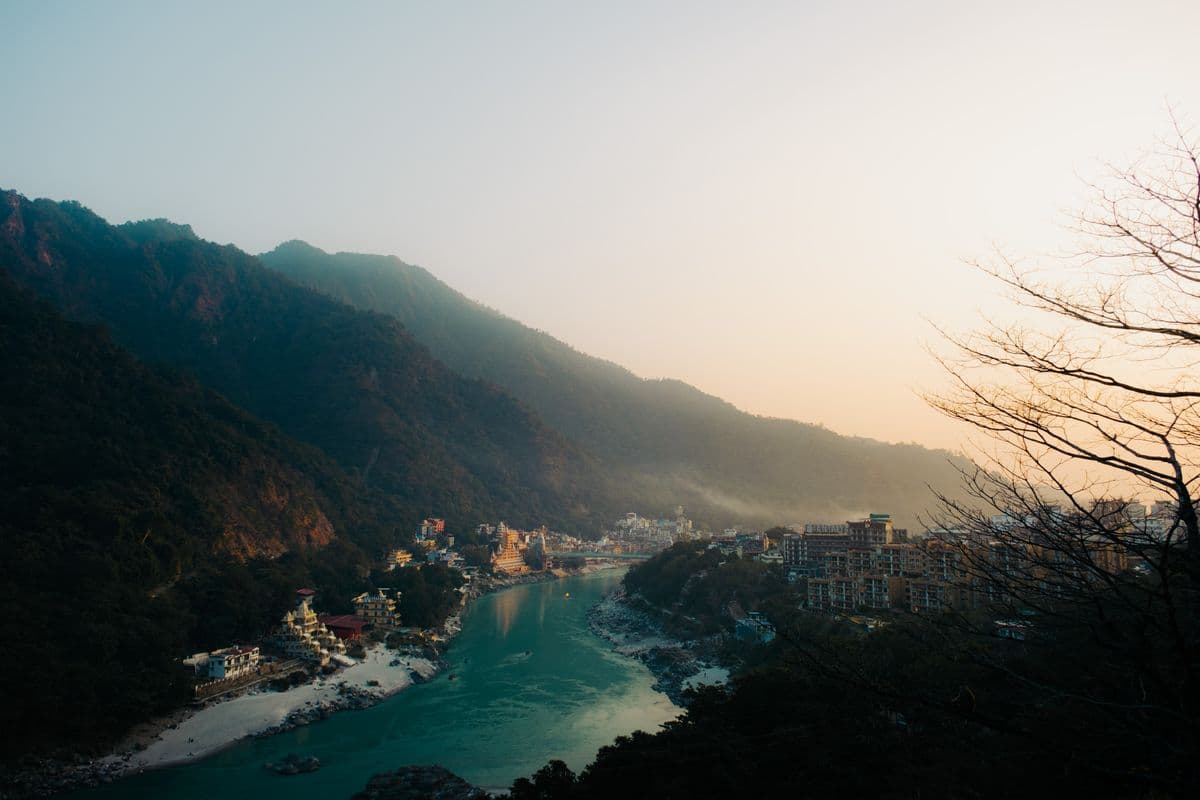
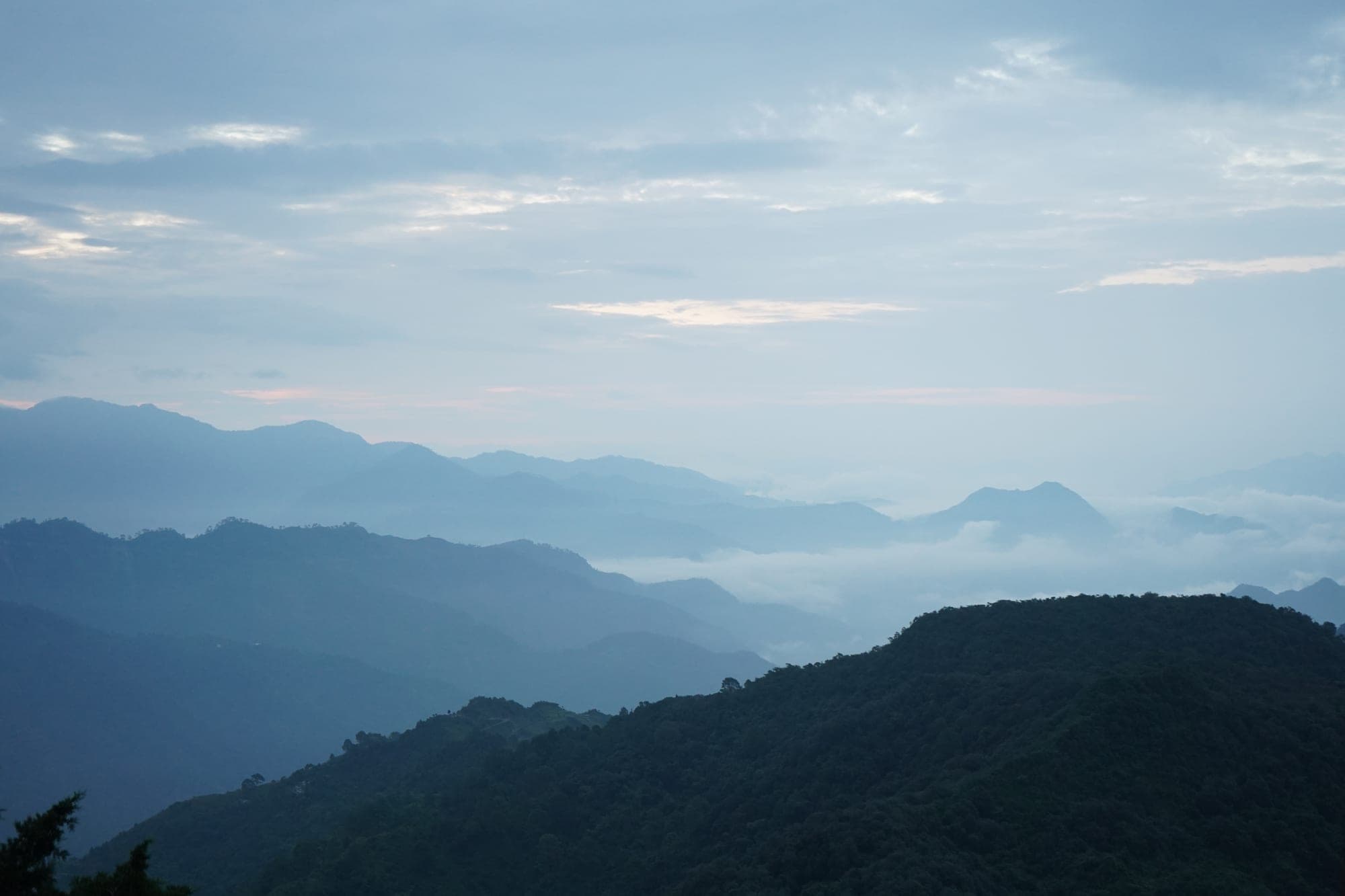
Do not arrive expecting architecture. It is small, plain and open to the weather, and you will have taken it in about as soon as you have parked. What the stop gives you is height and quiet: forested ridges stacking away into haze, the valley dropping below, wind moving through the trees, and long gaps between vehicles.
If someone is there you might hear a bell. Often there is nobody at all. In the months after the monsoon the ridges are green and the air is clear enough to see a long way. In high summer the same view sits behind haze and the stone is hot underfoot. Neither is a reason to skip it, but they are different stops.
If a family or a caretaker is there when you arrive, take your lead from them rather than from anything you have read. Keep your voice down, leave your shoes where theirs are, and ask before you photograph a person or the deity. Nobody is going to hand you a list of rules at a shrine this small, which is exactly why it is worth arriving with your own.
- Best time: On the way back down from Neelkanth, when you are no longer watching the clock.
- Treat it as: A working shrine rather than a viewpoint — quiet voices, shoes off where others leave theirs, and ask before photographing anyone.
- How long: Not long. Long enough for the day to slow down, short enough that the rest of the loop still fits into the morning.
- Easy to miss: Nothing here is signposted for visitors. Know roughly where you are pulling in before you set off, or you will ride straight past it the way everyone else does.
There is nothing to see here in the sightseeing sense. That is exactly why the stop is worth making.
Why the stop is worth making
Most of a day out of Rishikesh is spent in places built to receive visitors. Neelkanth has its queues and its stalls. The Ganga ghats have their cameras. Balkumari Devi Temple has none of that, and the difference is the whole value of it — a short stop on a hillside where nothing is being performed for you.
If you want spectacle, skip it and give the time to the waterfall instead. If what you came to Rishikesh for is the quiet sitting underneath everything else, this is usually where the day tips over into it.
How this fits into a trip with us
Balkumari Devi Temple is part of Rebirth, our six-night retreat. It sits between Neelkanth Mahadev and Patna Waterfall on the same scooty loop, so the pause costs you nothing — one morning covering both temples and the forest walk, rather than three thin outings spread across the week.
Your host knows where to pull in, which matters more than it sounds: the shrine is easy to ride straight past, and most people do. Your host also sets the order and the hour, so the climb and the darshan are behind you while the road is still quiet. If you are doing the loop on your own, plan it as one direction of travel and start early.