Two hundred and nineteen metres, and below you the river valley. This is not the quick adventure most people picture when they search for bungee jumping in Rishikesh. It is a mountain road day trip to Devprayag, the town where the Bhagirathi and the Alaknanda meet and become the Ganga. The jump is the headline. The journey is half the experience.
What makes this one different
The jump is about 219 metres, which makes it an exceptionally high bungee by any standard and, as far as we can establish, the highest in India. The familiar Rishikesh jump is the 83-metre platform near Mohan Chatti, which is the figure Uttarakhand Tourism lists. So Devprayag is dramatically higher. It is also dramatically further away, and that second part is the one people miss. One is an adventure you fit into half a day. The other deserves a day of its own.
One honest note about the number, because you are reading it before stepping off a platform. The operator currently advertises the jump as 200 plus metres, and published heights vary a little between listings. Confirm the exact height, and the rest of the operating details, when you book. We would rather hand you a question than a number we cannot stand behind.
Devprayag is not Rishikesh
This sounds obvious. It is worth saying anyway. Devprayag is a mountain town on the road towards Badrinath, roughly 70 to 75 kilometres from Rishikesh depending on the route and where you start. The Tehri Garhwal district page puts it at about 472 metres above sea level, at the confluence of the Alaknanda and the Bhagirathi.
So do not book the jump assuming you will be back in Tapovan for lunch. Allow a substantial part of the day for the road, and know what that road is: mountain driving, not a straight highway transfer. Which is why we would treat Devprayag itself as part of the trip rather than the price of it.
Where the Ganga begins
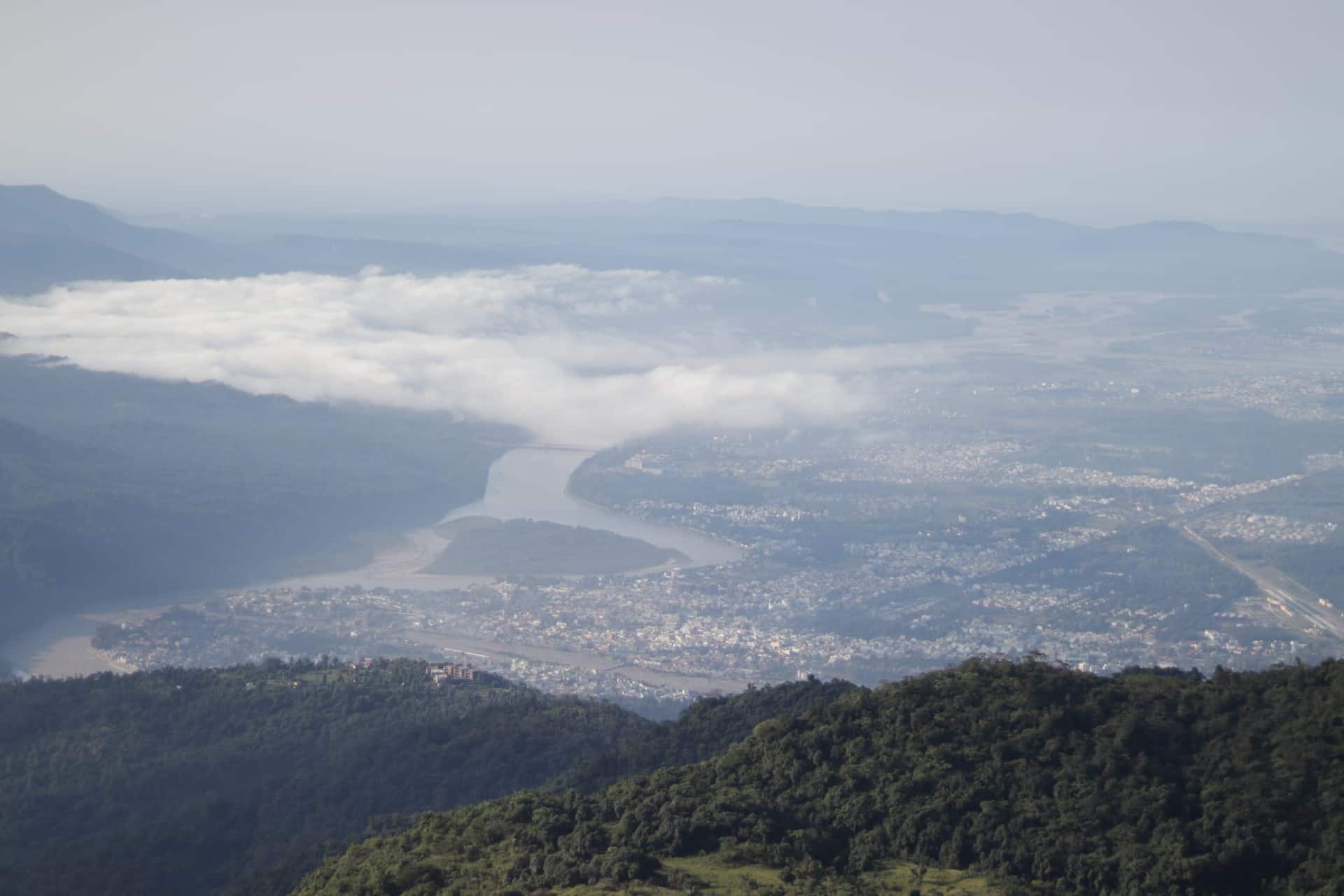
This is the part that makes the location special. The Bhagirathi comes down from the Gangotri side. The Alaknanda comes down its own valley. They meet at Devprayag, and from that confluence the river is called the Ganga.
So while you stand above the valley waiting your turn, you are not looking at some anonymous mountain river. You are looking at the beginning of the one that runs on to Rishikesh: the aarti, the bridges, every raft you have seen a photograph of. That gives the jump a sense of place no adventure park can manufacture.
219 metres against 83
If you are choosing between the two, choose on the practical difference rather than on the height alone.
Trip length decides this more often than nerve does. On a single day in Rishikesh it is not really a choice: six hours in a car is the day. Over two days you give up half of everything else you came for. From three days upward it stops being a sacrifice and becomes one very good day.
If you have two days in Rishikesh, jump at Mohan Chatti. Devprayag is worth a day of its own, and it should get one.
The 219 metres are the easy part
Not physically. Mentally. You can read the number on a screen all morning. Standing at the platform is a completely different piece of information. The fear does not disappear because you researched it, and at some point you still have to step forward.
Which is why we will not spend an article persuading you that it is not scary. It is supposed to be. If the height does not bother you at all, you are probably an unusual person.
One thing you will read that is not true
Several listings describe Devprayag as the world’s highest bungee jump. It is not, and it does not need to be. The Macau Tower has been dropping people 233 metres since 2006. What Devprayag genuinely is, the highest in India and the one above the point where the Ganga becomes the Ganga, is a better sentence than the one being borrowed.
Should you drive three hours for a jump?
If the jump is the only thing you care about, probably not. But if you like the idea of turning an adventure into a proper mountain day, then yes. You leave Rishikesh behind, the road follows the river valleys, then the confluence, then the jump. That sequence is far more interesting than hotel, activity centre, jump, hotel. It suits:
- Anyone who has jumped once already and wants a bigger one
- Bloggers and content creators, because at Devprayag the confluence is the picture, not the platform
- People who genuinely enjoy mountain roads and river valleys
- Anyone with three days or more, who can spare a whole one
Who should not do this one
Everything true of the 83-metre jump is more true here. There are age and weight limits, they are checked at the platform, they are not negotiable, and operators change them, so trust the operator’s current rules rather than any blog post, including this one. If you have a heart, blood pressure, back or neck condition, an old injury, or you are pregnant, get medical advice before you book and tell the operator in advance. Do not wait until you are at the platform to find out that you are not eligible.
And if what you are unsure about is the height rather than your health: that is not a reason to skip it, but it is a good reason to do the 83-metre jump first, on a different day, and find out what you think of the falling part before you commit three hours of driving to it.
Check these before you leave Rishikesh
This matters more here than anywhere else, because you are committing most of a day to getting there. Before you set off, confirm:
- The jump is operating on your date
- The current age and weight requirements, and that you meet them
- The exact jump height
- The current price, and what video and photo package is included
- Your reporting time, and how long the whole thing should take
- Whether the operator provides transport or you arrange it
- The road and the weather that morning
Do not build a three hour drive around an assumption that the activity will definitely be running.
Weather, and the months that work
This is a mountain activity, so rain, road conditions and visibility all change the day. Uttarakhand Tourism recommends October to March as a favourable period for bungee in the Rishikesh area and advises avoiding monsoon conditions, much the same window that works best for the rest of a Rishikesh trip. That does not make every dry day automatically perfect. Check the operating status before you leave.
What to wear
Keep it simple. Comfortable clothes you can move in freely. Nothing loose or dangling, and nothing you would mind losing over the edge. Proper footwear for the site and the stops on the road. And do not turn up with your entire holiday luggage. You are going for an adventure day, not checking into a resort.
Make the confluence part of your day
Do not arrive at Devprayag, jump, eat something and immediately turn around. Give yourself time at the sangam. Look down at the two rivers meeting, and at how long they refuse to mix. Spend an hour in the town. The district’s own tourism page leads with Devprayag’s history and its religious importance rather than with the bungee, which tells you what sort of place you are standing in.
Which also means you are somewhere people come to pray. If you go down to the ghat or step into the temple above it, cover your shoulders and legs, and if the day allows it, shower before you go rather than arriving straight off the road. Nobody checks. It is simply what somebody from here would do.
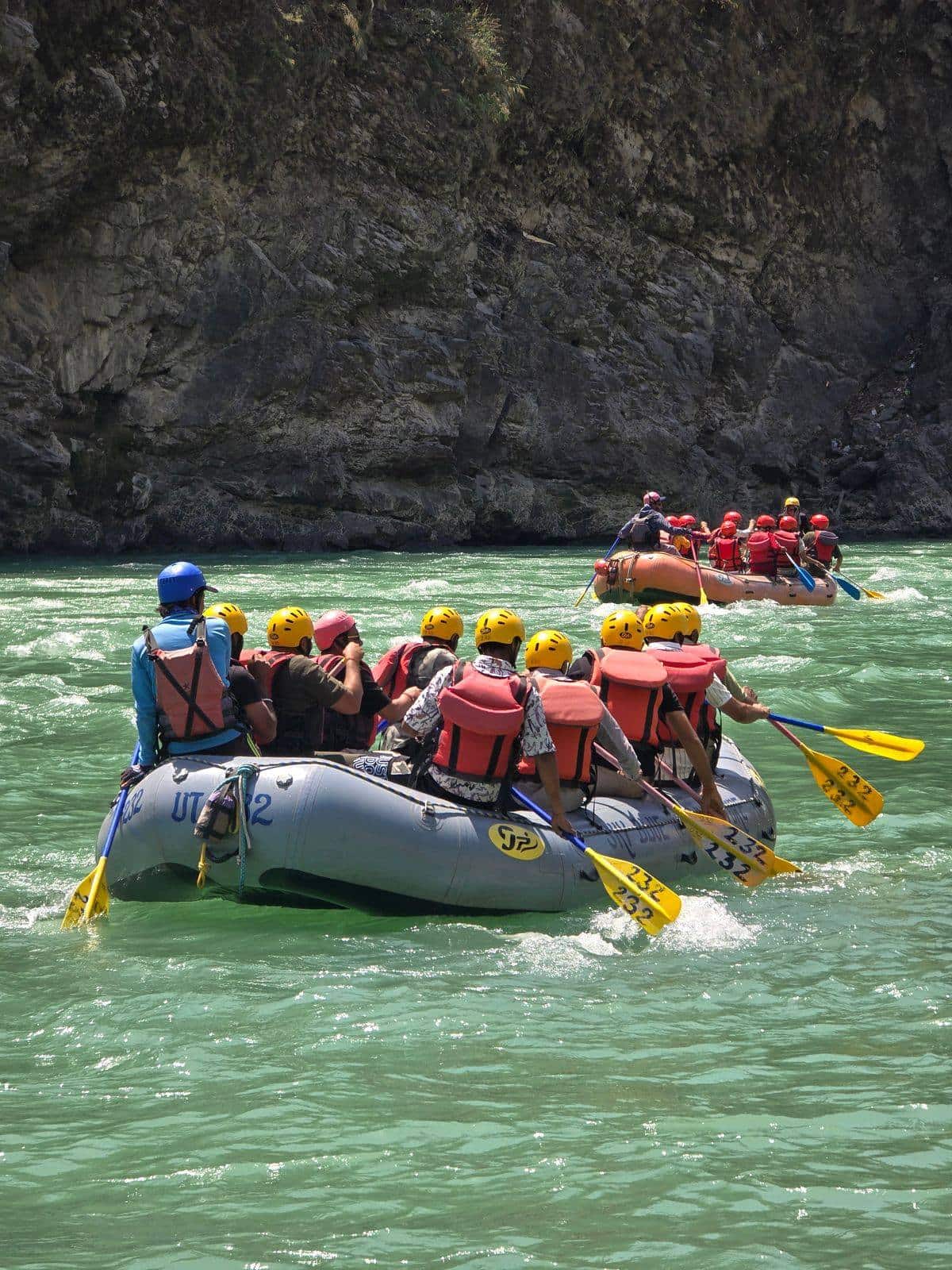
This same stretch of water is also where the three day rafting expedition starts, running all the way back down to Rishikesh. If the river is the part you like rather than the falling, the shorter rafting stretches are the gentler way to see the same water.
The simple version
Want a quick bungee from Rishikesh? Go for the closer Mohan Chatti option. Want an enormous jump and do not mind a full day? Look at Devprayag. Want the best version of the Devprayag trip? Do not treat the drive as wasted time. See the confluence, spend some time in the town, then jump.
The number is what gets you interested. The place is what makes this one worth the drive.