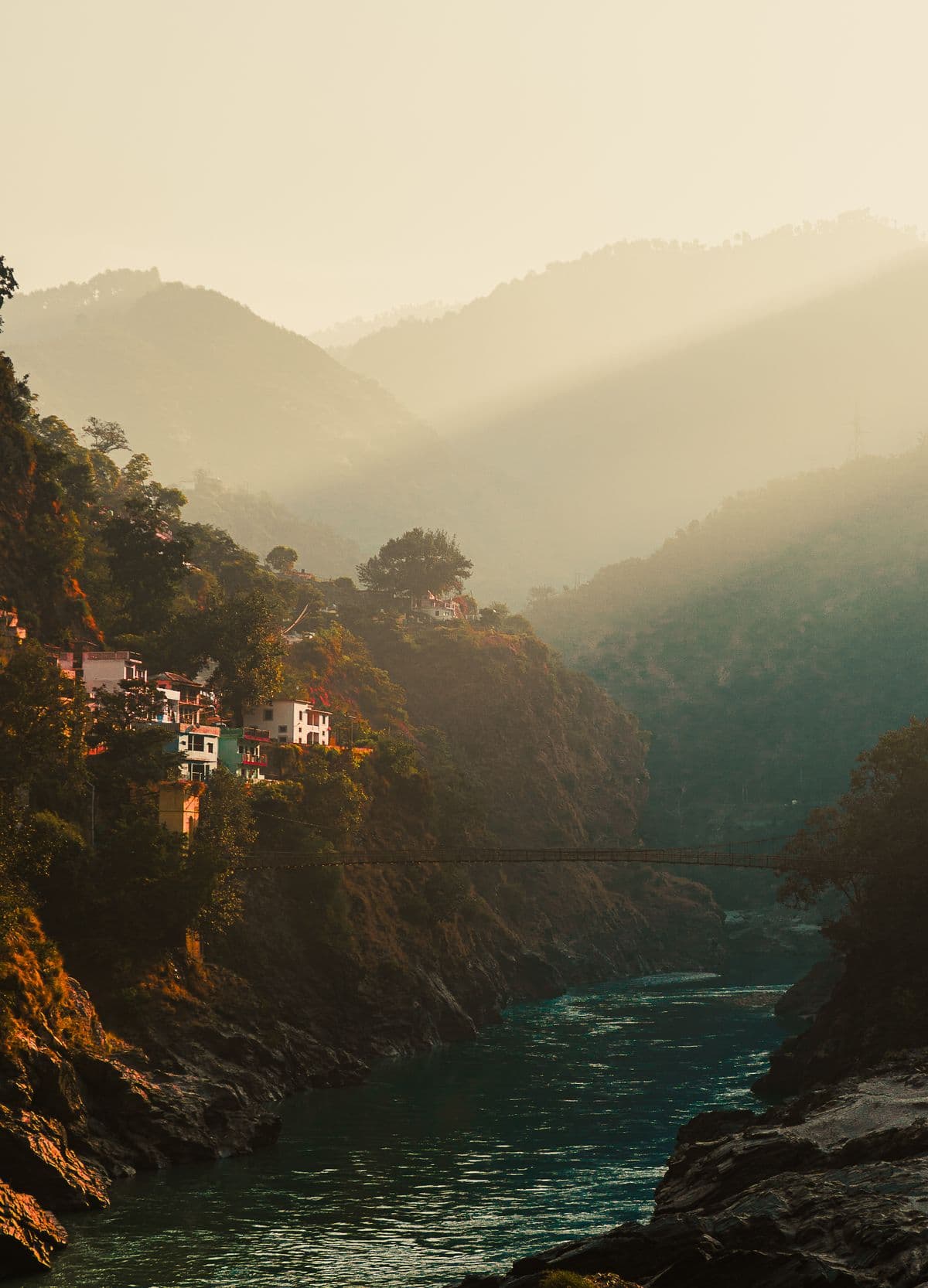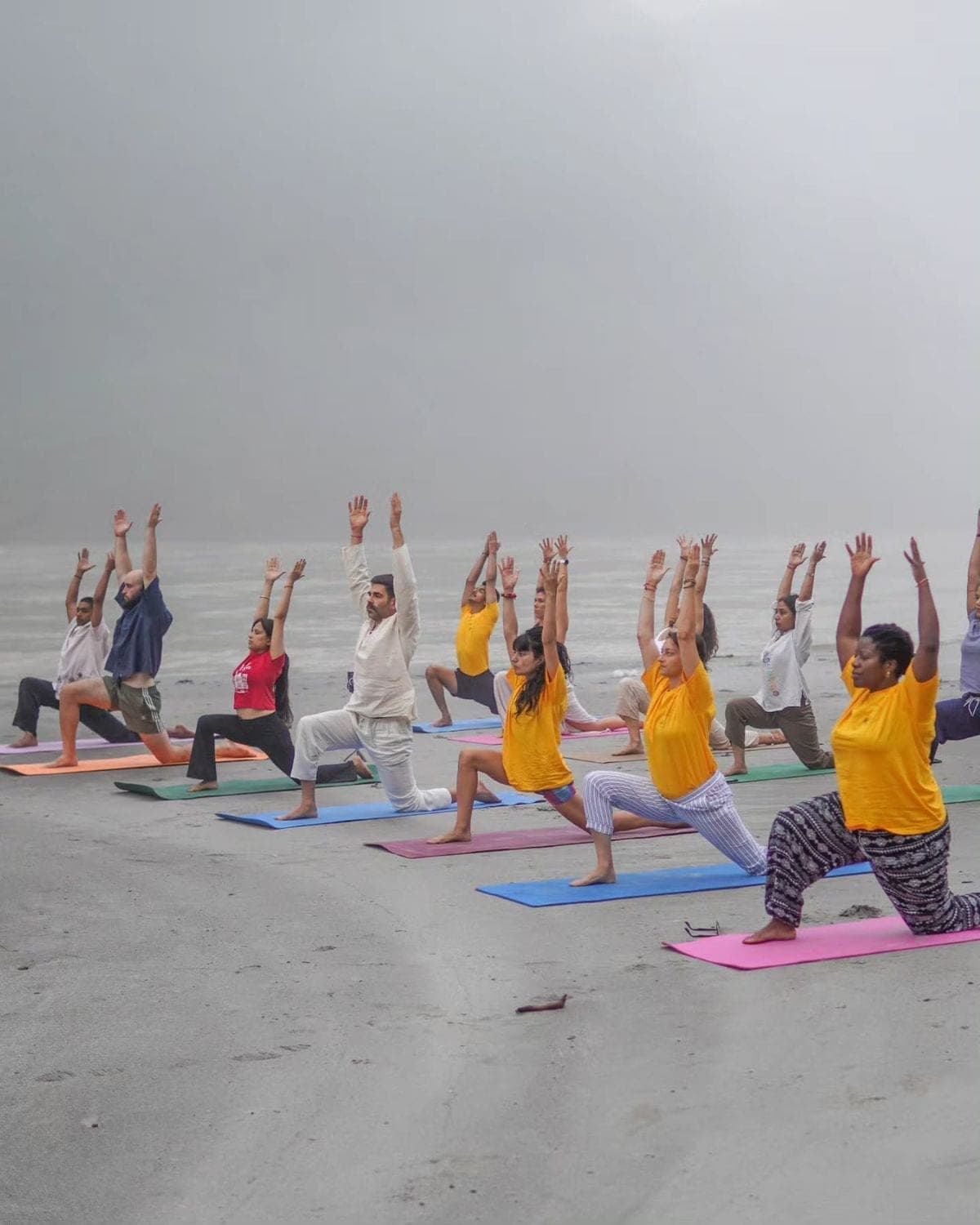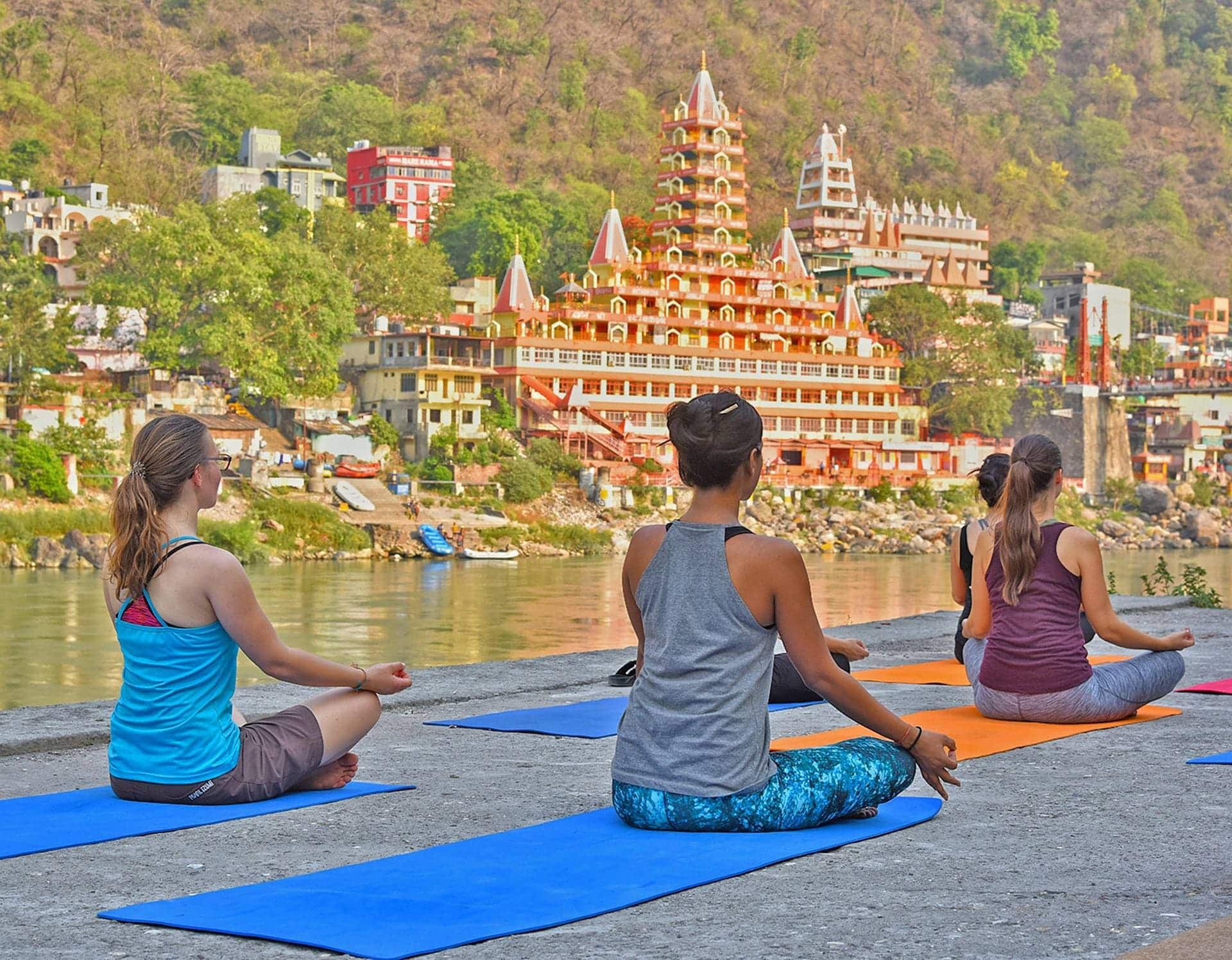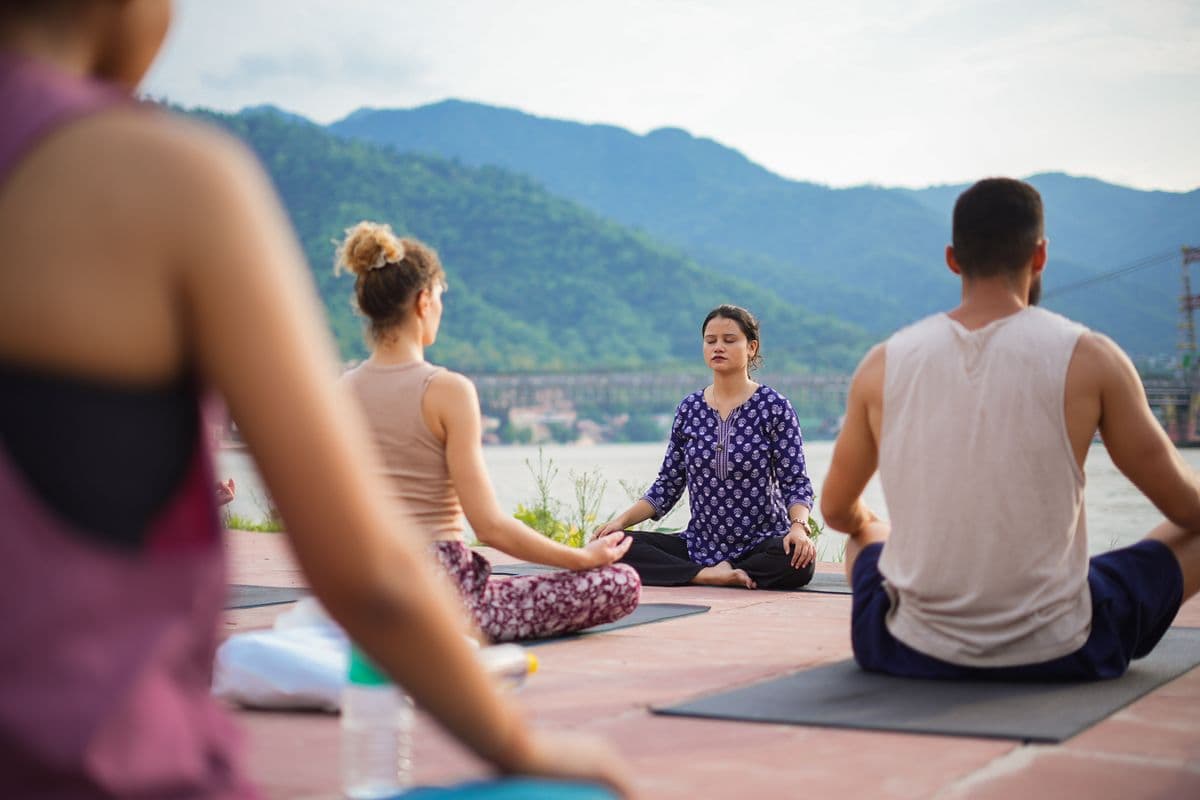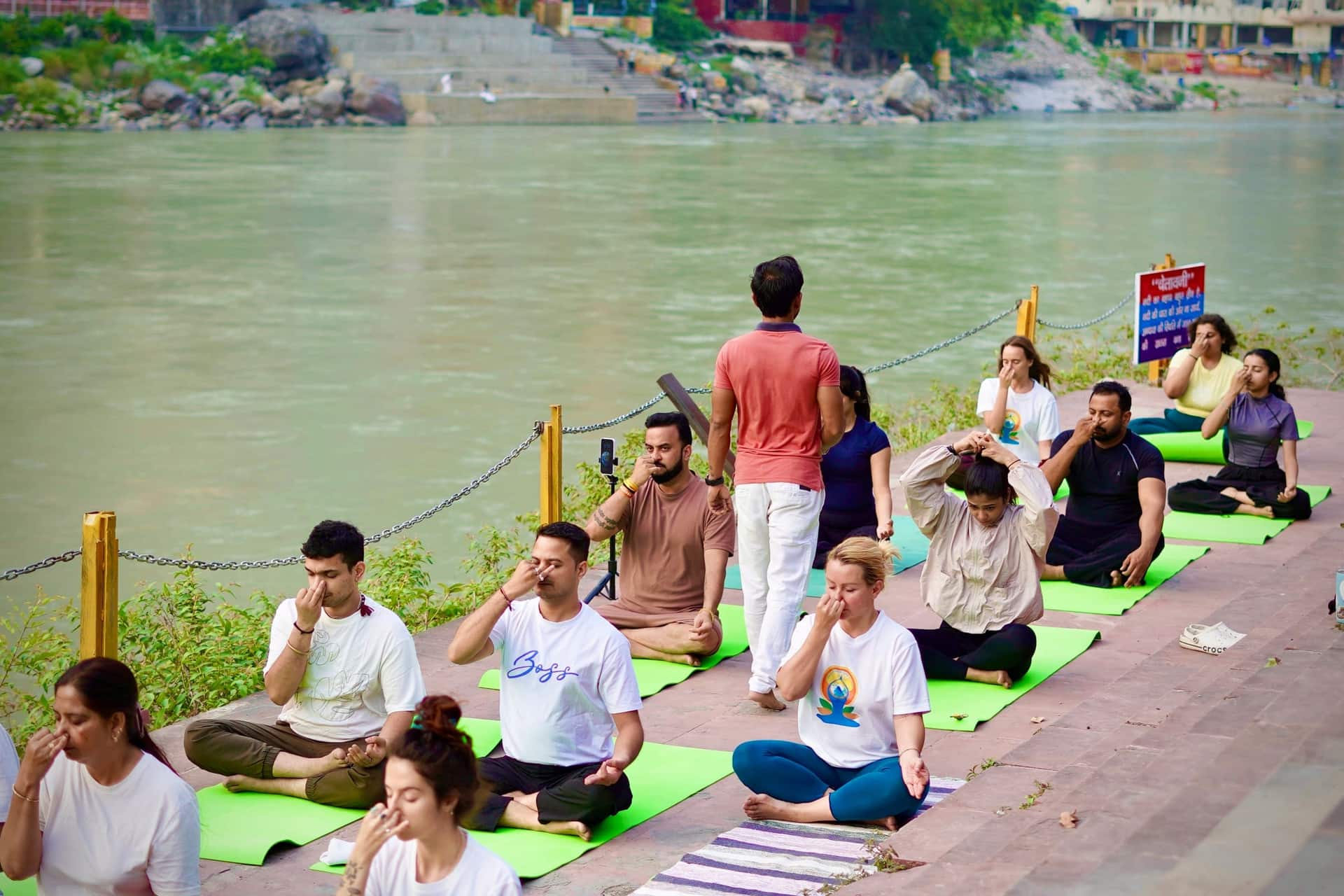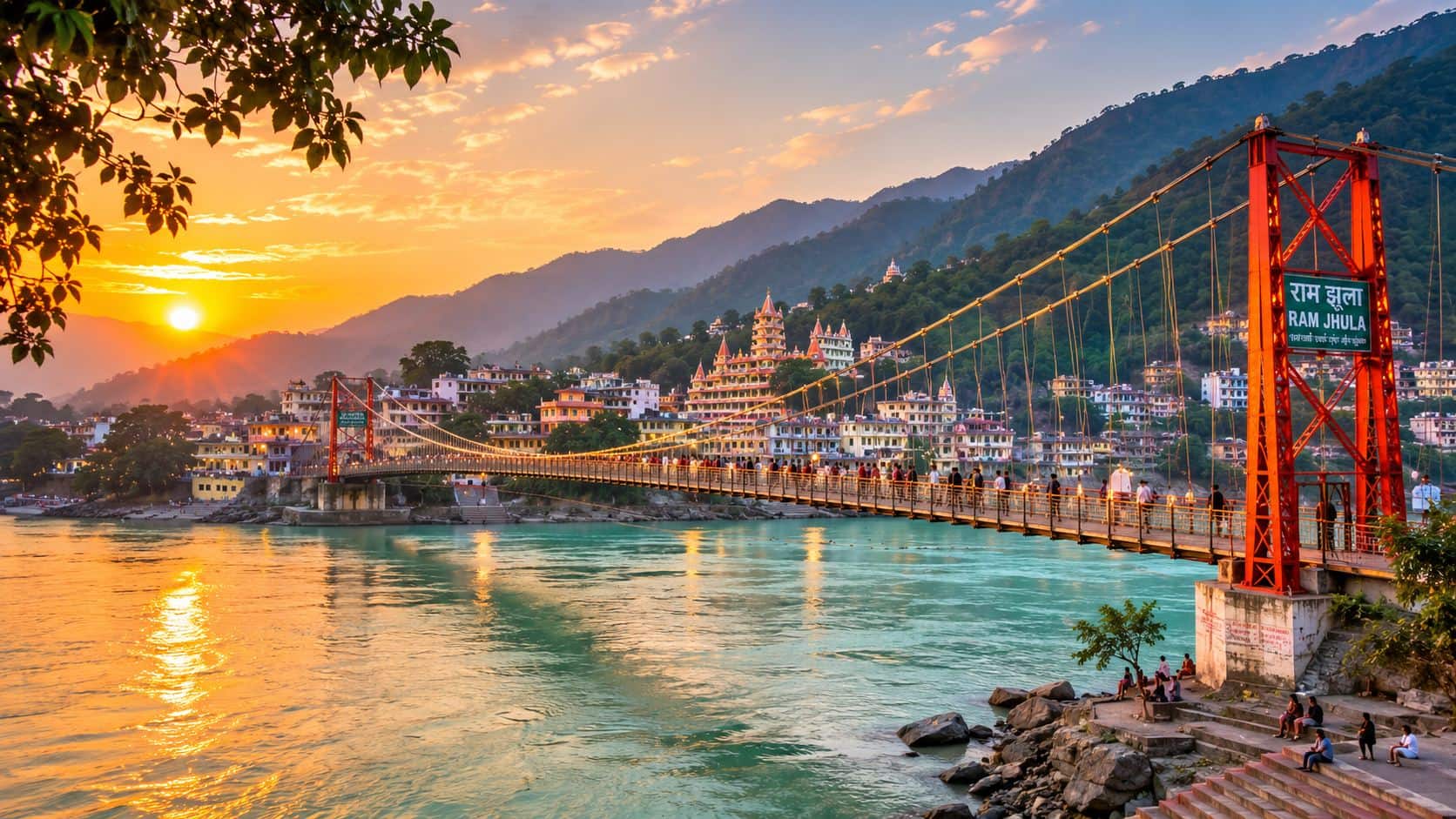
Almost everyone who says they can’t meditate means the same thing. They sat down, their mind kept talking, and they took that as proof of failure. It isn’t. That is simply what minds do. Meditation in Rishikesh is not a test you pass by going blank — and this town, where the Ganga comes out of the Himalayan foothills, is an unusually forgiving place to find that out.
Nobody actually empties their head
The usual reason beginners quit is a false standard. You expect silence, you get a shopping list and an old argument, and you conclude the practice is for other people. Ask almost any honest teacher in Uttarakhand and you will hear the same correction: the thought is not the mistake. Noticing you have drifted and coming back is not the interruption to the practice — it is the practice. Done often enough, that return gets easier, and that is the whole skill.
Which means the useful question isn’t whether you can concentrate. It’s whether you can sit somewhere undisturbed for a while without being needed. Rishikesh is very good at arranging that.
The styles you will actually meet here
The town is dense with practice and the labels can be bewildering, but most of what you will be offered falls into a handful of families. Knowing which one suits you saves a lot of wasted evenings.
- Breath-led: pranayama and simple breath awareness. You are following something that keeps moving, which is far easier than following nothing. This is where most beginners should start.
- Sound-led: mantra, chanting and kirtan. It gives the talkative part of the mind a job, so it stops trying to run the session. Surprisingly effective for people who find quiet unbearable.
- Guided relaxation: long body scans, usually lying down, with a voice taking you through it. Almost impossible to get wrong. Also easy to fall asleep in, which nobody minds.
- Silent sitting: the one everyone pictures, and the hardest place to begin. Worth arriving at, not starting from.
If you have tried an app three times and stopped three times, the problem was probably the format rather than you. Meditation in Rishikesh is mostly done in rooms with other people and someone guiding, and that turns out to be a completely different experience from a phone on your chest late at night.
What a guided riverside sitting is like
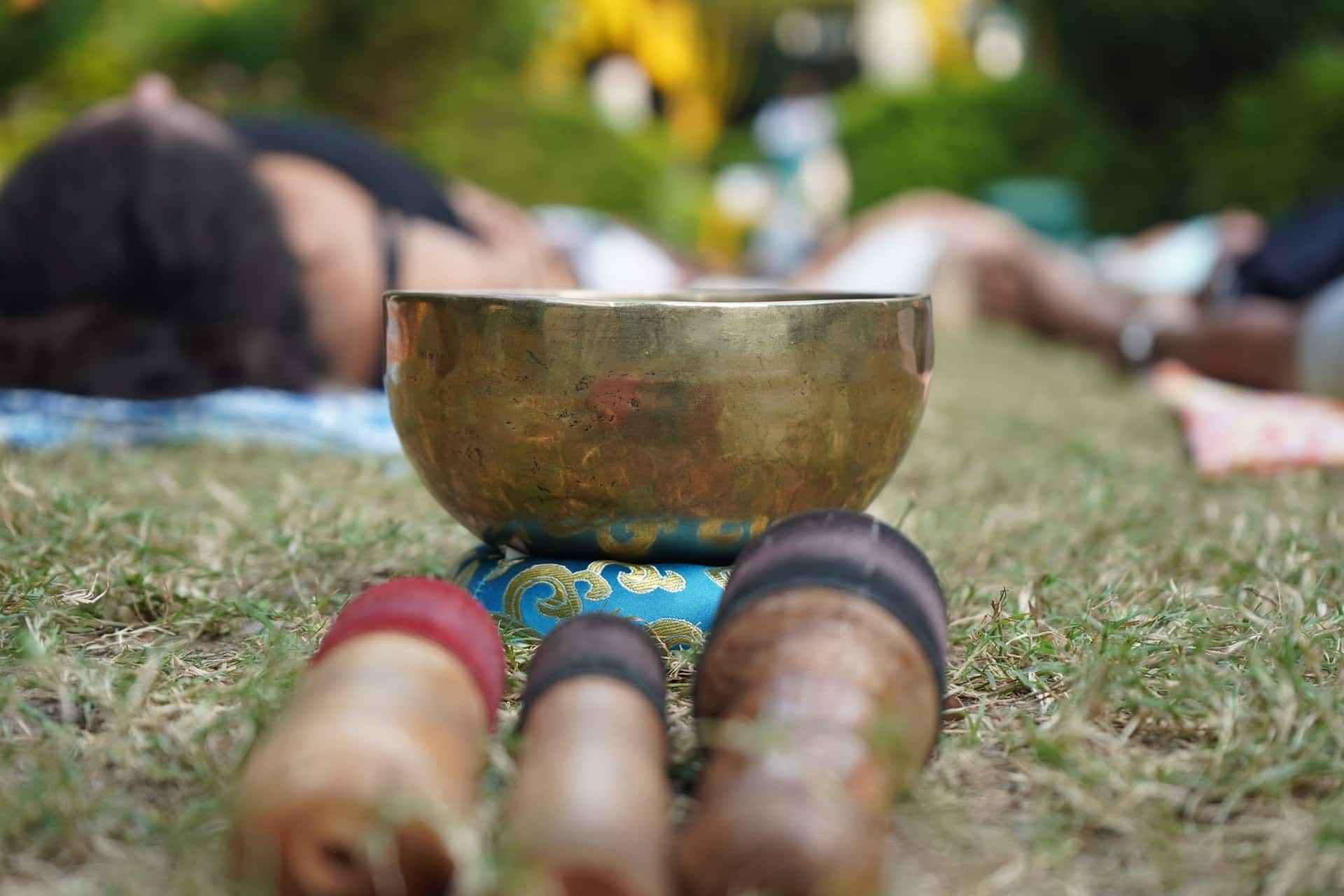
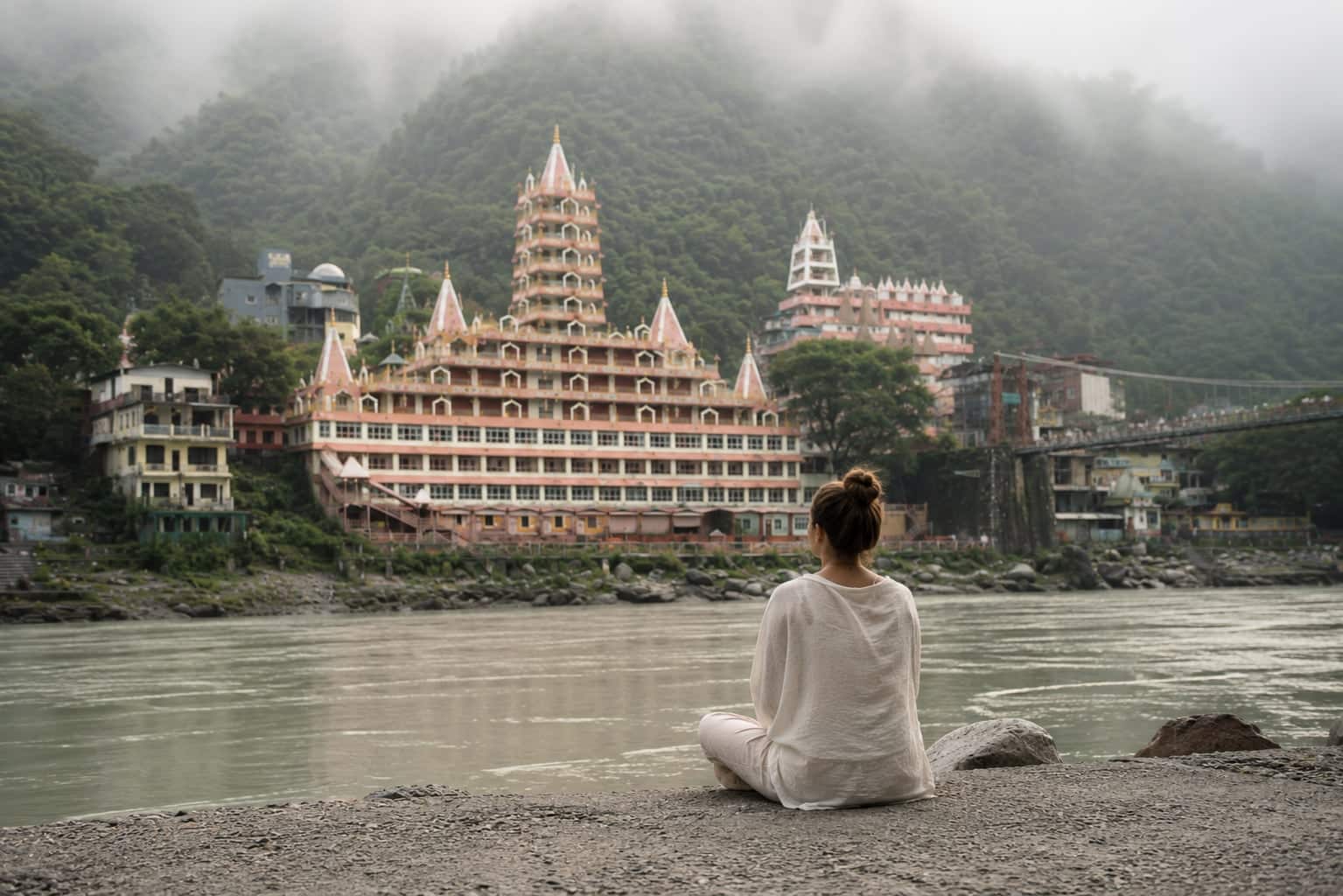
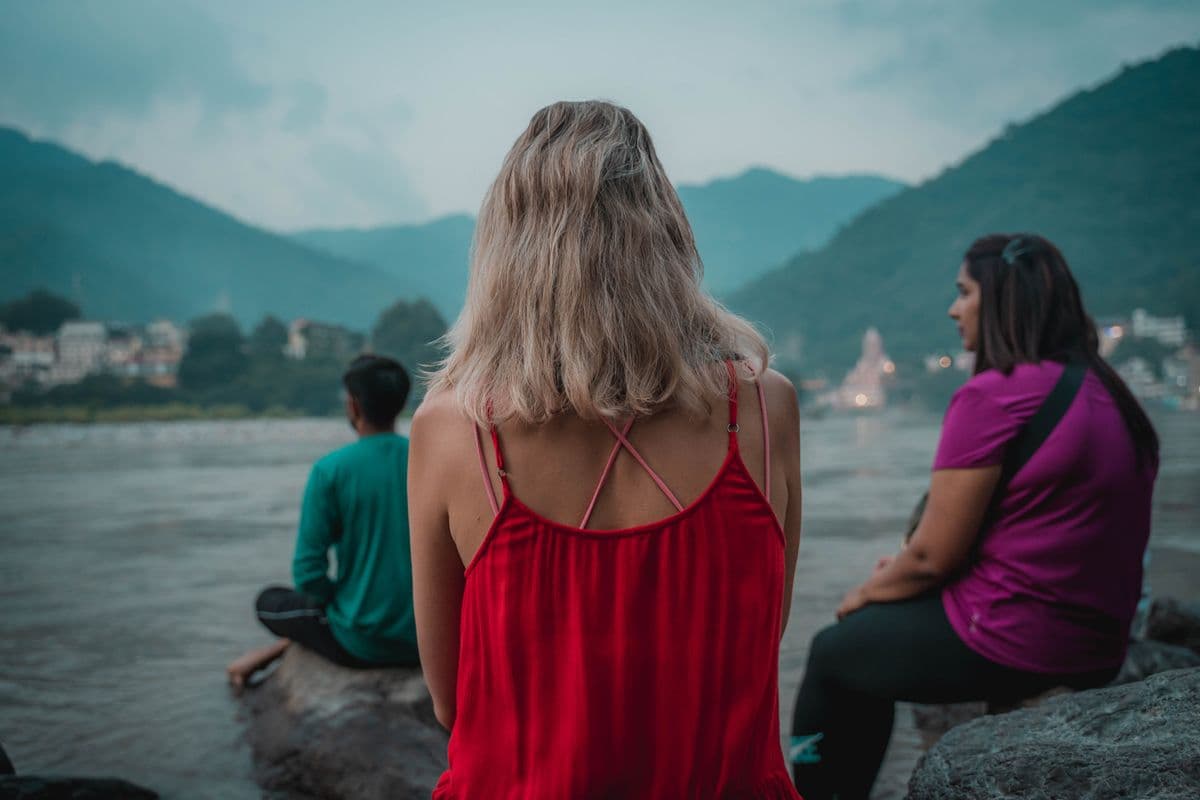
Shoes off. A cushion or a mat, close enough to the water that you can hear it. The teacher talks for a few minutes, sets you going, and then mostly stops talking — the good ones say much less than you expect. Somewhere behind you a bell, a scooter, a dog. None of it is a problem. The river carries on regardless and after a while you stop editing it out.
Your legs will complain. You are allowed to shift. You will drift off into planning tomorrow and catch yourself, and that catching is the thing you came for. Nobody watches you, nobody grades you, and nobody asks afterwards whether it worked. Evening sittings tend to land better than morning ones for first-timers, because the day has already happened and the mind has something real to put down.
You are not trying to stop thinking. You are practising coming back — and you only get to practise that because your mind wandered off in the first place.
Drop-in or retreat — which one you actually want
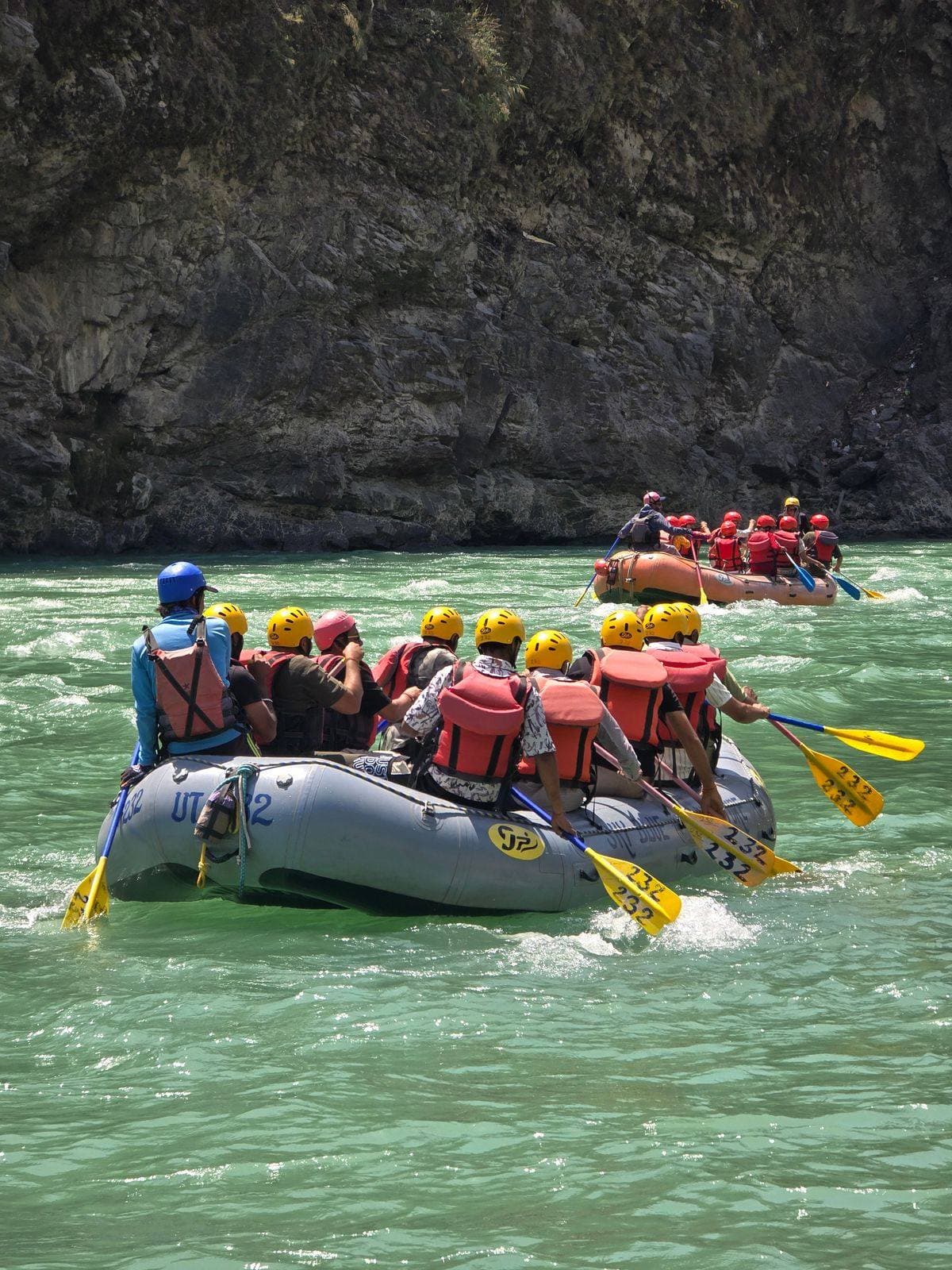
A drop-in is one sitting. You turn up, you sit, you leave, and you find out whether any of this is for you without committing a week of your holiday to the answer. It suits travellers with full days of rafting and temples who want one quiet stretch of the evening that asks nothing of them, and it suits sceptics, who tend to make good meditators once they stop arguing with the word. Most people trying meditation in Rishikesh for the first time should start here.
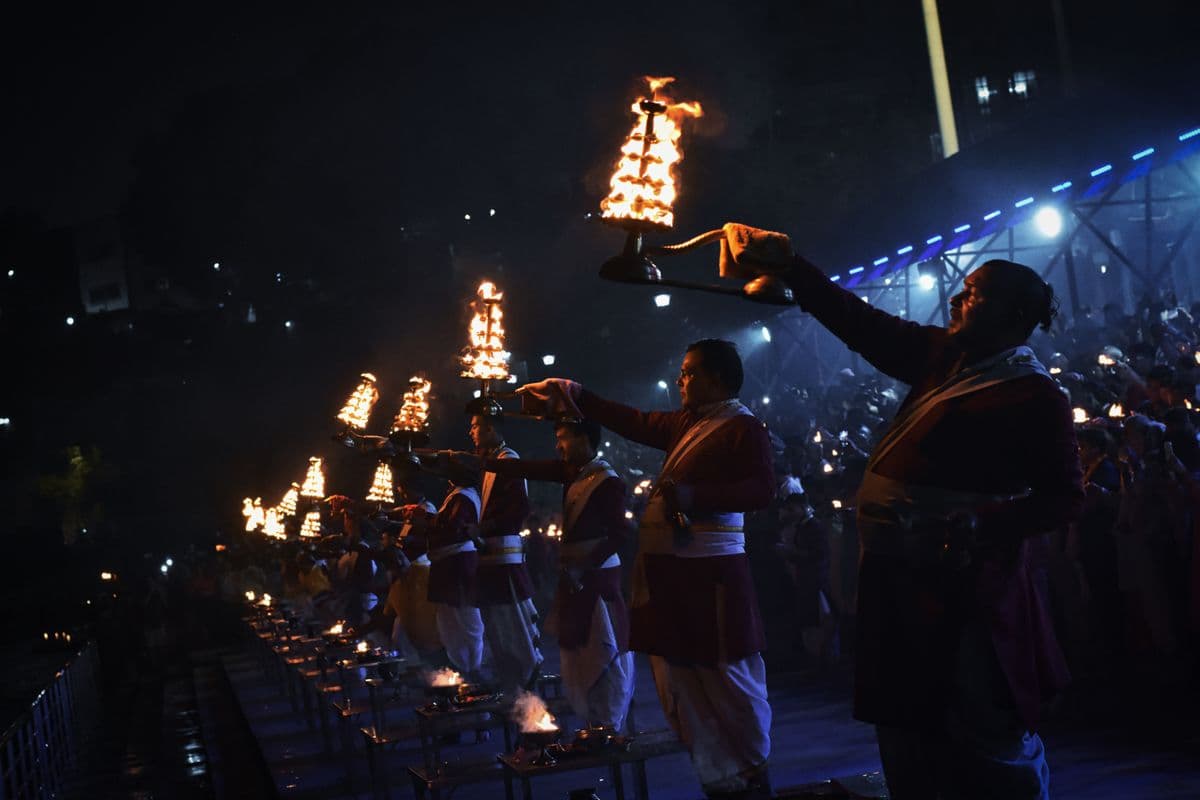
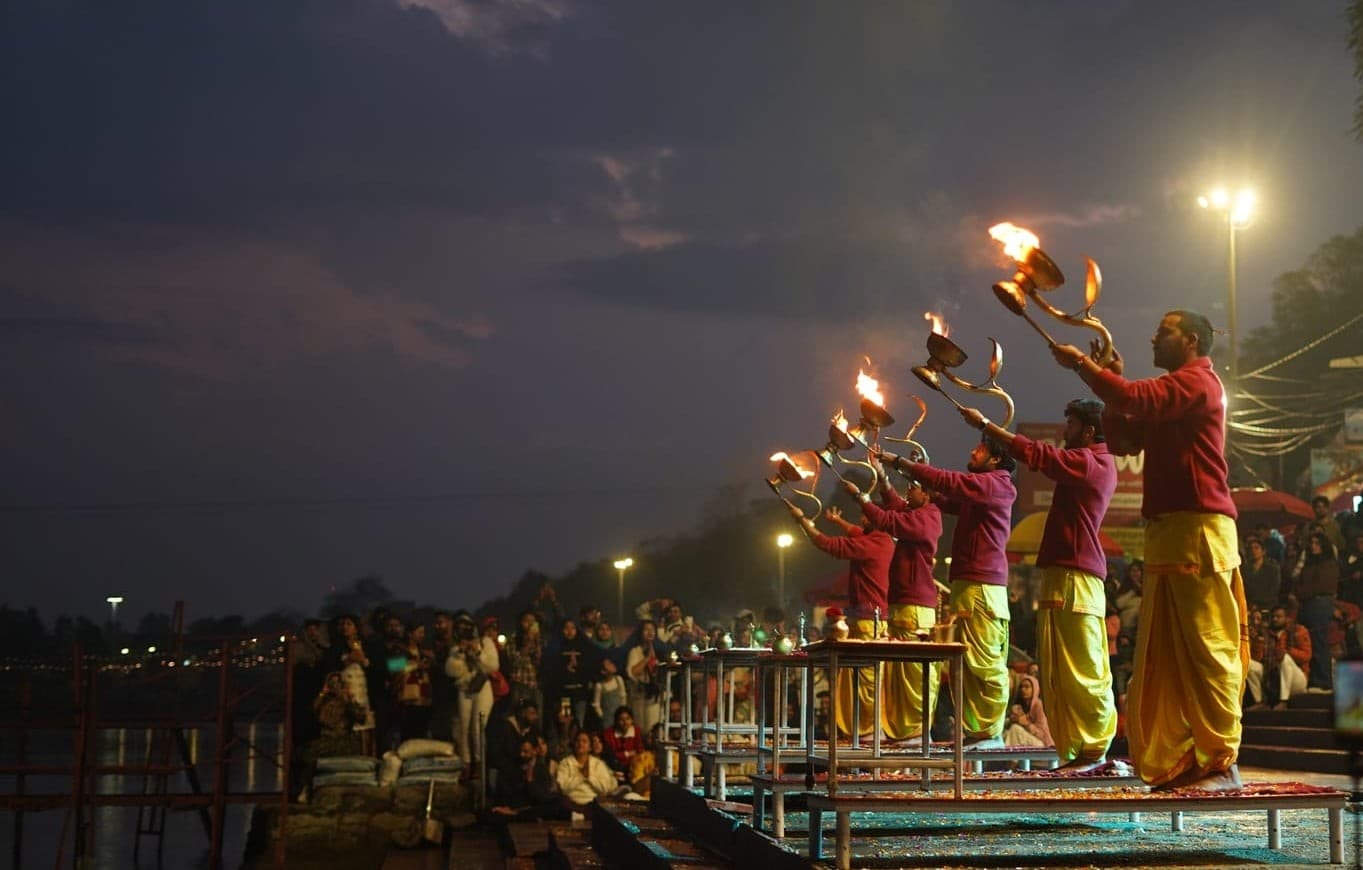
A retreat is a different proposition. The sitting itself may be no deeper — the difference is that everything around it agrees with it. Morning yoga and breathwork, unhurried meals, a slow afternoon, aarti by the water, then meditation at the end of the day. On a drop-in you meditate despite your schedule. On a retreat your schedule is quietly built to make it easy. If you have a specific thing you are carrying — sleep, grief, a decision you keep turning over — a private one-to-one session starts from that, rather than from a practice written for a room of strangers.
Being honest about what it does
This is where writing about meditation usually overreaches, so, plainly: people who sit regularly report sleeping better, reacting less sharply, and noticing a small gap between something happening and their response to it. Long-term practitioners say it more strongly still. Those are reports, and they are worth something. They are not a medical result, and no honest teacher here will hand you one. Nothing on this page is medical advice, and none of it replaces a conversation with your own doctor.
The other honest note is that sitting still with your own attention is not gentle for everyone. It can bring difficult material up, particularly if you are carrying grief, trauma or a mental health condition you are already managing, and long silent formats are the ones most likely to do it. That is not a reason to skip a guided evening sitting. It is a reason to tell the teacher beforehand, to start with guided rather than silent, and to check with your doctor first if you are unsure.
How we handle it
Guided meditation is built into our wellness retreats — Reset, Restore and Rebirth alike — riverside wherever the weather allows, alongside the morning yoga and pranayama. If you are not on a retreat we run drop-in meditation sessions you can join for a single evening, and private meditation sessions if you would rather work one-to-one at an hour that fits your day.
The point of any of it is not one good hour beside the Ganga. It is walking away with something plain enough that you still do it at home in November, in a room with no river in it. Ask your host which of the three fits you — the honest answer is sometimes the cheapest one.